Introduction
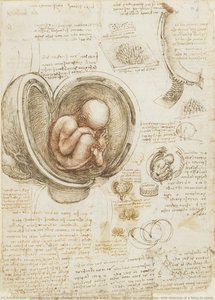
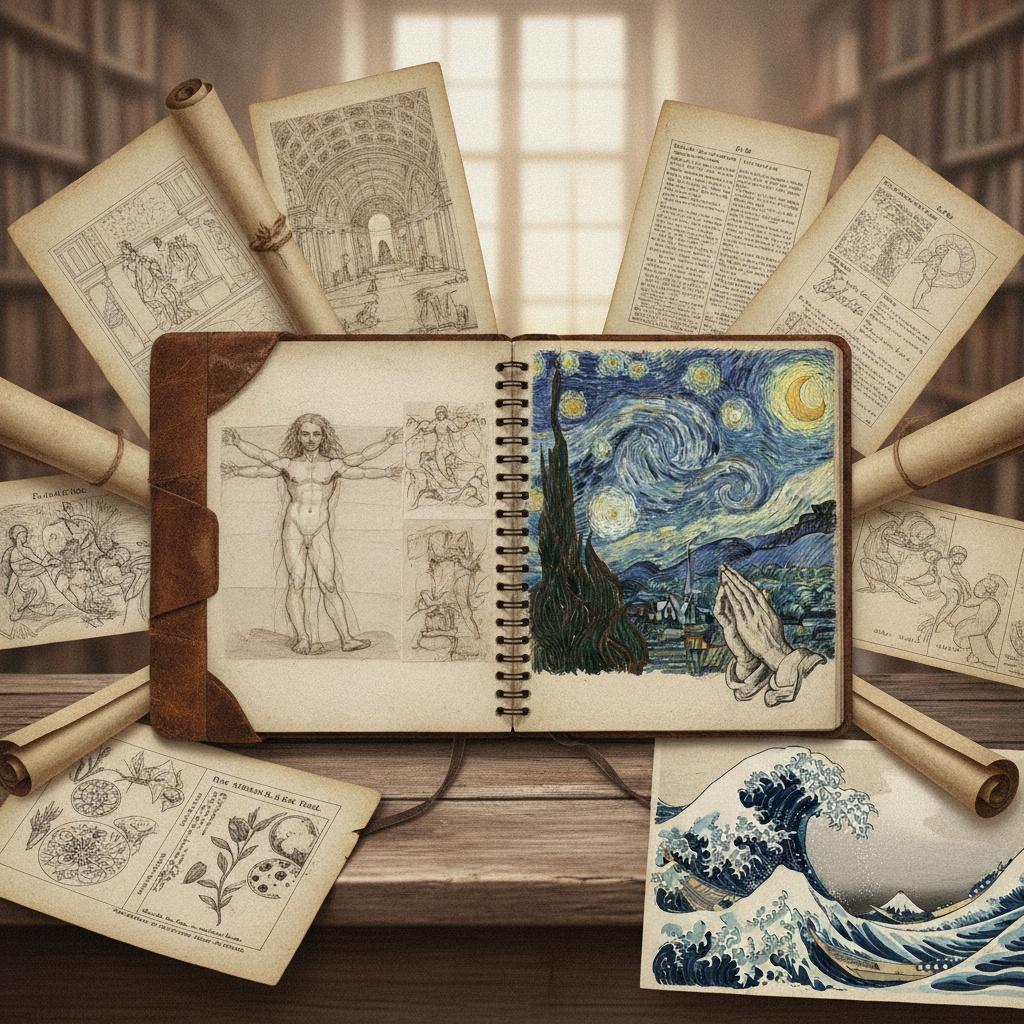
Before the heavy layers of oil paint or the high-impact saturation of digital media, there was only the raw, unadulterated power of a single line. A drawing is more than just a sketch; it is the DNA of visual expression, capturing the very first spark of an idea before it evolves into a masterpiece. Throughout history, these marks on paper—the scratch of charcoal, the fluid sweep of ink, the delicate pressure of graphite—have acted as the blueprints for human emotion and cultural revolution.
These legendary works represent more than just technical skill; they are the moments where art broke free from tradition. From the anatomical precision that redefined our understanding of the human form to the expressive strokes that paved the way for modern graphic intensity, these drawings changed how we see the world. They carry a visceral energy that remains strikingly relevant in our contemporary landscape, bridging the gap between the classical masters and the bold, high-contrast aesthetics of today's street and pop art movements.
In this exploration, we are stripping away the excess to focus on the essential. We are tracing the lineage of greatness through ten legendary drawings that didn't just decorate walls—they rewrote the rules of visual language forever. Prepare to witness the raw, unfiltered moments that shaped the very foundation of everything we call art.
Vitruvian Man - Leonardo da Vinci
 Vitruvian Man - Leonardo da Vinci
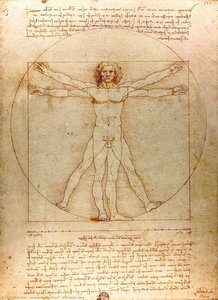
Imagine a moment where the pulse of human anatomy meets the infinite geometry of the cosmos—a vision of perfect balance captured in the delicate dance of ink on aged parchment. This is Vitruvian Man by Leonardo da Vinci.
Emerging from the late 15th century, this work stands as a scientific manifesto disguised as art. Da Vinci meticulously used the principles of the Roman architect Vitruvius to demonstrate that the human form serves as the ultimate bridge between the earthly square and the divine circle. The precision of his pen strokes reveals an obsessive study of musculature and mathematical proportion, where every fine line maps out a body that defines its own universe.
As one of the most legendary drawing masterpieces , it transcends mere anatomy to embody the very essence of Renaissance humanism. Even centuries later, this work's profound harmony continues to inspire, reminding us that the intersection of science and soul is where true art lives.
Sien, Sewing, Half-Figure - vincent willem van gogh
 Sien, Sewing, Half-Figure - vincent willem van gogh
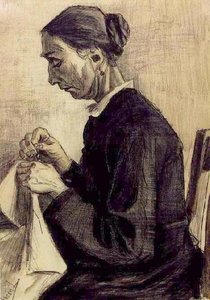
Before the explosive, high-impact colors of his later years, Vincent van Gogh captured something raw and deeply intimate in Sien, Sewing, Half-Figure . This isn't just a sketch; it is a masterclass in using monochrome to command attention. As one of the Top 10 Legendary 'Drawing' Masterpieces That Changed Art Forever , this work strips away the visual noise, focusing instead on the rhythmic, meditative pulse of a single, quiet moment.
The stark interplay of light and shadow creates a cinematic depth that feels strikingly contemporary. In an era where minimalist design and monochromatic palettes define modern urban interiors, Van Gogh’s ability to build form through nothing but precise, soulful linework is incredibly relevant. It serves as a powerful visual anchor for any curated space, proving that true impact doesn't require loud colors—just the perfect, intentional strike of a pen.
The head of St James, and architectural sketches - Leonardo da Vinci
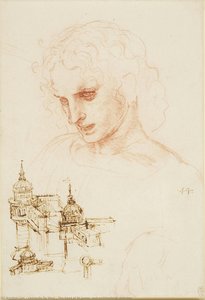 The head of St James, and architectural sketches - Leonardo da Vinci
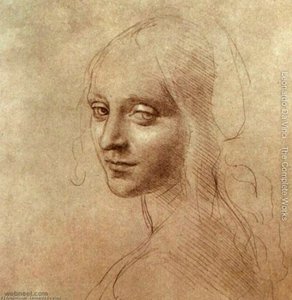
Imagine a quiet Florentine studio, where the only sound is the soft scratch of charcoal against parchment. In Leonardo da Vinci’s 1495 masterpiece, The Head of St James, and Architectural Sketches , we step directly into the analytical yet soulful mind of the Renaissance. This drawing is far more than a mere study; it is an intimate encounter with the artist's obsession with the essence of life. Through his revolutionary sfumato technique, the youthful contours of St. James emerge from the shadows, blurred and breathing, as if captured in a moment of profound spiritual stillness.
This work belongs in the pantheon of legendary drawings because it captures the exact moment where human anatomy meets structural engineering. By pairing a tender portrait with precise architectural bastions, Da Vinci proves that art and science are inseparable. In our frantic, digital age, this piece acts as a meditative anchor, inviting us to slow down and rediscover the profound beauty found in meticulous observation and the quiet strength of a single, well-placed line.
View of the Sea at Sunset - Claude Monet
 View of the Sea at Sunset - Claude Monet
To encounter Claude Monet’s 1862 View of the Sea at Sunset is to witness the very first breath of an artistic revolution. Long before the world fell in love with his iconic water lilies, this work emerged as a profound study of light and atmosphere, marking the pivotal moment where academic rigidity began to dissolve into pure sensory experience. It earns its place among the legends by capturing the ephemeral—the exact, fleeting second when day surrenders to night.
The canvas vibrates with the alchemy of a Normandy dusk; warm oranges and soft peaches bleed across the sky, reflecting upon a sea so calm it appears like liquid glass. The two small boats, drifting silently in the foreground, provide a haunting sense of scale against the vast, breathing horizon. For the discerning collector, this piece is a masterclass in atmospheric harmony, offering a serene, timeless anchor that elevates any modern luxury interior with its quiet, historical soul.
Potato field behind the dunes - vincent willem van gogh
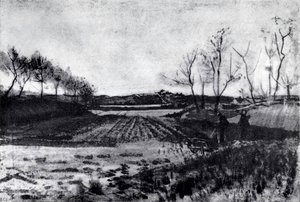 Potato field behind the dunes - vincent willem van gogh
In Potato field behind the dunes by Vincent van Gogh, one immediately encounters the heavy, quiet weight of the earth. Before his signature explosion of color, this 1883 monochrome masterpiece captures a raw, unvarnished emotion—a profound meditation on the dignity of labor and the grit of rural existence. The masterful use of hatching and cross-hatching creates a tactile landscape where you can almost sense the dampness of the soil and the coarse texture of the dunes.
As one of the legendary drawing masterpieces that changed art forever, this work offers a psychological depth that mirrors our human experience. Integrating such a powerful, somber piece into your personal sanctuary can transform a modern space into a site for deep reflection and stillness. It serves as a window into the soul of early expressionism, grounding your home with a timeless, melancholic beauty that invites quiet contemplation.
Study for the Disputation of the Holy Sacrament: twenty clerics and ecclesiastics discussing - Raphael
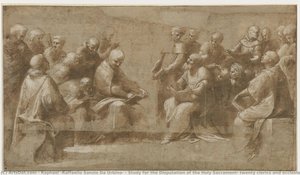 Study for the Disputation of the Holy Sacrament: twenty clerics and ecclesiastics discussing - Raphael
A whisper of monochrome shadows and intellectual fire, Study for the Disputation of the Holy Sacrament by Raphael captures a moment where profound thought becomes visible. This piece stands among the top legendary drawing masterpieces because it reveals the raw, structural soul of the High Renaissance—the mastery of disegno . Before the grand oil canvases existed, this sketch served as the essential blueprint, capturing the intense energy of theological debate through stark, dramatic contrast. You can almost hear the low murmur of the thirteen clerics as light and shadow sculpt every expressive gesture and furrowed brow with surgical precision. In today’s fast-paced, hyper-saturated world, the monochromatic gravity of this work offers a sophisticated anchor for modern interiors. It brings a sense of quiet, intellectual depth to any space, proving that true artistic impact does not require a palette of colors, but rather the perfect balance of form and emotion.
Sitting Male Nude (recto) - Michelangelo Buonarroti
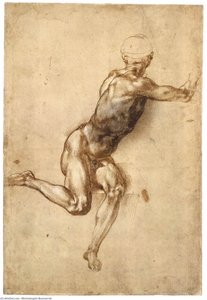 Sitting Male Nude (recto) - Michelangelo Buonarroti
In Sitting Male Nude (recto) by Michelangelo Buonarroti, there is an immediate, visceral sense of tension that commands your attention. You don't just see the meticulously rendered musculature; you feel the weight and the coiled energy of a body caught in a moment of profound, quiet intensity. This isn't merely an anatomical study; it is a masterclass in human vulnerability masked by Herculean strength, serving as a cornerstone in our exploration of the Top 10 Legendary 'Drawing' Masterpieces That Changed Art Forever . The intricate pen strokes create a landscape of shadow and light that mirrors the complexities of the human experience, making the figure feel remarkably alive. Integrating a work of such raw, sculptural power into your interior can transform a personal sanctuary into a space for profound reflection. It invites a contemplative energy, turning any modern room into a gallery of quiet strength and timeless, anatomical beauty.
Codex Madrid I, f.7r - Leonardo da Vinci
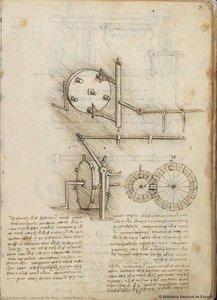 Codex Madrid I, f.7r - Leonardo da Vinci
Imagine peering into the mind of a visionary before the world was even wired for electricity. In Codex Madrid I, f.7r by Leonardo da Vinci , we encounter a moment where the boundary between fine art and proto-engineering dissolves entirely. Created around 1490, this drawing serves as a breathtaking blueprint for the future, capturing the rhythmic pulse of gears and levers with unparalleled precision.
Da Vinci employs his legendary sfumato technique to breathe life into cold machinery, using subtle gradations of tone to transform mechanical components into something almost organic. The delicate, ink-etched lines trace a complex apparatus—perhaps a mechanical clock—that embodies the Renaissance spirit of empirical discovery and humanism. This work is essential to our list because it proves that the artist’s true subject is often the underlying logic of nature itself. Even in our era of high-tech complexity, Leonardo’s mechanical vision remains a profound reminder that innovation and aesthetic beauty are two sides of the same eternal coin.
Portrait of a Young Woman - Titian
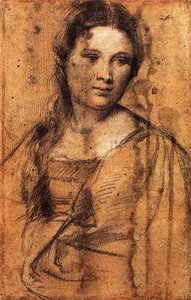 Portrait of a Young Woman - Titian
Before Titian became the undisputed master of color, he proved that shadows could hold more truth than any pigment. In his 1515
Through meticulous hatching, Titian breathes three-dimensional life into the subject’s soulful gaze, creating an arresting presence that transcends the paper. The way he manipulates light to define the soft contours of her face is a technical leap that changed art history forever. Integrating such a profound sense of depth and discipline into a modern home office or study can transform a workspace, fostering an atmosphere of quiet ambition and sophisticated focus.
The Barricade - Édouard Manet
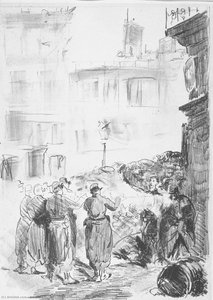 The Barricade - Édouard Manet
In The Barricade , Édouard Manet proves that light is not merely illumination; it is a profound language. He does not simply depict light—he composes it, much like a musician crafting a haunting sonata. Within this monochrome landscape, the smoke-filled streets of 1871 Paris emerge, capturing the visceral energy of the Commune through the rhythmic tension of shadow and stark, white voids. Through the masterful use of charcoal and ink , Manet employs expressive hatching to sculpt a world of urban upheaval. Every heavy line breathes life into the chaos, where small, grounded details anchor the historical rebellion in a startling, human reality. By bridging Realism and Impressionism, this legendary drawing does more than reflect history; it invents a new way to perceive it. To witness this work is to see light waiting to spill into your home, turning walls into portals of inspiration.
Conclusion
The echoes of these masterstrokes do not fade with the passing of centuries; instead, they settle into the very fabric of our contemporary lives, breathing life into the spaces we call home. These drawings are far more than historical artifacts held in silent reverence; they are living, breathing presences that continue to shape our visual language and stir our deepest emotions. To hang such a work is to invite an eternal dialogue between the artist's original pulse and your own daily rhythm, turning a mere room into a sanctuary of culture and thought. As the light shifts across the textures of paper and ink, we are reminded that the human connection to art remains as vibrant and essential as ever. We invite you to explore this enduring legacy within our full collection , where every line tells a story that is still being written.