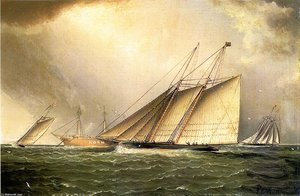
Early Life and Artistic Foundations: A Family Legacy
The story of James Edward Buttersworth is inextricably linked to the sea, a heritage woven into the very fabric of his artistic upbringing. Born in London in 1817, he wasn’t merely *born* into a maritime world; he was immersed within it. His father, Thomas Buttersworth Jr., was already an established painter specializing in naval scenes – depictions of battleships and dramatic coastal views were his forte. This familial connection proved pivotal, providing young James with not only initial instruction but also a deep-seated appreciation for the nuances of light on water, the complex rigging of sailing vessels, and the sheer power of the ocean. While many artists of the period sought inspiration in classical landscapes or portraiture, Buttersworth’s earliest lessons were focused on capturing the ephemeral beauty and formidable strength of the marine environment. This early grounding instilled a precision and attention to detail that would become hallmarks of his mature style. It wasn't simply about painting ships; it was about understanding them – their construction, their movement, their relationship to the elements.
Transatlantic Passage: Buttersworth’s Arrival and Rise in American Maritime Art
Around 1845, James Edward Buttersworth made a significant life change, emigrating from England to the United States. He settled initially in West Hoboken, New Jersey – a location that offered both proximity to the bustling port of New York City and a burgeoning artistic community. This move wasn’t merely geographical; it represented a shift in focus. While his father primarily documented naval power, Buttersworth found himself drawn to the commercial maritime world—the clipper ships, steam yachts, and schooners that fueled America's growing trade empire. He quickly established a studio, also maintaining one in Brooklyn, and began exhibiting regularly at the American Art Union of New York from 1850 to 1852. This period marked his ascent within the American art scene. His paintings resonated with a public captivated by the romance of seafaring and the nation’s burgeoning maritime prowess. He wasn't simply documenting vessels; he was capturing symbols of progress, ambition, and national identity.
The Meticulous Detail: Technique, Style, and the Pursuit of Realism
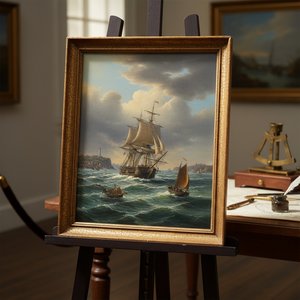
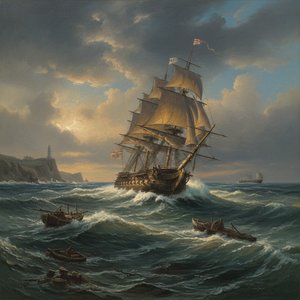
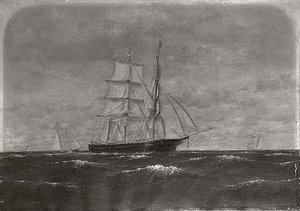 Marine Painting with Ships, (painting)
1870 Marine Painting by William Edward Norton. Detailed ship & wave scene in a monochromatic style. Explore this historical realism artwork's beauty and maritime charm.
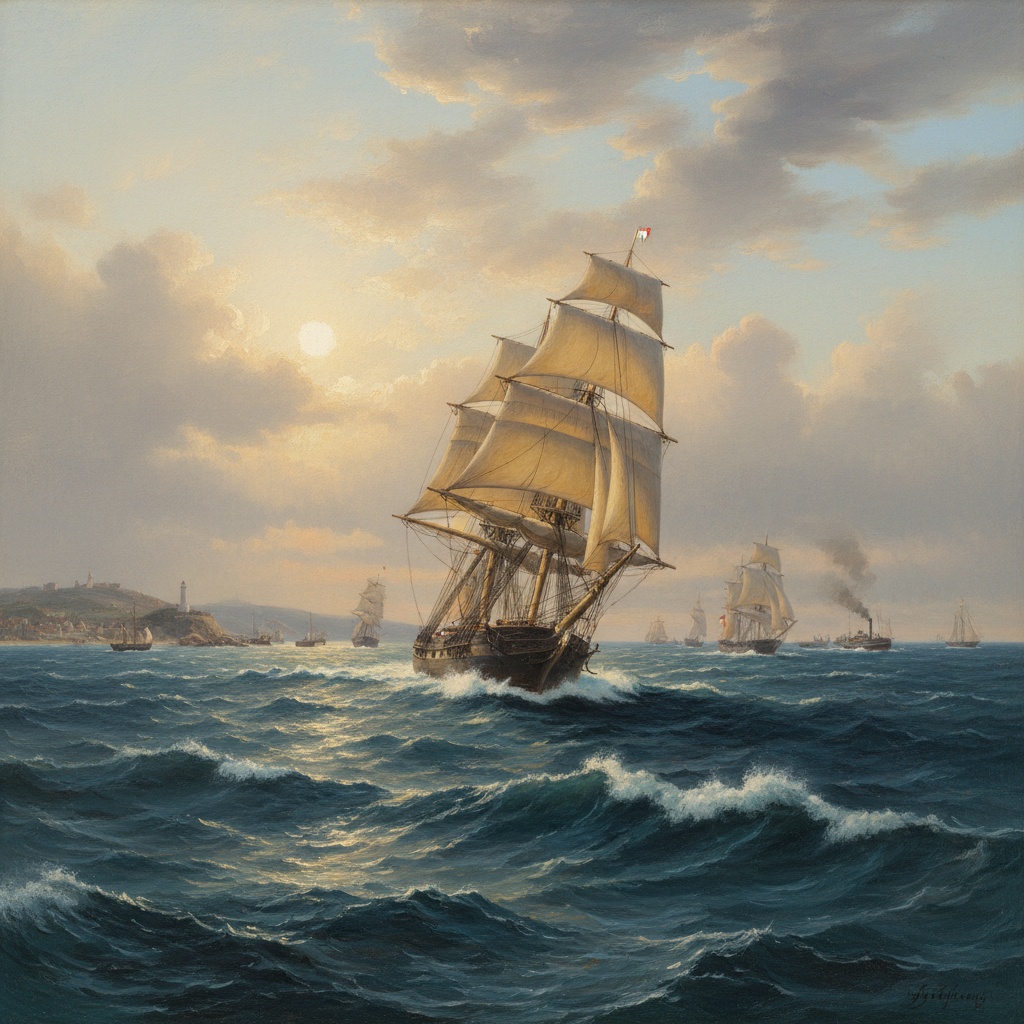
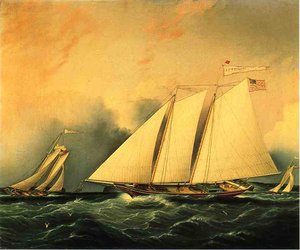
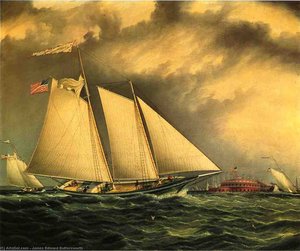
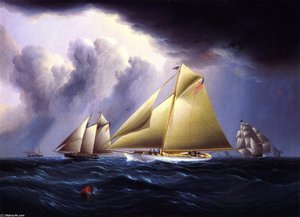
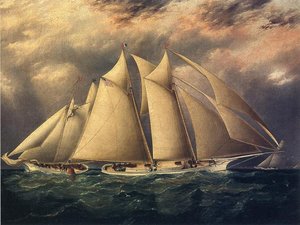
Buttersworth’s reputation rests on his extraordinary ability to render ships with breathtaking accuracy. His technique was characterized by a painstaking attention to detail – each line of rigging, every plank of wood, the subtle curve of a sail, all meticulously depicted. However, he wasn't simply a technical draftsman; there was an artistic sensibility at play. He possessed a remarkable talent for capturing atmospheric effects—the hazy glow of sunset on the water, the dramatic interplay of light and shadow during a storm. While some contemporaries favored broad brushstrokes and impressionistic renderings, Buttersworth embraced a more refined approach, prioritizing clarity and realism. His paintings often feature a monochromatic style, particularly in earlier works, emphasizing form and texture over vibrant color palettes. This focus allowed him to convey the sheer scale and complexity of these vessels with unparalleled precision. He studied William Edward Norton’s work, admiring his detailed ship & wave scenes, and incorporated similar techniques into his own practice.
Chronicling the America's Cup: Capturing Speed, Grace, and National Pride
Perhaps no subject embodies Buttersworth’s artistic mastery more fully than his depictions of the America’s Cup yacht races. He famously traveled to England in 1851 to document the inaugural race for the Hundred Pound Cup, creating sketches and paintings that became definitive records of this pivotal moment in sailing history. But it was his later work on the 1893 *Vigilant* versus *Valkyrie II* match that cemented his legacy as a chronicler of America’s maritime sporting achievements. These paintings weren't just about boats racing; they were about capturing the spirit of competition, the elegance of design, and the national pride associated with winning the Cup. He understood the drama inherent in these events—the tension before the start, the furious speed of the yachts, the exhilaration of victory. His ability to convey this sense of movement and excitement was exceptional, particularly considering the limitations of photographic technology at the time. These paintings served as visual testaments to American ingenuity and sporting prowess.
Buttersworth’s Enduring Legacy: Museums and Collections Today
James Edward Buttersworth passed away in 1894, leaving behind a remarkable body of work—approximately 600 paintings that continue to captivate audiences today. His legacy is preserved in numerous museum collections across the United States, including the Brooklyn Museum, Detroit Institute of Arts, and Metropolitan Museum of Art. His works have also been featured on *Antiques Roadshow*, further solidifying his place within the public consciousness. The enduring appeal of Buttersworth’s paintings lies not only in their technical brilliance but also in their ability to transport viewers back to a bygone era—a time when sailing was both a vital industry and a source of national pride. His meticulous detail, atmospheric perspective, and graceful compositions continue to inspire artists and collectors alike. For those seeking to experience the beauty and drama of Victorian marine painting, Buttersworth’s work offers an unparalleled glimpse into a world of ships, sea, and sky. ArtsDot.com provides high-quality reproductions of his masterpieces, allowing art enthusiasts to bring this captivating vision home.