The Dawn of the High Renaissance: A Cultural Rebirth
 The High Renaissance: A Flourishing of Artistic Innovation & Humanist Ideals
Introduction: The Dawn of a New Artistic Era Wikipedia: High Renaissance In art history, the High Renaissance was a short period of the most exceptional artistic production in the Italian states, particularly Rome, capital of the Papal States, and in...
To understand the profound impact of the Renaissance Trinity, one must first grasp the atmosphere of the era that birthed them. The Italian Renaissance was not merely a period of aesthetic change; it was a seismic shift in the human consciousness, marking the transition from the medieval worldview to the dawn of the modern age. Emerging around 1400, this movement drew its strength from a fervent rediscovery of Classical antiquity, viewing the wisdom of ancient Greece and Rome as the noblest of traditions. This era, characterized by the rise of Humanism, placed an unprecedented focus on the dignity, potential, and scientific understanding of humankind.
As the Florentine Republic and later the Papal States in Rome flourished under the patronage of ambitious families like the Medici and powerful popes such as Julius II, a unique cultural ecosystem emerged. This was a time when art, science, philosophy, and technology converged. The foundations laid by the Early Renaissance—centered on geometric precision and the study of nature—blossomed into the High Renaissance between roughly 1490 and 1527. It was an incandescent moment in history where human potential seemed limitless, and the pursuit of beauty became inextricably linked to the pursuit of truth. In this fertile ground of intellectual curiosity, three titans would emerge to redefine the very boundaries of what it meant to create.
Leonardo da Vinci: The Scientific Visionary and the Mastery of Sfumato
 High Renaissance Masterpieces: Iconic Art for Your Home |
Introduction To gaze upon the masterpieces of the High Renaissance is to encounter a moment in time where human potential seemed limitless, and artistic expression reached unprecedented heights. This wasn’t merely a stylistic shift; it was a cultural...
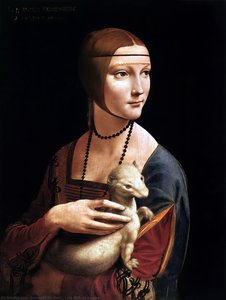
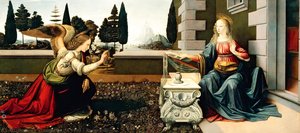
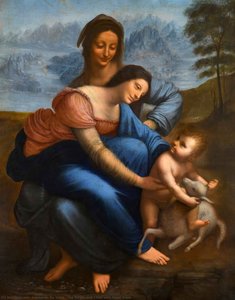
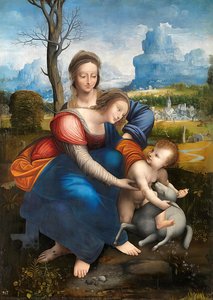
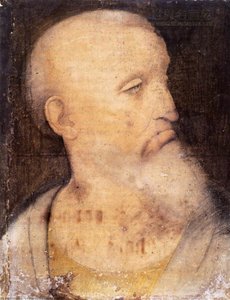
Among the masters, Leonardo da Vinci stands as the quintessential uomo universale—the universal man. For Leonardo, painting was never an isolated pursuit but a branch of natural science. His approach was rooted in an obsessive observation of the world, driven by the belief that to depict a subject accurately, one must understand its underlying anatomy, the physics of light, and the subtle mechanics of atmosphere. He did not merely paint figures; he investigated the very essence of life through the lens of empirical inquiry.
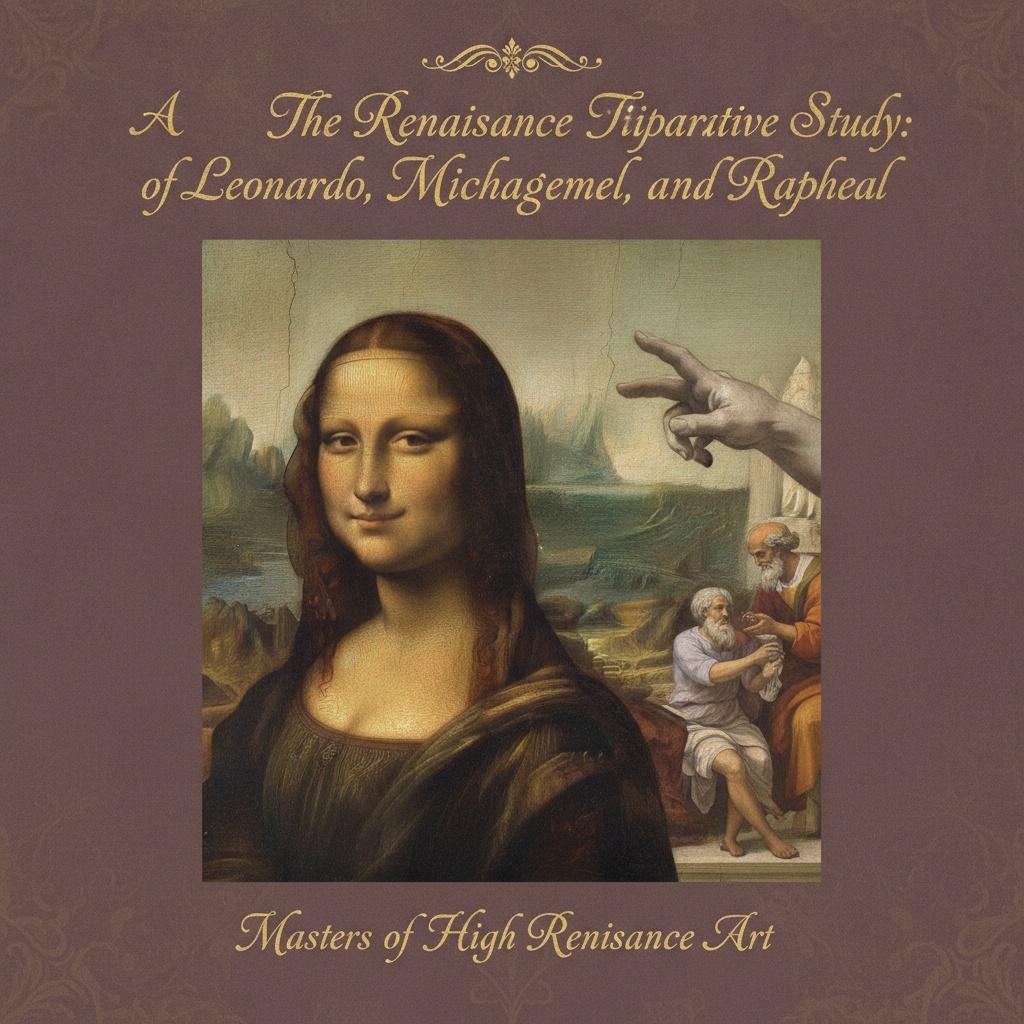
His most enduring technical contribution, sfumato, revolutionized the canvas. By employing incredibly subtle gradations of tone, Leonardo eliminated the harsh, jarring outlines that characterized earlier works. This technique allowed colors and tones to merge like smoke, creating a seamless transition between light and shadow. When one gazes upon the enigmatic smile of the Mona Lisa, they are witnessing the triumph of sfumato; the soft edges around the corners of her mouth and eyes create an ambiguity of expression that feels alive and breathing. Through this atmospheric perspective, Leonardo captured not just the physical form, but the psychological depth and the ephemeral nature of human emotion, making his works feel less like static images and more like windows into a living soul.
Michelangelo Buonarroti: The Divine Sculptor and the Power of Terribilità
 Renaissance art
Renaissance art (1350 – 1620) is the painting, sculpture, and decorative arts of the period of European history known as the Renaissance, which emerged as a distinct style in Italy in about AD 1400, in parallel with developments which occurred in phi...
If Leonardo sought the subtle breath of life, Michelangelo Buonarroti sought its monumental strength. Often referred to as Il Divino (the Divine), Michelangelo viewed himself primarily as a sculptor, believing that his duty was to liberate the figure trapped within the raw marble. His work is characterized by an intense preoccupation with the human anatomy, rendered with a muscularity and dynamism that pushed the limits of physical expression. To Michelangelo, the body was the ultimate vessel for spiritual and emotional struggle.
The hallmark of his style is terribilità—a term used to describe the awe-inspiring, overwhelming power and emotional intensity found in his compositions. Whether carving the powerful limbs of David or painting the sweeping, muscular figures on the ceiling of the Sistine Chapel, Michelangelo infused his subjects with a sense of monumental tension and divine energy. His figures are rarely at rest; they are caught in moments of profound psychological or physical exertion. This mastery of form and the dramatic use of scale created an aesthetic of grandeur that moved beyond mere realism into the realm of the sublime, leaving viewers not just impressed, but profoundly shaken by the sheer force of his vision.
Raphael Sanzio: The Prince of Painters and the Perfection of Harmony
The Italian Renaissance (Italian: Rinascimento [rinaʃʃiˈmento]) is a period in Italian history covering the 15th and 16th centuries. It is the initial development of the broader Renaissance culture that spread from Italy to the rest of Europe (and al...
In stark contrast to the scientific mystery of Leonardo and the turbulent energy of Michelangelo, Raphael Sanzio achieved a state of classical perfection that many consider the zenith of the High Renaissance. Known as the "Prince of Painters," Raphael possessed an unparalleled ability to synthesize the innovations of his contemporaries into a style defined by clarity, balance, and grace. Where Leonardo was enigmatic and Michelangelo was intense, Raphael was harmonious.
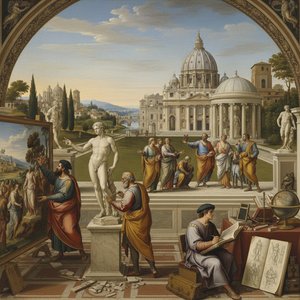
His compositions are masterclasses in equilibrium. In works such as The School of Athens, he utilizes complex architectural perspectives and carefully arranged groups of philosophers to create a sense of profound order and intellectual serenity. Raphael’s figures possess a rhythmic elegance and a sweetness of expression that avoids the heaviness of Michelangelo or the shadows of Leonardo. He mastered the art of the "idealized" human form—creating subjects that were more perfect than nature itself, yet remained deeply relatable through their poised and graceful gestures. His ability to organize vast, complex narratives into a single, cohesive, and aesthetically pleasing whole remains one of the greatest achievements in the history of Western art.
The Artistic Trinity Compared: Divergent Paths to Classical Idealism
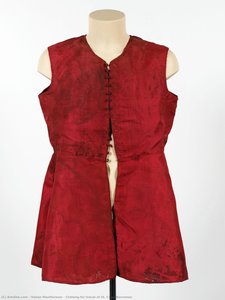 italian manifacture
Italian Manufacture: A Legacy of Renaissance Craftsmanship Italian manufacture represents more than just a production process; it embodies centuries of artistic tradition and meticulous skill—a cornerstone of European culture during the Renaissance. ...
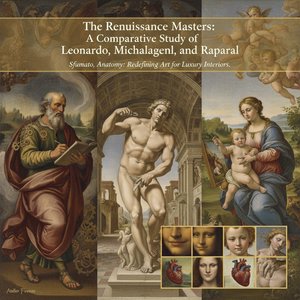
While Leonardo, Michelangelo, and Raphael all operated within the shared framework of Renaissance Humanism, their paths toward expressing classical ideals were strikingly divergent. They represent three distinct pillars of artistic achievement: the intellectual, the spiritual, and the aesthetic. Leonardo utilized the tools of science to explore the mysteries of the natural world; Michelangelo used the language of anatomy to express the struggle of the human spirit; and Raphael used the principles of geometry and proportion to achieve a state of divine harmony.
This divergence is most evident when comparing their treatment of light and form. Leonardo’s sfumato creates a world of soft shadows and atmospheric uncertainty, inviting contemplation. Michelangelo’s use of chiaroscuro emphasizes the sculptural weight and muscular tension of his subjects, demanding awe. Raphael, meanwhile, employs light to illuminate clarity and structure, celebrating the beauty of order. Together, these three masters created a complete spectrum of human experience, ensuring that the Renaissance would not merely be a period of historical interest, but a permanent cornerstone of the human artistic identity.
Legacy of the Masters: Preserving Renaissance Grandeur in Modern Interiors
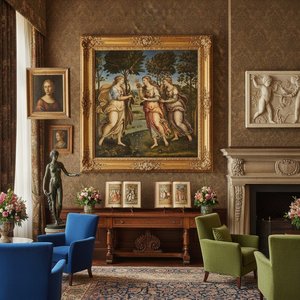 Italian Renaissance Art: A Procurement Guide to Timeless Masterpieces for High-End Hotel Interiors
The Renaissance Aesthetic: Integrating Classical Grandeur into Modern Hospitality Design Renaissance art Renaissance art (1350 – 1620) is the painting, sculpture, and decorative arts of the period of European history known as the Renaissance, which e...
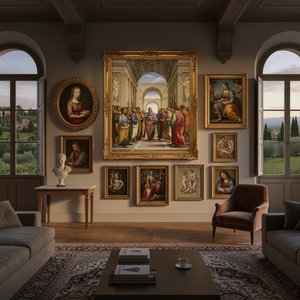
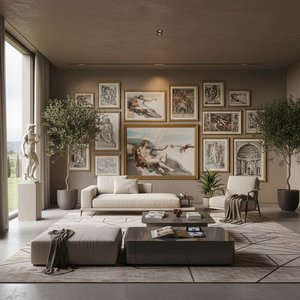
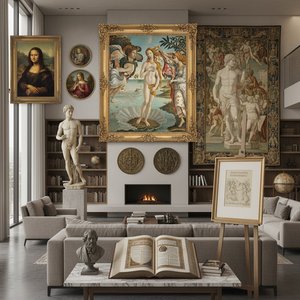
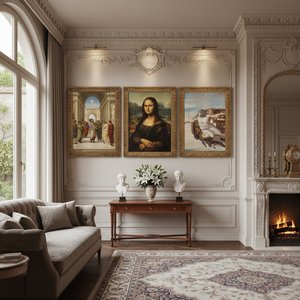
The influence of the Renaissance Trinity extends far beyond the museum walls. The principles of balance, proportion, and narrative depth that these masters perfected continue to inform the highest levels of design and curation today. In modern high-end interiors, the presence of Renaissance-inspired art serves as a silent ambassador of prestige and cultural sophistication. Integrating these timeless aesthetics allows a space to transcend mere luxury, establishing a sense of historical weight and permanence.
At ArtsDot.com, we believe that the profound beauty of these masterpieces should be accessible to all who appreciate their history. We specialize in providing museum-quality, hand-painted oil reproductions that capture the very essence of the Old Masters. Unlike mere prints, our 100% hand-painted works on cotton canvas feature the visible brushstrokes and deep tonal ranges—such as Leonardo’s subtle gradations or Michelangelo’s powerful forms—that define the original works. Whether you seek a large-scale mural to recreate the grandeur of a chapel ceiling or a delicate portrait to anchor a study, our artists use traditional techniques to ensure every piece is a testament to Renaissance craftsmanship. We invite you to explore our collection and bring the enduring legacy of the Renaissance Trinity into your own home.