The Genesis of Grandeur: Historical Context and the Counter-Reformation
 The Dramatic Flourish: Exploring the Baroque Movement's Enduring Legacy in Art History
The Genesis of Grandeur: Historical Context & The Counter-Reformation Wikipedia: Counter-Reformation The Counter-Reformation (Latin: Contrareformatio), also sometimes called the Catholic Revival, was the period of Catholic resurgence that was initiat...
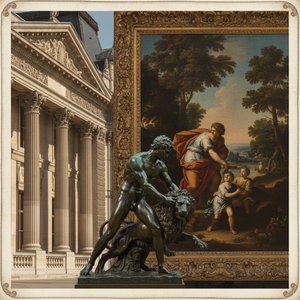
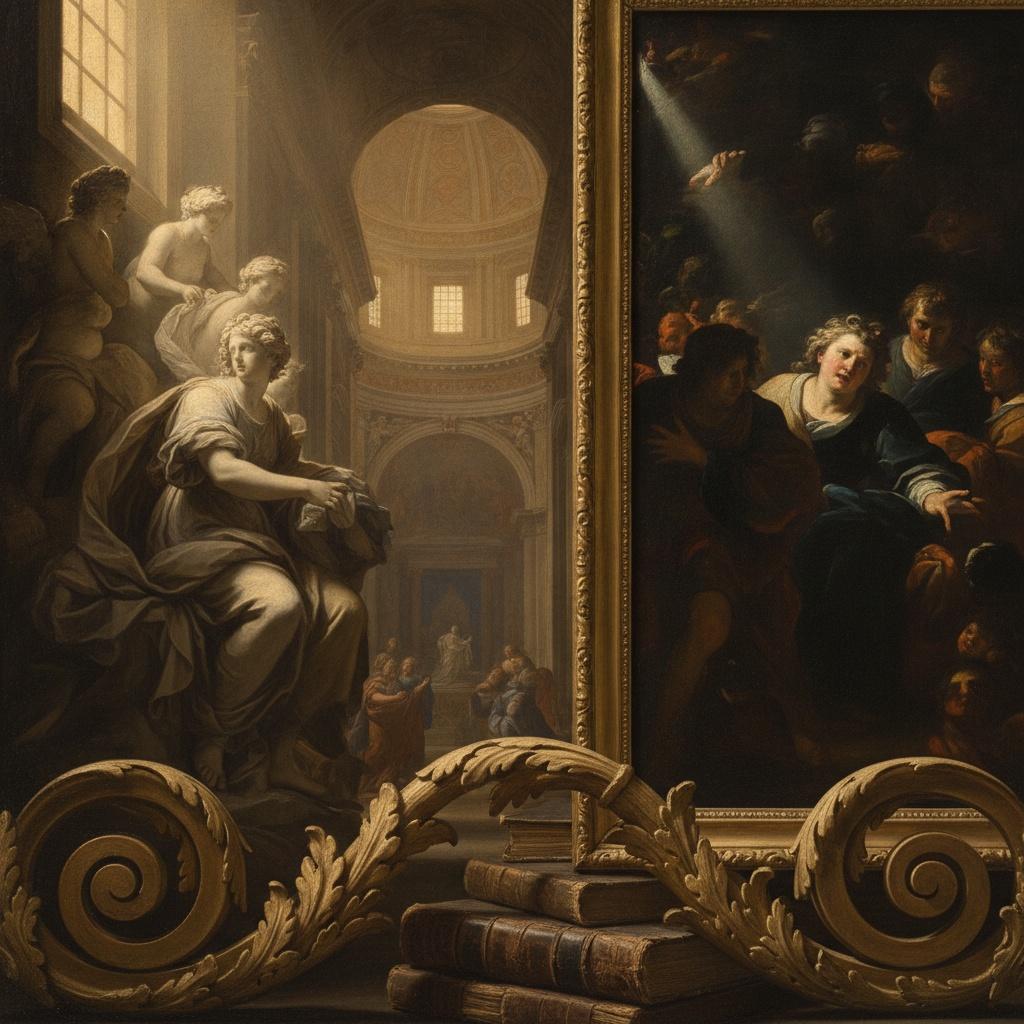
To understand the Baroque era, one must look beyond the canvas and into the turbulent soul of seventeenth-century Europe. This was not merely a period of stylistic evolution but an artistic earthquake born from profound religious and political upheaval. As the Protestant Reformation challenged the long-standing authority of the Catholic Church, a powerful response emerged known as the Counter-Reformation. This movement, or Catholic Revival, sought to reclaim the hearts and minds of the faithful through a visual language that was not merely decorative, but deeply persuasive.
The Council of Trent played a pivotal role in this transformation, decreeing that art should serve as a tool for spiritual instruction and emotional engagement. Moving away from the intellectualized, often detached complexities of Mannerism, the Church demanded clarity, decorum, and—most importantly—a visceral connection to the divine. This era saw the rise of absolute monarchies, where leaders like Louis XIV utilized the same grand aesthetic to project unyielding authority. Consequently, the Baroque became a dual-purpose instrument: a vehicle for religious ecstasy and a monument to royal power, creating a fertile ground for artists who dared to embrace unprecedented scale and intensity.
Chiaroscuro and Tenebrism: The Mastery of Light and Shadow
 Chiaroscuro
In art, chiaroscuro (English: kee-AR-ə-SKOOR-oh, -SKURE-, Italian: [ˌkjaroˈskuːro]; lit. 'light-dark') is the use of strong contrasts between light and dark, usually bold contrasts affecting a whole composition. It is also a technical term used by a...
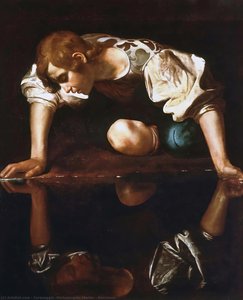
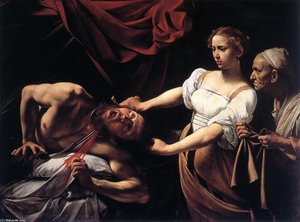
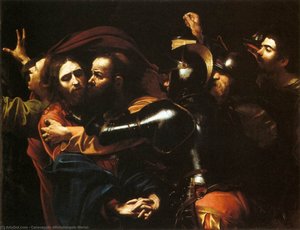
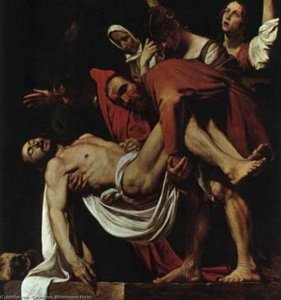
At the very heart of the Baroque aesthetic lies the manipulation of light, a technique that transformed flat surfaces into breathing, three-dimensional stages. The most profound manifestation of this is chiaroscuro—the use of strong contrasts between light and dark to achieve a sense of volume and weight. When pushed to its dramatic extreme, this becomes tenebrism, where darkness dominates the composition, pierced only by sudden, violent shafts of illumination that focus the viewer's gaze with surgical precision.
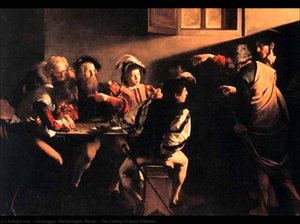
No artist embodied this revolutionary approach more than Michelangelo Merisi da Caravaggio. By painting directly from life and including the gritty, unidealized details of everyday existence—even the dirt beneath a saint's fingernails—Caravaggio shocked his contemporaries. His use of light did not merely illuminate; it dramatized. In works such as The Calling of Saint Matthew, the light acts as a divine protagonist, guiding the eye through the gloom to the moment of spiritual awakening. This interplay of shadow and brilliance creates a psychological depth that invites the viewer to participate in the scene, making the sacred feel startlingly immediate and human.
Theatricality in Motion: Dynamic Composition and Emotional Depth
 václav vavřinec reiner
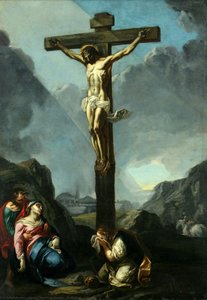
Václav Vavřinec Reiner: A Baroque Visionary Václav Vavřinec Reiner (Wenzel Lorenz Reiner), born Prague, Czech Republic around 1686 or 1689 and died Prague in 1743, stands as a pivotal figure within the baroque painting movement—a period characterized...
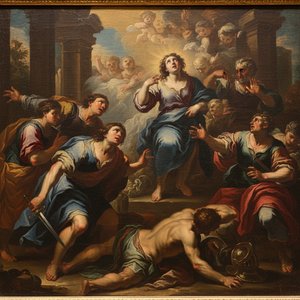
While the Renaissance prized balance, symmetry, and the calm rationality of a moment captured before an event, the Baroque artist preferred the climax. The movement is defined by its preference for the "decisive moment"—the split second where action is at its most intense. This shift in perspective replaced the static stability of the past with a sense of perpetual motion and swirling energy.
Consider the sculptural evolution from Michelangelo’s David, poised in quiet contemplation, to Bernini’s Baroque David, caught in the physical strain of hurling the stone. This dynamism is mirrored in painting through diagonal compositions that break the boundaries of the frame and pull the viewer into the narrative. Artists like the Flemish master Gaspar de Crayer or the visionary Václav Vavřinec Reiner utilized rich, deep color palettes and muscular figure articulation to convey profound spiritual fervor. The goal was no longer to achieve a perfect, frozen harmony, but to evoke passion, tension, and an overwhelming sense of movement that resonates within the viewer's own emotions.
Architectural Splendor: The Baroque Intersection of Space and Faith
 Il Gesù
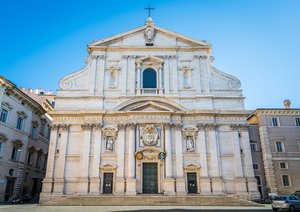
A Baroque Masterpiece of Faith and Light In the heart of Rome, where the echoes of the Counter-Reformation still resonate through ancient cobblestones, stands Il Gesù—a sanctuary that serves as a profound testament to the power of visual persuasion. ...
The Baroque spirit was never confined to the frame; it spilled over into the very architecture that housed it. In the heart of Rome, churches like Il Gesù were designed as bold architectural declarations of triumph. Moving away from the centralized, balanced plans of the High Renaissance, architects embraced the longitudinal basilica form, creating sweeping naves that drew the eye and soul toward the high altar. This structural innovation maximized space for communal devotion, turning the church interior into a living stage.
The mastery of illusion, or trompe-l'œil, reached its zenith in these sacred spaces. In the ceiling of Il Gesù, Giovanni Battista Gaulli achieved a dizzying spectacle where the architecture appears to dissolve entirely. Through masterful fresco work, clouds and divine figures seem to spill over the edges of the ceiling and into the physical space of the worshiper. This blurring of the boundaries between the earthly and the celestial is the ultimate achievement of Baroque architecture—a sensory experience designed to overwhelm the senses and inspire a state of spiritual ecstasy through sheer, unadulterated grandeur.
The Enduring Legacy: From 17th-Century Masters to Modern Aesthetics
 Baroque painting
Baroque painting is the painting associated with the Baroque cultural movement. The movement is often identified with Absolutism, the Counter Reformation and Catholic Revival, but the existence of important Baroque art and architecture in non-absolut...
Though the era eventually gave way to the lighter, more decorative Rococo and the disciplined Neoclassicism, the legacy of the Baroque remains an indelible part of our visual DNA. Its influence can be traced through the dramatic lighting of modern cinematography, the emotional intensity of Romanticism, and even the bold textures found in contemporary expressionism. The movement taught us that art could be a visceral experience—a way to touch the profound through the medium of the spectacular.
For the modern collector and enthusiast, the Baroque offers a timeless connection to the heights of human creativity. At ArtsDot.com, we honor this legacy by providing museum-quality reproductions that capture the true essence of these masterpieces. Whether it is the tactile depth of an oil painting on cotton canvas or a meticulously crafted print, our mission is to bring the drama, light, and soul of the Old Masters into your personal space. From the heavy impasto of a Caravaggio-inspired work to custom commissions that reimagine history, we ensure that the power of the Baroque continues to inspire generations to come.