The Foundations of Excellence: Defining the Academic Tradition
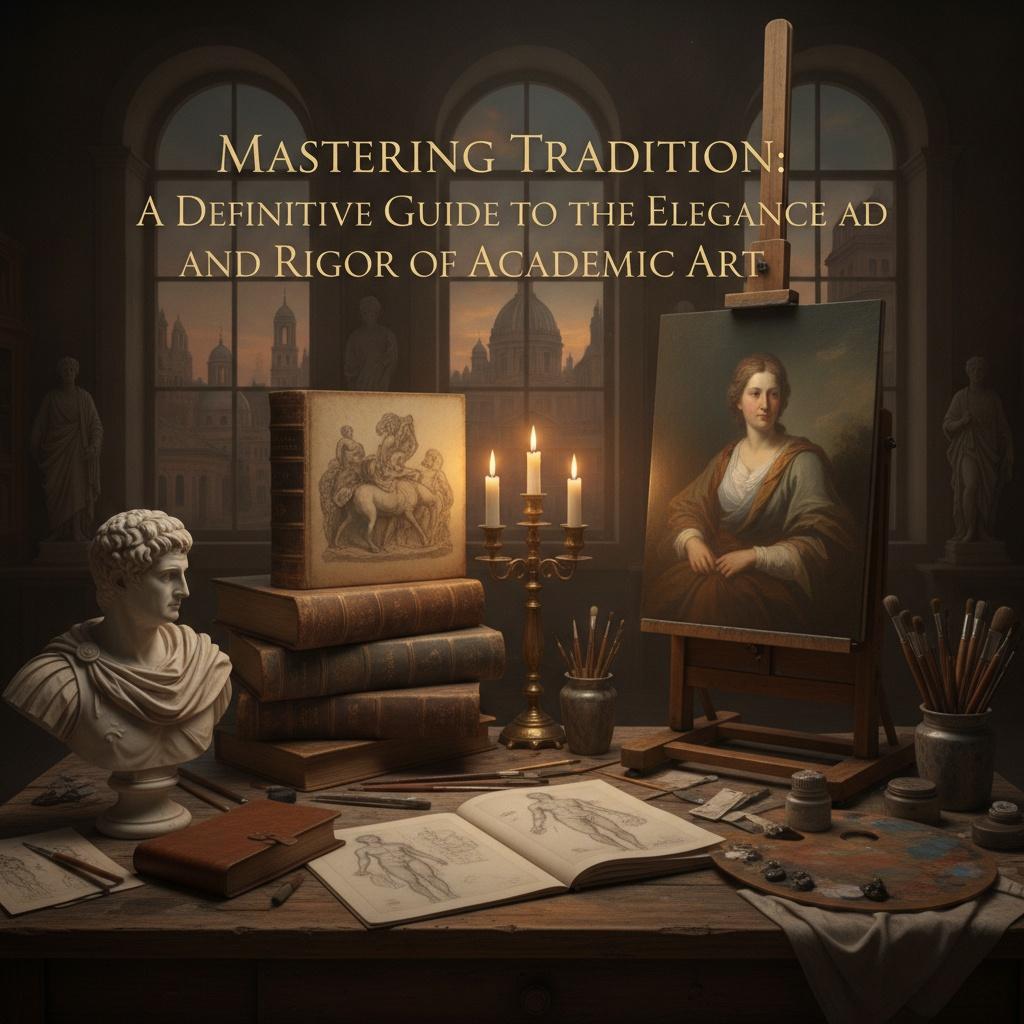
To understand the profound impact of Academic Art, one must first look beyond the mere surface of paint and canvas to the very concept of institutionalized excellence. This was not simply a style, but a rigorous standard of beauty and truth established by the great European academies, most notably in France. At its heart, the Academic tradition sought to elevate art from mere craft to a high intellectual pursuit, governed by strict rules of proportion, hierarchy, and historical significance. It was an era where the artist was not merely a creator of images, but a scholar of human form and classical lore.
The essence of this movement lay in its commitment to idealism. Unlike the raw, unfiltered reality captured by later movements, Academic painters sought to refine nature, stripping away the accidental or the grotesque to reveal the eternal. This pursuit of perfection required an immense discipline, a devotion to studying the masters of the Renaissance and Antiquity to understand how light, shadow, and form could be orchestrated to evoke awe. When we gaze upon these works today, we are not just seeing a depiction of a subject; we are witnessing a carefully constructed vision of perfection that has stood the test of centuries.
The Rigor of the Academy: Technique, Anatomy, and Compositional Order
The true soul of Academic Art resides in the invisible labor of its technique. For an artist trained within the academy, the mastery of disegno—the art of drawing and design—was the indispensable foundation upon which all else was built. This process began with the study of anatomy, often through the painstaking observation of skeletal structures and musculature, ensuring that every limb and torso possessed a structural integrity that felt both lifable and divine. There was no room for anatomical error; the artist’s hand had to be as precise as a surgeon's, yet as fluid as a poet's.
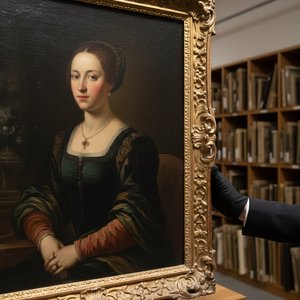
Beyond the individual figure, the Academic tradition demanded a sophisticated command of composition. The arrangement of elements within a frame followed a deliberate logic, often utilizing pyramidal structures or balanced diagonals to guide the viewer's eye through a narrative journey. This was complemented by the mastery of sfumato and chiaroscuro, techniques used to create depth and volume through the subtle gradation of light and dark. The result was a sense of atmospheric presence that made the painted world feel tangibly real, yet elevated. For those seeking to bring this level of technical sophistication into their own environments, a hand-painted oil reproduction offers more than just a visual; it provides the tactile depth of visible brushstrokes and the rich tonal range that only authentic oil on canvas can achieve.
From Myth to Majesty: The Narrative Power of Classical Subject Matter
The subject matter of Academic Art served as a bridge between the human experience and the divine. The hierarchy of genres placed History Painting at the pinnacle, followed by portraiture, landscape, and still life. History painting was considered the highest calling because it required the artist to engage with the grand narratives of humanity—mythology, biblical epolls, and significant historical events. These works were designed to be didactic, teaching moral lessons and celebrating the virtues of heroism, sacrifice, and wisdom.
Consider the dramatic intensity found in works like Pietro Testa’s Venus and Adonis. Here, the interplay of love and mortality is rendered through a lens of classical allegory, where every serpent and cherub carries a weight of symbolic meaning. This narrative depth transformed the canvas into a stage for the eternal struggles of the human condition. Even in more intimate settings, such as the elegant 19th-century scenes seen in Benoît-Hermogaste Molin’s Académie féminine, the influence of classical order remains present, lending a sense of dignity and grace to even the most contemporary subjects. This tradition of storytelling ensures that every masterpiece is an invitation to contemplate the deeper truths of our existence.
The Legacy of the École des Beaux-Arts: Shaping Modern Art History
While the rise of modernism eventually challenged the dominance of the Academy, it is impossible to discuss the trajectory of art history without acknowledging the profound legacy of the École des Beaux-Arts. This institution was the crucible in which generations of masters were forged. It provided the rigorous training that allowed artists to move from the structured world of Academic realism into the more expressive realms of Impressionism and Fauvism. Even as artists like Albert Marquet began to explore the vibrant, looser brushwork seen in Life Class at the École des Beaux-Arts, the fundamental understanding of light and form inherited from the Academy remained a vital part of their artistic vocabulary.
The tension between the established Academy and the burgeoning avant-garde is what ultimately gave birth to the richness of modern art. The Academy provided the grammar, while the modernists provided the new languages. Without the foundational discipline of the classical tradition, the revolutionary breaks of the 20th century would have lacked their profound impact. Today, we see this legacy preserved in the continued appreciation for works that honor these historical roots, allowing collectors to bridge the gap between the structured elegance of the past and the dynamic energy of the present.
Preserving the Grandeur: Bringing Academic Masterpieces into the Modern Home
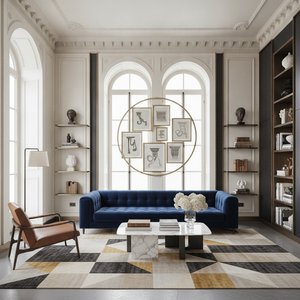
In an age characterized by rapid change and digital ephemeralness, there is a growing desire to anchor our living spaces with the permanence and dignity of classical art. Integrating an Academic masterpiece into a modern interior is not merely a decorative choice; it is an act of cultural preservation. These works possess a unique ability to provide a sense of continuity and intellectual depth to a home, turning a room into a curated gallery of human achievement.
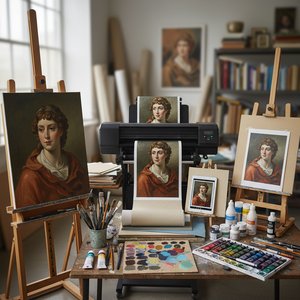
Whether through a large-scale multi-panel set that commands a grand staircase or a single, focused portrait that serves as a centerpiece for a study, the presence of classical art elevates the atmosphere of any space. For the discerning enthusiast, the opportunity to own such beauty lies in high-quality reproductions that respect the original's integrity. At ArtsDot.com, we specialize in bringing these canonical works to life through meticulous hand-painted oil reproductions. Each piece is a labor of passion, created by artists trained in the very academic traditions discussed here, ensuring that the texture, light, and soul of the original masters are captured on 100% cotton canvas for generations to come.