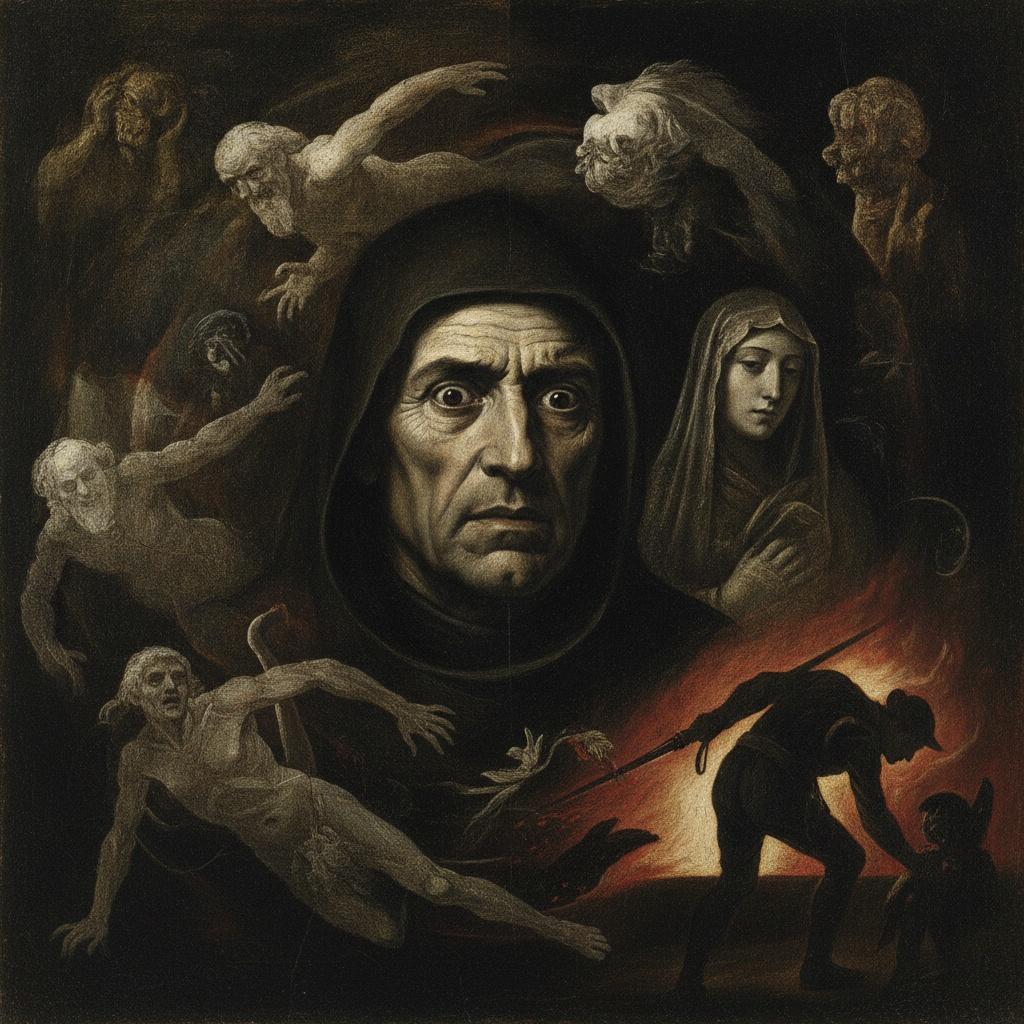
The Courtly Visionary: Goya’s Early Mastery and the Rococo Tradition
 Francisco Goya: Darkness & Enlightenment – A Comprehensive Exploration of the Artist's Life, Works, and Enduring Legacy
Early Life & Artistic Formation: Goya's Apprenticeship and Rise at the Spanish Court Francisco José de Goya y Lucientes Francisco Goya (1746-1828): Explore the life & work of Spain's Romantic master. Known for portraits, dark satire & 'Disasters of W...
To understand the profound darkness that would later define Francisco José de Goya y Lucientes, one must first encounter the luminous grace of his youth. Born in 1746 in the humble village of Fuendetodos, Spain, Goya’s early trajectory was far removed from the haunting shadows of his later years. His formative training under masters like José Luzán and the influential Anton Raphael Mengs instilled in him a command of classical composition and the elegant, light-filled aesthetics of the Rococo period. During this era, Goya rose to prominence as a painter for the Spanish Royal Chamber, securing prestigious commissions that celebrated the opulence of the aristocracy.
Goya’s early works, particularly his exquisite tapestry cartoons, captured the vibrant, everyday rhythms of Spanish life with a charming, idealized realism. These pieces were characterized by soft palettes and a sense of pastoral tranquility, reflecting the Enlightenment's fascination with order and beauty. For those who find themselves drawn to this era of courtly elegance, our collection at ArtsDot.com offers meticulously hand-painted oil reproductions that capture the very essence of this Rococo splendor. Each stroke on our 100% cotton canvas is designed to evoke the delicate textures and luminous light that Goya mastered long before his world turned to shadow.
A Turning Point in Darkness: The Impact of Illness on Artistic Perspective
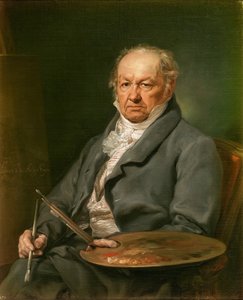 Francisco José de Goya y Lucientes
The Spanish Soul: A Life Forged in Shadow and Light Francisco José de Goya y Lucientes, a name that resonates through the halls of art history, embodies a fascinating paradox. He was both a product of his time – steeped in the traditions of Old Maste...
The trajectory of art history was irrevocably altered by a devastating biological event in 1793. A severe, unnamed illness left Goya profoundly deaf, an affliction that effectively severed his connection to the auditory world and forced him into an intense, inward-looking psychological landscape. This period of isolation acted as a crucible, transforming him from a courtly decorator into a visceral chronicler of the human condition. The silence of his world was filled by an increasingly turbulent internal vision, where the boundaries between reality and nightmare began to blur.
The shift in his technique is nothing short of revolutionary. As he retreated from the social noise of the Madrid court, his brushwork became more expressive, and his subject matter grew increasingly complex. He moved away from the idealized figures of his youth toward a style that embraced psychological depth and raw emotion. This transition marks the moment Goya ceased to be merely an observer of society and became its most profound critic. For collectors seeking to capture this pivotal tension between light and shadow, our artists specialize in recreating these nuanced tonal gradations, ensuring that the emotional weight of Goya’s transformation is palpable in every reproduction.
Witness to Tragedy: The Raw Humanity of the War Series
 Goya's Masterpieces: Explore 25 Iconic Paintings & Art Prints | ArtsDot
Introduction To embark on a journey through the top 25 artworks of Francisco José de Goya y Lucientes is to enter a world where beauty and brutality, light and shadow, hope and despair coexist with startling immediacy. It’s an encounter with the soul...
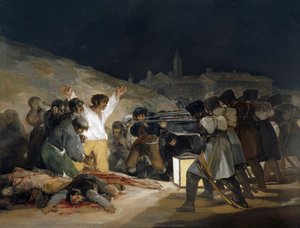
As Napoleon’s forces invaded Spain, Goya found himself at the epicenter of a nation torn apart by conquest and resistance. He did not merely document the Napoleonic Wars; he experienced their brutality firsthand. This era gave rise to some of his most harrowing achievements, most notably the series known as The Disasters of War. In these works, Goya rejected the heroic, sanitized depictions of battle common in traditional history painting. Instead, he presented a stark, unflinching look at the atrocities, the hunger, and the senselessness of violence.
His approach was characterized by a brutal honesty that shocked his contemporaries. He captured the terror in the eyes of the victims and the dehumanization of the aggressors with equal intensity. This commitment to truth laid the groundwork for modern realism. At ArtsDot.com, we believe such powerful history deserves to be preserved with integrity. Our professional artists use traditional oil painting techniques—layering pigments to achieve a depth of color that digital prints simply cannot replicate—to ensure that the visceral impact of Goya’s wartime chronicles remains as striking on your wall as it was in the nineteenth century.
The Black Paintings: Confronting the Shadows of the Human Soul
 Black Paintings
The Black Paintings (Spanish: Pinturas negras) is the name given to a group of 14 paintings by Francisco Goya from the later years of his life, probably between 1820 and 1823. They portray intense, haunting themes, reflective of both his fear of insa...
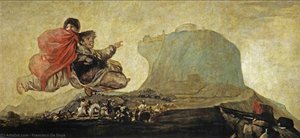
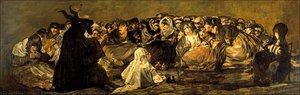
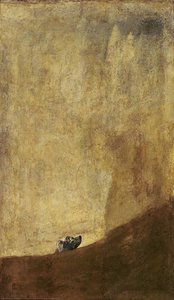
Perhaps the most enigmatic and haunting chapter of Goya's life occurred between 1820 and 1823, during his residence at the Quinta del Sordo, or the "Deaf Man's Villa." Here, Goya produced a group of fourteen works known as the Black Paintings. These were not intended for public consumption; they were private, mural-like explorations of his most profound fears and his increasingly bleak outlook on humanity. Works such as La Cometa (The Kite) showcase this dark mastery, where figures struggle amidst chaotic, murky landscapes, reflecting a sense of existential dread.
The aesthetic of the Black Paintings is defined by a somber palette and an almost terrifyingly expressive use of texture. The themes of madness, superstition, and decay are rendered with a heavy, impasto-like intensity. To recreate such profound darkness, our studio employs specialized techniques to mimic Goya's original textures. We offer an optional "Aged & Cracked" (craquelure) finish on many of our reproductions, allowing the artwork to possess the venerable, weathered character of a true historical artifact. It is an invitation to bring the most intimate and powerful moments of Goya’s private psyche into your own space.
The Bridge to Modernity: Goya’s Lasting Legacy in Art History
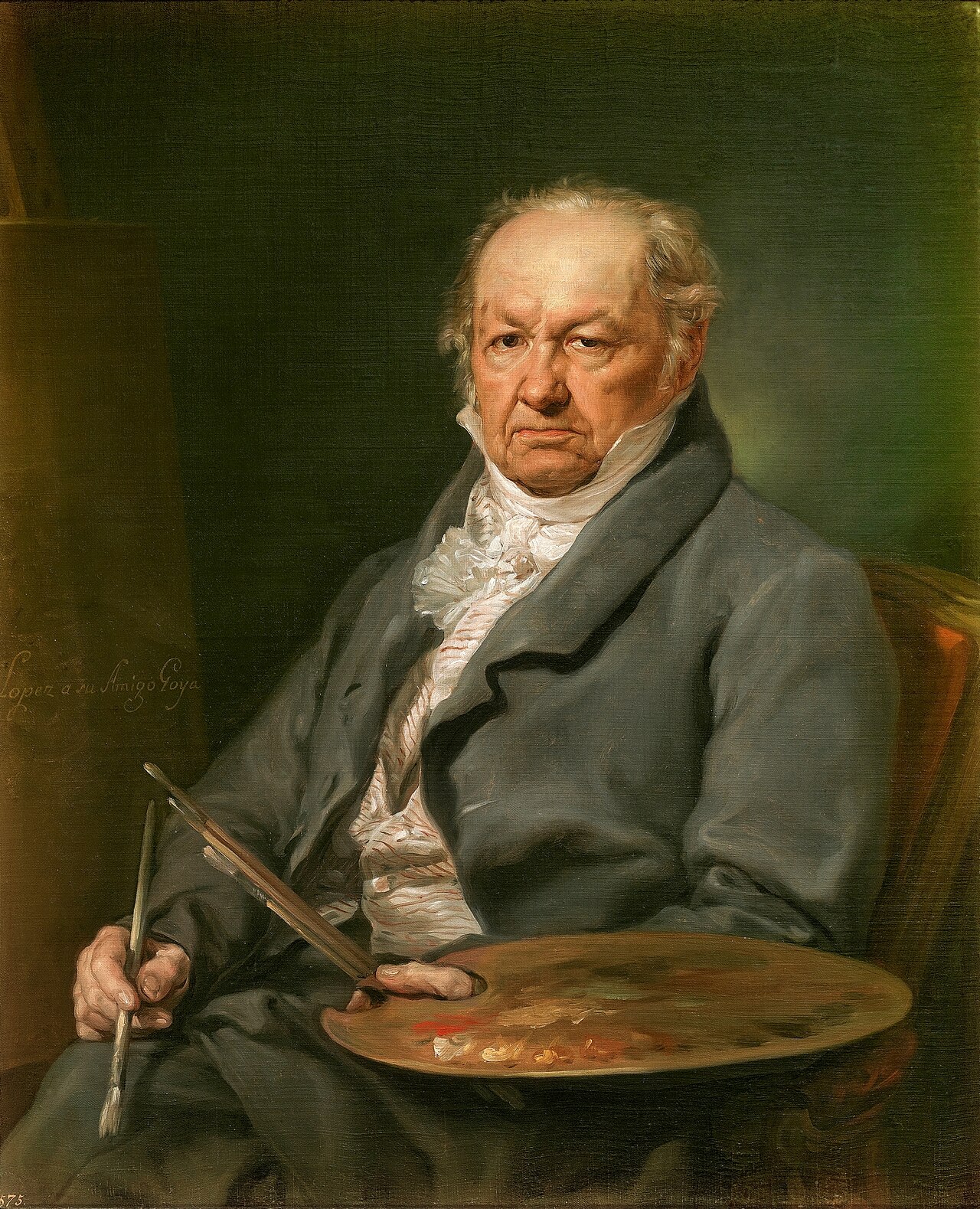 List of works by Francisco Goya
Francisco José de Goya y Lucientes (1746–1828) was a Spanish artist, now viewed as one of the leaders of the artistic movement Romanticism. He produced around 700 paintings, 280 prints, and several thousand drawings. Goya's early career as a painter ...
Francisco Goya stands as a monumental figure at the crossroads of art history—often hailed as both the last of the Old Masters and the first of the moderns. He bridged the gap between the structured traditions of the past and the expressive, subjective freedom of the future. His ability to navigate from the Rococo grace of his early tapestries to the existential terror of his final years provided a blueprint for the Romantic movement and beyond, influencing everyone from Manet to Picasso.
His legacy is a testament to the power of art to confront uncomfortable truths. Whether through a royal portrait or a haunting mural, Goya’s work remains an essential reference for anyone seeking to understand the complexities of human existence. At ArtsDot.com, we are dedicated to preserving this heritage. Beyond our museum-grade reproductions, we offer unique services such as "Period Shifts," where we can reimagine modern imagery through a Goya-esque lens. We invite you to explore our curated selection of the world's most canonical masterpieces and find a piece of history that speaks to your own soul.