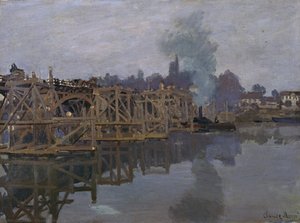
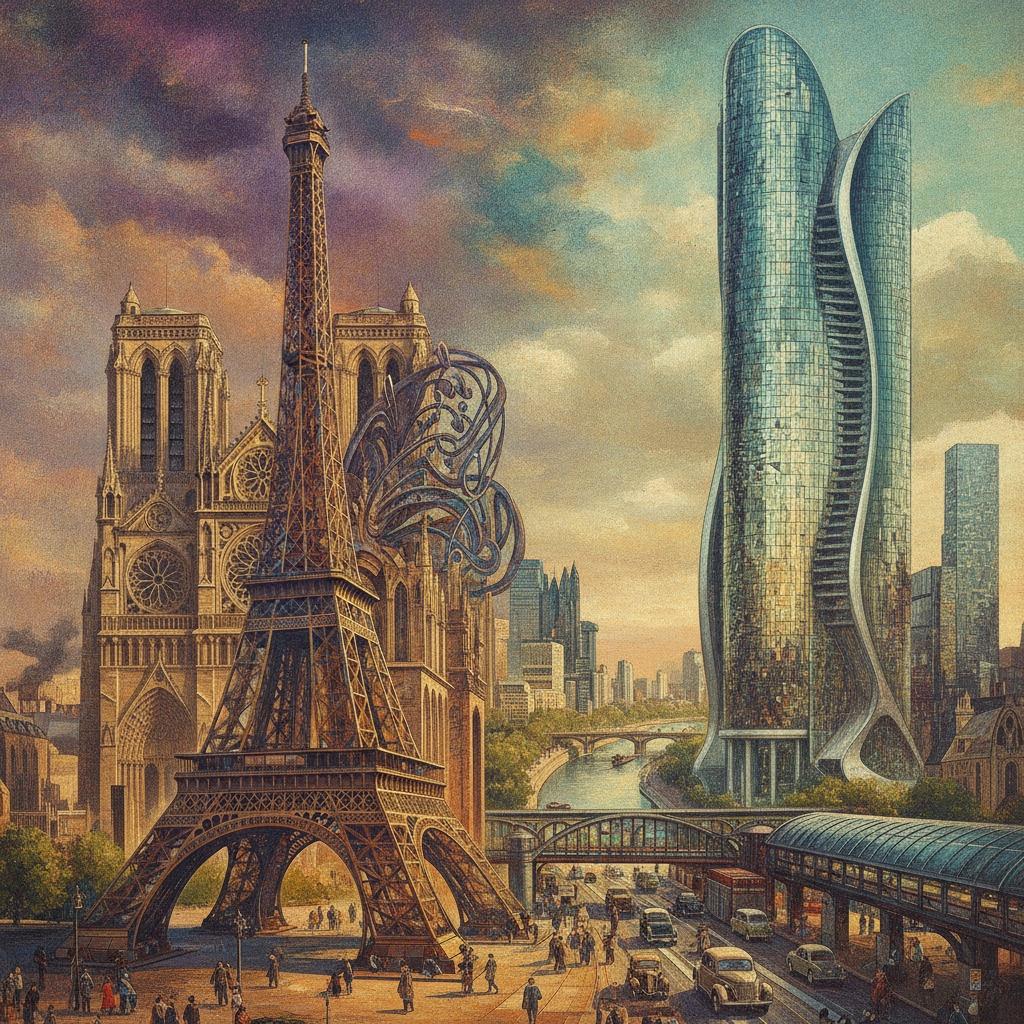
From Background to Protagonist: The Historical Evolution of the Cityscape Genre
 Urban Visions: A Historical & Artistic Exploration of the Cityscape in Painting
From Maps to Masterpieces: The Early Depiction of Cities in Art Wikipedia: Cityscape In the visual arts, a cityscape (urban landscape) is an artistic representation, such as a painting, drawing, print or photograph, of the physical aspects of a city ...
The true revolution occurred in the mid-17th century within the Netherlands, where the cityscape emerged as a prestigious, independent genre. Masters like Jan Vermeer, in his hauntingly accurate View of Delft, demonstrated that the architecture and atmosphere of a city could possess a profound, quiet dignity. This era transformed the urban landscape from a mere setting into a protagonist, capable of conveying national pride, economic vitality, and architectural grandeur. As this tradition spread to Venice through the works of Canaletto and Guardi, the genre evolved to capture the unique light and maritime pulse of the Mediterranean, setting the stage for the more radical interpretations that would follow in the modern era.
A Symphony of Light and Motion: Impressionism’s Encounter with the Modern Metropolis
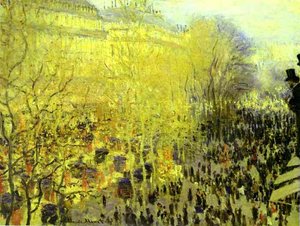
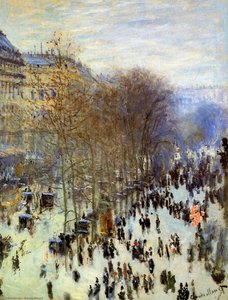
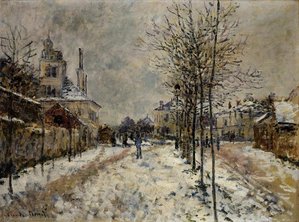 The Boulevard des Capuchine (aka Boulevard des Capucines)
A Symphony of Urban Motion In the heart of late nineteenth-century Paris, amidst the rapid transformations of Haussmann’s grand reconstruction, Claude Monet captured something far more elusive than mere architecture. His masterpiece, The Boulevard de...
This fascination with the transient nature of urban life found another legendary voice in Édouard Cortès, often called the "poet of painting." In works such as Rue Royale Madeleine, Cortès invites us into a rain-swept metropolis where the pavement becomes a shimmering mirror. His mastery lies in the ability to capture the romantic melancholy of a sudden downpour, reflecting the vibrant energy of passing buses and motorcycles through a luminous, rain-slicked glow. Through these Impressionist eyes, the city is no longer a static collection of buildings; it is a sensory immersion, a choreographed dance of light, shadow, and kinetic energy that celebrates the beautiful momentum of modern existence.
Urban Echoes and Intimate Narratives: Post-Impressionist Perspectives on Street Life
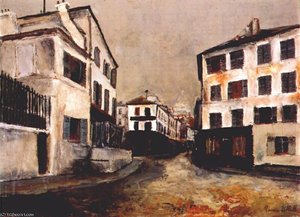 rue norvins
Maurice Utrillo’s "Rue Norvins" captures a bustling Montmartre street scene in 1912. Experience the artist's evocative post-impressionist style – a Parisian treasure.
This era explored the psychological dimensions of the urban landscape, finding beauty in the weathered walls and the solitary moments of street life. The technique became more about the emotional texture of the city—the way light hits a crumbling brick or how a shadow stretches across a cobblestone alley. These works remind us that the heart of a city is found not just in its grand monuments, but in the small, often overlooked intersections where human stories intersect with the permanence of the built environment.
The Living Canvas: The Rise of Street Art as a Contemporary Urban Force
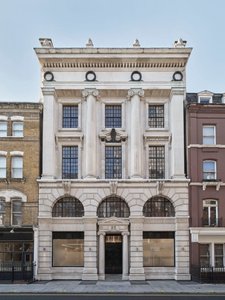 Global Street Art Foundation
A City Unveiled: Exploring the Global Street Art Foundation London pulses with a restless energy, an urban heartbeat that finds its most immediate expression not within hallowed halls, but splashed across the city’s very surfaces. The Global Street A...
This modern evolution is characterized by a raw, unfiltered energy that bridges the chasm between high art and public expression. Institutions like the Global Street Art Foundation in London recognize that these murals are not mere decorations but vital forms of social commentary and aesthetic statement. Whether it is the intricate, origami-inspired textures of Airborne Mark or the provocative stencil revolutions of Milan’s Orticanoodles, contemporary urban art continues to push the boundaries of what a cityscape can be. It is an art form that is inherently democratic, accessible, and perpetually in flux, mirroring the restless heartbeat of the modern world.
Timeless Urbanity: Bringing Iconic Cityscapes into the Modern Home
The allure of the cityscape lies in its ability to capture a moment of time and freeze it forever, allowing us to bring the energy of the world's greatest streets into our own private sanctuaries. At ArtsDot.com, we believe that these historical moments deserve to be preserved with the utmost reverence. We specialize in creating museum-quality, hand-painted oil reproductions that honor the original masters. Unlike mass-produced prints, our works are 100% hand-painted on fine cotton canvas by artists holding degrees from prestigious academies.Our process is designed to ensure that every brushstroke reflects the soul of the original masterpiece:
- Authentic Texture: Our artists utilize heavy impasto and visible brushwork to recreate the tactile depth found in Monet or Cortès, offering a much richer tonal range than any digital print.
- Bespoke Customization: We offer the unique ability to "remix" history. You may request a "Period Shift," such as having a modern photograph transformed into a 17th-century masterpiece in the style of Rembrandt, or use our AI tools to reimagine your memories through a Cubist lens.
- Professional Precision: To ensure complete satisfaction, we provide a Professional Digital Mockup Service for complex commissions and allow you to approve a pre-ship photo of your painting before it is framed and dispatched via DHL or FedEx.
This article was featured on ArtsDot.com.