
Introduction
To step into a gallery dedicated to the floral motif is to enter a sanctuary of ephemeral beauty. Throughout the centuries, flowers have served as more than mere decoration; they are a silent, universal language capable of articulating the most profound human emotions—from the tenderest whispers of new love to the somber reflections on mortality. When we gaze upon a petal or a stem captured in oil, we are witnessing an artist's attempt to freeze time, capturing a fleeting moment of perfection before it inevitably withers.
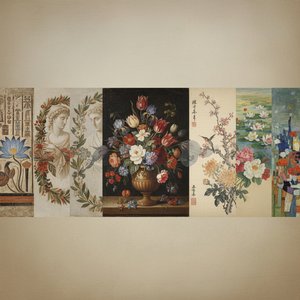
Historically, the study of flowers has mirrored the evolution of human thought itself. In the 17th-century Dutch Golden Age, botanical paintings were meticulously detailed scientific records and symbols of immense wealth and prestige. During the Impressionist era, the focus shifted from botanical accuracy to the sensory experience of light and atmosphere, as masters sought to capture the way a sun-drenched peony vibrates with color. From the symbolic vanitas still lifes that reminded viewers of life's transience to the lush, expressive landscapes of the modern era, floral art has always been deeply intertwined with our cultural understanding of nature and existence.
These works remain profoundly meaningful today because they touch upon a shared biological and emotional truth. In an increasingly digital and fast-paced world, the tactile richness of a hand-painted bloom—with its visible brushstrokes and deep, luminous tones—offers a much-needed connection to the organic rhythms of the earth. They remind us to find stillness in the present moment.
In the following curation, we invite you to walk alongside us through a selection of the world's most iconic floral masterpieces. We will explore ten definitive works that do not merely depict plants, but rather breathe life into the canvas, each offering a unique perspective on the delicate, enduring power of the botanical world.
A boy with pipe - Pablo Picasso
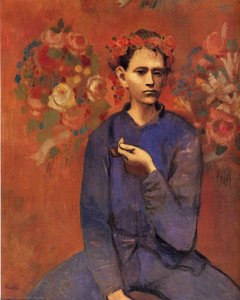 A boy with pipe - Pablo Picasso
Before he revolutionized the world with Cubism, Pablo Picasso lived through a period of profound emotional transition, moving away from the somber, monochromatic shadows of his Blue Period into the warmth of the Rose Period . In 1905, as he navigated the vibrant, bohemian streets of Montmartre, he captured a moment of quiet, floral-crowned introspection in "A Boy with Pipe."
This masterpiece stands out among the top 10 artworks exploring the theme of flowers because it uses flora not merely as decoration, but as a symbolic crown of fleeting youth. The subject, adorned with a garland of orange blossoms, sits against an energetic, impasto background of fiery reds and ochres. Picasso’s technical genius lies in his ability to balance the heavy, tactile texture of the paint with a delicate, melancholic facial expression. The way the organic shapes of the flowers frame the boy's contemplative gaze creates a dreamlike, Post-Impressionist atmosphere that feels both theatrical and deeply personal.
Bringing such a profound sense of focus and historical depth into your private study can transform a workspace into a sanctuary of thought. Much like Picasso’s disciplined evolution, hanging a high-quality oil reproduction of this piece invites a sophisticated, creative energy into your modern home office.
Irises - vincent willem van gogh
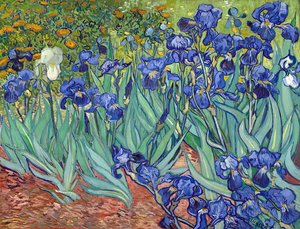 Irises - vincent willem van gogh
To encounter Irises by Vincent van Gogh is to witness a profound dialogue between nature and the human soul. Painted in 1889 during his transformative stay at the Saint-Paul-de-Mausole asylum, this masterpiece stands as a pinnacle of Post-Impressionist innovation, earning its place among the world's most significant floral studies. Van Gogh transcends mere botanical observation through his legendary impasto technique ; the thick, rhythmic strokes of cobalt, indigo, and cerulean create a tactile landscape where the flowers seem to pulse with life.
The composition offers a breathtaking symphony of color, where vibrant greens and a single, poignant white iris emerge from a dense, organic cluster. For the discerning collector, this work represents more than just a beautiful subject; it is an emblem of resilience and emotional depth. Its rich textures and deep tonal range bring a sense of quiet prestige and historical gravity to any refined interior, serving as a timeless anchor of beauty that continues to inspire modern aesthetics and sophisticated design.
Flowering Garden - vincent willem van gogh
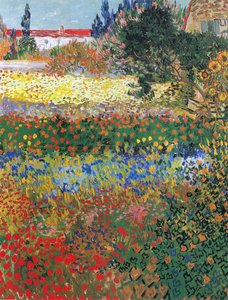 Flowering Garden - vincent willem van gogh
In Flowering Garden (1888), Vincent van Gogh does not merely depict a landscape; he composes a visual sonata of light and vitality. Painted during his prolific Arles period, this masterpiece transcends simple botanical study to become a profound language of emotion. The artist did not just paint the sun hitting the petals—he invented the light itself, using thick, rhythmic impasto brushstrokes that make the vibrant reds, yellows, and blues pulse with a life of their own.
As you stand before this work, you feel the energetic movement of the wildflowers dancing under a warm, diffused glow. The texture of the oil paint creates a three-dimensional experience, where every stroke symbolizes growth and the fleeting beauty of nature. It is this sensory depth that secures its place among the greatest floral artworks in history. For those looking to transform their space, our hand-painted oil reproductions capture this exact tactile intensity, allowing Van Gogh’s luminous garden to spill into your home and turn your walls into portals of inspiration.
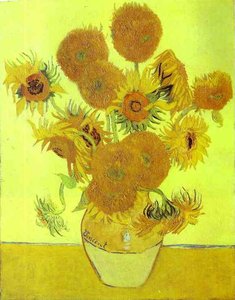
Still Life: Vase with Fourteen Sunflowers - vincent willem van gogh
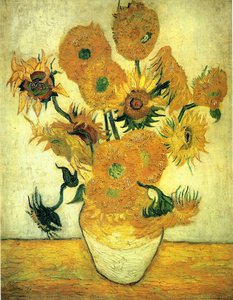 Still Life: Vase with Fourteen Sunflowers - vincent willem van gogh
In the pantheon of floral masterpieces, few works radiate with the raw, pulsating vitality found in Vincent van Gogh’s Still Life: Vase with Fourteen Sunflowers (1889) . Created during his transformative period in Arles, this painting transcends mere botanical study to become a profound exploration of light and emotion. Van Gogh utilizes a masterful impasto technique, where thick, sculptural layers of yellow and ochre pigments create a tactile landscape of petals that seem to vibrate against the muted background.
The sunflowers serve as more than subjects; they are symbols of adoration, warmth, and the relentless cycle of life. As you observe the swirling, expressive brushstrokes, you feel the artist's psychological depth—a sense of exuberant joy intertwined with a heavy, textured reality. To possess a reproduction of this work is to invite this solar energy into your own sanctuary. Whether through a hand-painted oil masterpiece that captures every visible stroke or a high-quality Giclée print, bringing this Post-Impressionist icon into your home transforms a simple wall into a gallery of the soul .
Light of Iris - Georgia O'Keeffe
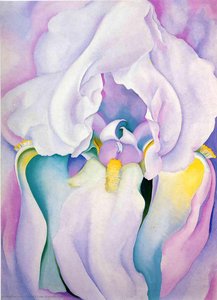 Light of Iris - Georgia O'Keeffe
In Light of Iris (1924), Georgia O'Keeffe invites us into a meditative realm where the boundaries between botanical observation and pure abstraction dissolve. As one of the most profound entries in our exploration of the top 10 artworks that explore the theme of flowers , this watercolor transcends mere illustration to become a study of organic rhythm. Through her signature Precisionist lens, O'Keeffe magnifies the iris, transforming delicate petals into sweeping, architectural forms of lavender, pale blue, and soft pink.
The painting’s fluid, circular composition evokes a sense of eternal renewal, mirroring modern desires for tranquility and mindfulness in our increasingly frenetic world. The way light diffuses through the translucent watercolor layers creates an ethereal, dreamlike atmosphere that remains a powerful cultural touchstone for contemporary interior aesthetics. To possess a hand-painted oil reproduction of this masterpiece is to bring a piece of American Modernism into your sanctuary, offering a permanent window into the grace and ephemeral beauty of the natural world.
Ophelia 1 - John William Waterhouse
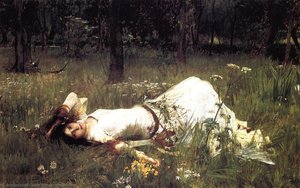 Ophelia 1 - John William Waterhouse
In Ophelia , John William Waterhouse presents a profound meditation on the intersection of botanical beauty and human tragedy. As a cornerstone of our exploration into artworks centered on flowers, this 1889 masterpiece transcends mere floral depiction; it utilizes the lush, organic textures of wildflowers to mirror the internal dissolution of Shakespeare’s tragic heroine. The painting is a triumph of the Pre-Raphaelite spirit, where every petal and leaf serves as a symbolic vessel for themes of mortality and the fleeting nature of innocence.
Waterhouse employs a rich, painterly technique, using visible brushstrokes and an earthy palette to create a sense of immersive, melancholic realism. The way the flora envelops the figure invites us to contemplate our own connection to the natural cycle of life and decay. For the discerning collector, bringing a hand-made oil reproduction of this piece into a modern interior offers more than decor; it introduces a timeless, soulful conversation between historical romanticism and contemporary elegance, turning any space into a sanctuary of quiet reflection.
Bowl with Peonies and Roses - vincent willem van gogh
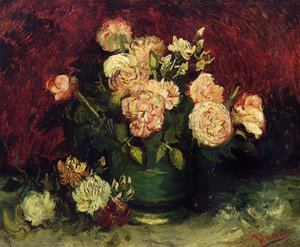 Bowl with Peonies and Roses - vincent willem van gogh
To gaze upon Vincent van Gogh’s Bowl with Peonies and Roses is to witness a moment of vibrant, breathing life captured in oil. Painted during his transformative Parisian period in 1886, this still life transcends mere botanical study; it is an emotional eruption of color. The lush, heavy petals of pink and orange roses spill from their vessel, set against a dramatic, deep burgundy backdrop that lends the composition a theatrical intensity. Van Gogh’s signature impasto technique creates a tactile landscape of thick, expressive brushstrokes, where the light seems to dance across the textured surface of each bloom.
The painting captures the very essence of floral symbolism—the fleeting beauty and passionate vitality of nature. This masterpiece does more than decorate; it anchors a room with warmth and soulful energy. Whether you are seeking to inspire creativity in a studio or bring a sense of quiet, classical elegance to a dining space, a hand-painted reproduction of this Post-Impressionist treasure offers a profound connection to the master’s enduring legacy of light and emotion.
Dancer with a bouquet of flowers (The Star of the ballet) - Edgar Degas
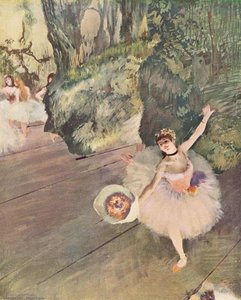 Dancer with a bouquet of flowers (The Star of the ballet) - Edgar Degas
In Edgar Degas' 1878 masterpiece, Dancer with a bouquet of flowers (The Star of the ballet) , we encounter more than just a floral tribute; we witness a breath held between exertion and grace. The painting captures a fleeting moment in the Parisian ballet, where the delicate textures of the bouquet contrast beautifully with the dancer's poised, muscular strength. It earns its place among the top artworks exploring flowers because it uses the botanical element not merely as decoration, but as an extension of the dancer's own ephemeral beauty and vulnerability.
Degas moves beyond simple representation, using loose, expressive brushstrokes and a palette of soft pinks, creams, and earthy greens to evoke the atmosphere of the stage. This sense of movement and light is precisely what we strive to preserve at ArtsDot.com. Our hand-made oil reproductions are meticulously crafted by academic artists to capture every visible brushstroke and tonal depth of Degas' original vision. By choosing a faithful reproduction, you can bring this profound intersection of human grace and floral elegance into your own home, maintaining the soul of the Impressionist era on your walls.
At the Shrine - John William Waterhouse
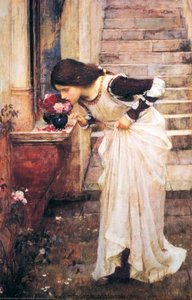 At the Shrine - John William Waterhouse
In At the Shrine , John William Waterhouse achieves a breathtaking structural harmony that anchors its place among the greatest floral-themed masterpieces. The composition is a masterclass in organic geometry; the soft, sweeping curves of the woman’s flowing white gown mirror the delicate, rounded petals of the roses resting on the window ledge. This fluid movement is balanced by the steady, ascending lines of the stone staircase, creating a sense of architectural stability that guides the eye toward her serene, introspective gaze.
The interplay of muted whites, pale pinks, and earthy textures evokes a nostalgic, romantic atmosphere, where the scent of roses seems almost tangible. This internal equilibrium—the marriage of delicate botanical detail with solid structural forms—resonates deeply with modern minimalist design, offering a grounding element for contemporary interiors seeking a touch of classical soul. For those looking to curate a space of quiet reflection, our hand-painted oil reproductions capture every meticulous brushstroke and luminous layer of this Pre-Raphaelite treasure, bringing the timeless elegance of Waterhouse directly into your home.
Portrait of Emilie Sériziat and her Son - Jacques-Louis David
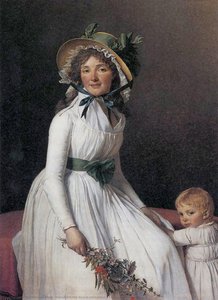 Portrait of Emilie Sériziat and her Son - Jacques-Louis David
In Jacques-Louis David’s 1795 masterpiece, Portrait of Emilie Sériziat and her Son , flowers transcend mere decoration to become the very heartbeat of Neoclassical virtue. While the painting is a profound study of maternal dignity and familial harmony, it is the vibrant vase in the foreground—overflowing with red roses and pink peonies—that anchors the composition’s emotional depth. These blooms act as silent narrators, symbolizing innocence, beauty, and the delicate flourishing of domestic life amidst the shifting political tides of late 18th-century France.
David utilizes his mastery of oil on canvas to render the velvety petals against a somber, dark background, creating a luminous contrast that draws the eye toward this floral centerpiece. The crisp whites of Emilie’s gown and the soft textures of her son's attire find their organic counterpart in the lush, botanical life before them. To possess such a work is to invite this sense of ordered grace into your own environment; it is not merely decoration, but a transformation of your space into a gallery of the soul. For those seeking to capture this exact era of elegance, our museum-quality handmade oil reproductions allow you to surround yourself with the enduring genius of David.
Conclusion
As the light fades on our journey through these botanical wonders, we are reminded that a flower in art is never merely a specimen of nature; it is a vessel for human emotion, a symbol of fleeting beauty, and a silent witness to the passage of time. From the delicate, dew-kissed petals of an Impressionist garden to the bold, structural vitality of a Van Gogh sunflower, these masterpieces transcend their historical eras to remain living presences in our modern world. They do not belong solely to the hushed halls of museums; they possess a profound capacity to breathe life into our personal sanctuaries, shaping the atmosphere of our homes and anchoring our most intimate spaces with grace and color.
At ArtsDot.com , we believe that this connection to the sublime should be tangible. Our mission is to ensure that the soul of these canonical works—the very texture of the brushstroke and the depth of the pigment—can be reborn within your own walls. Each of our hand-painted reproductions is a labor of devotion, meticulously crafted by academic artists who honor the original's historical integrity and emotional resonance. Whether you are seeking to capture the light-drenched serenity of a floral landscape or the dramatic intensity of a classic still life, we invite you to explore our full collection and bring the enduring magic of art history into your daily life.