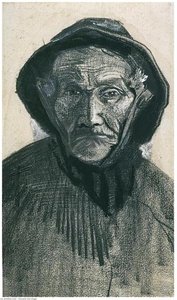

Introduction
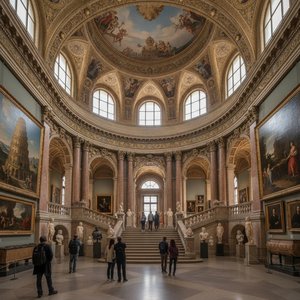
To step into the Detroit Institute of Arts is to enter a sanctuary where the industrial pulse of a great American city meets the eternal whispers of human creativity. Within its soaring Beaux-Arts halls, designed by Paul Philippe Cret, the air seems to hold a different weight—a mixture of reverence for the past and an unyielding resilience that mirrors the very spirit of Detroit itself. This is not merely a museum; it is a grand, marble-clad narrative of how humanity seeks beauty amidst the grit of progress.
The collection serves as a profound cultural anchor, tracing a journey that began in 1883 with a modest collection of European masters and has since blossomed into a global tapestry. As you wander through its light-drenched galleries, you encounter the dramatic chiaroscuro of the Old Masters, the delicate precision of Native American textiles, and the powerful, rhythmic soul of African sculpture. The museum’s evolution—from its early focus on European traditions to the groundbreaking inclusion of the General Motors Center for African American Art —reflects a deliberate, beautiful expansion of the human story, ensuring that every voice, from the Renaissance to the modern era, finds a home within these walls.
These selected works remain deeply meaningful today because they transcend their era of creation. They are more than artifacts; they are mirrors. Whether it is the emotional intensity found in a Van Gogh self-portrait or the quiet, naturalistic grace of an Audubon illustration, these masterpieces allow us to confront our own triumphs and tribulations. They remind us that while civilizations may rise and fall, the impulse to capture light, shadow, and emotion remains constant.
In the following curation, we invite you to journey through twenty-five of the most significant works housed within the DIA. Each piece has been chosen not just for its historical importance, but for its ability to stop time—to demand a moment of contemplation in an ever-moving world. As we prepare to explore these masterpieces, let us look closer at the brushstrokes and textures that continue to define our shared cultural heritage.
The Nightmare - johann heinrich füssli
 The Nightmare - johann heinrich füssli
To encounter The Nightmare by Johann Heinrich Füssli is to step directly into the threshold of the human subconscious, a moment of profound psychological unveiling. As one of the most arresting works within the Detroit Institute of Arts collection, this 1781 masterpiece stands as a cornerstone of Romanticism, capturing the raw, visceral terror of the nocturnal mind. Füssli utilizes a masterful chiaroscuro technique, where dramatic shafts of light struggle against oppressive, ink-black shadows to illuminate the vulnerable figure of a sleeping woman, beset by a demonic incubus and a spectral, looming horse.
The painting’s influence on the evolution of Gothic horror is immeasurable, offering an emotional intelligence that resonates deeply with contemporary collectors who appreciate art as a vessel for complex narrative. Its dark, theatrical palette of deep blues and somber earth tones provides a commanding presence in refined, modern interiors, serving as a sophisticated conversation piece that celebrates the sublime. For those seeking to bring this legacy of mystery into their own space, our hand-painted oil reproductions capture every expressive brushstroke and haunting texture of Füssli’s original vision.
Selene and Endymion - Nicolas Poussin
 Selene and Endymion - Nicolas Poussin
What story does the celestial landscape of Selene and Endymion by Nicolas Poussin tell us about the eternal intersection of myth and moonlight? As one of the most profound highlights within the top 25 artworks in 'Detroit Institute of Arts, Detroit,' this masterpiece captures the moment the lunar goddess descends to visit her slumbering beloved. Emerging from the intellectual fervor of 17th-century Rome, Poussin’s work broke ground by replacing Baroque chaos with a disciplined, classical serenity that honors the humanist revival of antiquity.
The painting breathes with a quiet, luminous atmosphere; the soft manipulation of light and shadow creates a sense of profound stillness, inviting viewers to lose themselves in its mythological depth. In an era of modern digital noise, bringing such a piece into your home offers a curated escape—a window into a timeless, tranquil realm. Whether you are drawn to the delicate chiaroscuro or the romantic narrative, owning a high-quality oil reproduction allows you to drape your walls in the same scholarly elegance found in the halls of the DIA, evoking a sense of history and poetic grace.
Judith and Her Maidservant with the Head of Holofernes - Artemisia Gentileschi
 Judith and Her Maidservant with the Head of Holofernes - Artemisia Gentileschi
In the hallowed halls of the Detroit Institute of Arts, few works command the room with such visceral intensity as Artemisia Gentileschi’s 1624 masterpiece, Judith and Her Maidservant with the Head of Holofernes . This is not merely a painting; it is a dance of shadows and defiance frozen in time. Through the revolutionary use of tenebrism, Gentileschi choreographs a scene where light does not just illuminate—it pierces. The stark, dramatic chiaroscuro pulls the viewer into the grim reality of the biblical heroine’s triumph, highlighting the vibrant yellow of Judith's gown against the deep, blood-red drapery that anchors the composition.
The lines within this work are meticulously orchestrated to guide the eye from the resolute gaze of Judith to the gruesome centerpiece of Holofernes’ severed head. It is a profound exploration of psychological complexity and female agency, making it a cornerstone of the DIA's collection. For those seeking to bring this same sense of dramatic rhythm and historical gravity into their own spaces, our hand-painted oil reproductions capture every textured brushstroke and emotional depth of this Baroque triumph.
Self Portrait II - Joan Miró
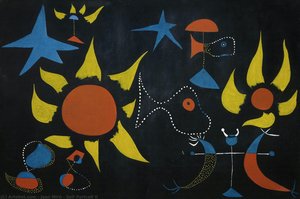 Self Portrait II - Joan Miró
To possess a study of Self Portrait II by Joan Miró is to invest in a profound legacy of Surrealist innovation and avant-garde taste. As one of the most captivating entries among the top 25 artworks in the Detroit Institute of Arts, this masterpiece serves as a window into the artist's subconscious, where the boundaries of reality dissolve into a rhythmic dance of Surrealist Expressionism . Miró’s late-career mastery is evident in the striking interplay of canary yellows and midnight blacks, punctuated by electric splashes of crimson and celestial symbols like radiant suns and wandering stars.
The painting's influence on modern abstraction remains unparalleled, making it a cornerstone for any serious collection of 20th-century icons. For those curating modern luxury interiors, the visceral energy of Miró’s thick impasto and organic forms provides an unmatched aesthetic authority. A high-quality, hand-painted oil reproduction of this work brings that same museum-grade prestige and cosmic movement into a contemporary space, offering a sophisticated focal point that resonates with both historical depth and timeless elegance.
Guerre Civile - Édouard Manet
 Guerre Civile - Édouard Manet
In the shadows of 1871 Paris, amidst the smoke of the Commune, Édouard Manet captured a moment of profound fracture. Guerre Civile is not merely a drawing; it is a visceral, monochromatic echo of chaos. Through a masterful use of charcoal and graphite, Manet employs stark, gestural lines and heavy cross-hatching to render a landscape of instability. The eye is immediately drawn to the central figure—a lone man amidst jagged rocks and scattered debris—whose vulnerability is amplified by the dramatic interplay of deep blacks and piercing whites.
The work’s energy lies in its sketch-like immediacy, where every rough stroke feels like a heartbeat caught in mid-tremor. This piece stands as one of the most haunting highlights within the Detroit Institute of Arts collection, offering a window into the resilience of the human spirit during wartime. For the discerning collector, bringing a reproduction of such a powerful, textured work into a home provides more than mere decoration; it introduces a profound sense of historical depth and a contemplative, dramatic focal point that invites quiet reflection on the complexities of our shared history.
Young Man with Cap - Amedeo Clemente Modigliani
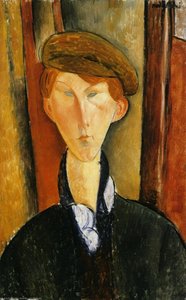 Young Man with Cap - Amedeo Clemente Modigliani
In Amedeo Modigliani’s 1919 masterpiece, Young Man with Cap , the play of light is not found in traditional brilliance, but in a muted, diffused glow that emerges from a somber, earth-toned palette. The artist employs a subtle, flattened chiaroscuro, where soft transitions between ochre, deep brown, and charcoal create a sense of sculptural volume within an almost two-dimensional plane. This controlled illumination directs the viewer’s gaze toward the subject's arresting, melancholic expression, anchoring its importance among the top 25 artworks in Detroit Institute of Arts, Detroit .
By eschewing harsh shadows for a rhythmic, textured light, Modigliani bridges the gap between Expressionism and Cubism , creating a work that feels both structurally modern and emotionally timeless. For the discerning collector, owning a high-quality, hand-painted oil reproduction of this piece allows one to bring this profound sense of quiet intensity into a private space. The visible impasto and rich, dark tones of a museum-grade canvas add an unmistakable layer of intellectual depth and sophisticated luxury to any contemporary interior.
Rowing Boats on the Banks of the Oise - vincent willem van gogh
 Rowing Boats on the Banks of the Oise - vincent willem van gogh
In the quiet corridors of the Detroit Institute of Arts , few works capture the fleeting vitality of a summer afternoon quite like Rowing Boats on the Banks of the Oise . Painted in 1890, this monumental oil on canvas serves as a breathtaking window into the late works of Vincent van Gogh . The composition is a rhythmic dance of color and light; vibrant blues, lush greens, and sun-drenched yellows coalesce to depict passengers drifting along the riverbanks.
Van Gogh’s signature Post-Impressionist technique is on full display here, with thick, emotive brushstrokes that lend a tactile energy to the water's surface. It is not merely a depiction of leisure, but an exploration of movement and atmosphere. To possess such a piece is to invite this profound emotional depth into your own environment. For those moved by this masterpiece, we offer exquisite hand-painted oil reproductions that preserve the artist's original impasto texture, allowing you to transform your home into a personal gallery of the soul.
The Wedding Dance - Pieter Bruegel the Elder
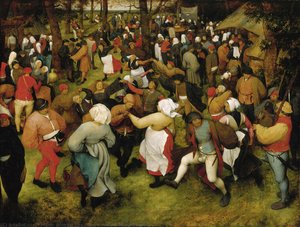 The Wedding Dance - Pieter Bruegel the Elder
In Pieter Bruegel the Elder’s The Wedding Dance , one is immediately swept into a whirlwind of communal joy and rhythmic movement. The painting captures the very essence of human connection, where the lively gazes of the guests and the spirited gestures of the musicians create a palpable sense of celebration. As one of the most captivating pieces among the top 25 artworks in Detroit Institute of Arts, Detroit , this masterpiece transcends its 16th-century Flemish setting to act as a universal mirror of human conviviality and shared emotion.
Bruegel utilizes a masterful technique of layered brushstrokes and subtle chiaroscuro to sculpt the figures, lending a profound psychological depth to the rustic scene. The interplay of light across the textured garments and expressive faces invites the viewer to linger within the festivities. Bringing such a vibrant, life-affirming composition into your own home can transform a personal sanctuary into a space of warmth and profound reflection. For those seeking to honor this legacy, our hand-made oil reproductions allow you to possess the tactile depth and emotional resonance of Bruegel’s genius on 100% cotton canvas.
Melancholy Woman - Pablo Picasso
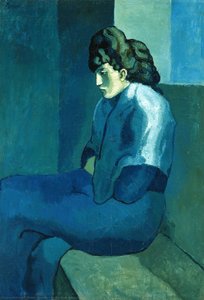 Melancholy Woman - Pablo Picasso
To encounter Melancholy Woman by Pablo Picasso is to witness a profound moment of vulnerability captured in oil. Painted during his formative Parisian years (1903–1904), this work stands as a cornerstone of the Detroit Institute of Arts' collection, representing a pivotal bridge between classical naturalism and the burgeoning psychological depth that would later define modernism. Picasso utilizes a somber palette of blues and earthy browns to drape the subject in a shroud of quiet sorrow, her downward gaze inviting us into a private world of introspection and grief.
Its inclusion in the top 25 artworks at the DIA is essential; it captures the very essence of human fragility through a nascent Cubist lens that disrupts perspective to reveal emotional truth. At ArtsDot.com, we believe such transformative energy should not be confined to museum walls. Imagine this masterpiece as a soulful anchor in your own sanctuary—a hand-painted oil reproduction that brings Picasso’s evocative textures and heavy, emotive brushstrokes into your home, turning a simple room into a profound cultural statement.
Two Diggers Among Trees - vincent willem van gogh
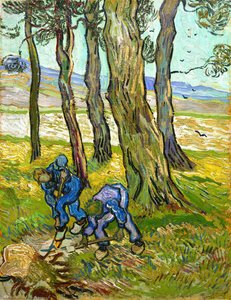 Two Diggers Among Trees - vincent willem van gogh
In the storied halls of the Detroit Institute of Arts, few works resonate with such profound, quiet intimacy as Two Diggers Among Trees by Vincent van Gogh. Painted in 1889 during his time at Saint-Rémy, this masterpiece transcends a simple depiction of manual labor to become a meditation on the dignity of existence and our rhythmic connection to the earth. The canvas is alive with Van Gogh’s signature Post-Impressionist energy; thick, impasto brushstrokes create a tactile landscape where deep forest greens and earthy browns collide with vibrant, pulsating blues.
As one of the top 25 artworks in the Detroit Institute of Arts collection, this piece serves as a masterclass in emotional color theory. The visible texture and swirling movement within the trees offer a sensory depth that continues to inspire modern interior aesthetics, where organic textures and moody, natural palettes are highly sought after. For collectors seeking to bring this same sense of historical soul into a contemporary space, our hand-painted oil reproductions capture every vigorous stroke and tonal nuance of Van Gogh’s original vision.
Portrait of a Bearded Man - Titian Ramsay Peale II
 Portrait of a Bearded Man - Titian Ramsay Peale II
To stand before Titian Ramsay Peale II’s Portrait of a Bearded Man is to encounter a profound moment of stillness. The painting does not merely depict a face; it captures the weight of wisdom and the quiet gravity of a life spent in contemplation. Through a masterful manipulation of light and shadow, Peale renders the subject's intense gaze and flowing beard with a texture so tactile that one can almost feel the heavy drape of his dark cloak. This work earns its place among the top 25 artworks in the Detroit Institute of Arts because it represents a unique intersection of American heritage and High Renaissance technique, blending scientific precision with soulful humanism.
The deep, somber tones and dramatic chiaroscuro create an atmosphere of prestige that transcends centuries. At ArtsDot.com, we believe such emotional depth should not be confined to museum walls. Our artists meticulously recreate this very essence—the visible brushstrokes and rich, oil-on-canvas textures—allowing you to bring this timeless sense of dignity and historical grandeur into your own private collection through our hand-painted reproductions.
Annunciatory Angel - Fra Angelico
 Annunciatory Angel - Fra Angelico
In the hallowed halls of the Detroit Institute of Arts, Fra Angelico’s Annunciatory Angel stands as a profound testament to the spiritual luminosity of the Early Renaissance. This masterpiece does more than depict a biblical moment; it captures a suspended breath of divine grace. Through the delicate application of tempera on panel, the artist—a Dominican friar—infuses the scene with a soft, pearlescent glow that seems to emanate from within the wood itself. The angel’s hand, poised near Mary’s lips, creates a powerful sense of sacred silence and reverence, inviting viewers to contemplate the weight of unspoken truths.
As one of the top 25 artworks in the Detroit Institute of Arts, this piece is essential for understanding how light and gesture can communicate the infinite. Its presence in a modern collection offers a serene anchor, bringing a sense of historical depth and contemplative beauty to any space. Whether you are moved by its delicate color palette or its emotional restraint, this work remains a timeless conversation between the earthly and the divine, perfect for those seeking to surround themselves with the soul of the Renaissance.
The Execution of Maximilian - Édouard Manet
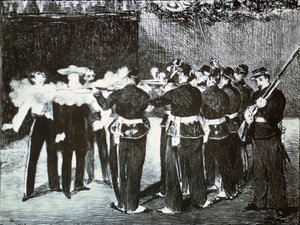 The Execution of Maximilian - Édouard Manet
In Édouard Manet’s The Execution of Maximilian , a somber, monochromatic grayscale dominates the canvas, casting a heavy shroud of mourning and clinical detachment over the scene. This absence of vibrant color strips away any romanticized veneer of heroism, leaving only the stark, chilling reality of political tragedy. As one of the top 25 artworks in the Detroit Institute of Arts, this masterpiece earns its place through Manet’s revolutionary use of tonal gradation; his ability to manipulate light and shadow creates a palpable sense of dread that transcends the historical event of the Franco-Mexican War.
For the discerning collector, the atmospheric tension of this work offers profound inspiration for modern interior curation. The painting's dramatic chiaroscuro and neutral palette can serve as a sophisticated anchor for a minimalist study or a formal dining room, where controlled lighting and silver-toned accents evoke a sense of timeless, intellectual depth. Whether you are moved by the historical gravity of this piece or wish to bring its moody, sculptural light into your home through a hand-painted oil reproduction, Manet’s work remains a hauntingly beautiful testament to the power of restraint.
Au Prado - Édouard Manet
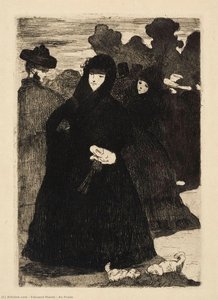 Au Prado - Édouard Manet
What if I told you that Au Prado by Édouard Manet was born from a moment of rebellion—a stroke of defiance against the ordinary? This etching is far more than a monochrome street scene; it is a quiet manifesto of the modern era. As one of the top 25 artworks in the Detroit Institute of Arts, Detroit, this piece captures the pulse of Parisian life through a lens of gritty realism, eschewing grand myths for the honest, fleeting movements of people beneath an umbrella.
Manet’s mastery of light and shadow, achieved through intricate hatching, creates a profound sense of atmosphere that transcends the black ink on paper. His ability to find depth in the commonplace redefined how we perceive beauty, moving away from academic perfection toward sensory truth. At ArtsDot.com, we believe such historical weight should not be confined to museum walls. Imagine this striking graphic aesthetic as a centerpiece in your own study or gallery; our hand-painted oil reproductions bring the textured, soulful essence of Manet’s vision into your personal sanctuary, turning any room into a sophisticated statement of cultural intelligence.
Moonmad - Max Ernst
 Moonmad - Max Ernst
To encounter the works within the Detroit Institute of Arts is to step into a dialogue between the conscious mind and the profound mysteries of the psyche. Among the most arresting moments in this journey is Moonmad by Max Ernst , a sculpture that captures the very essence of Surrealist shock. Emerging from the intellectual ferment of 1920s Paris, Ernst utilized his deep understanding of Freudian psychoanalysis to strip away rationalism, leaving behind only the raw, emotive truth of the subconscious.
The sculpture presents a stylized face, its mouth frozen in an expression of sudden, breathless astonishment. The metallic surface, likely bronze, catches the museum's light to emphasize the jagged, expressive contours that prioritize psychological gesture over mere anatomical accuracy. It is a masterful embodiment of the Surrealist fascination with the intrusion of dreams into reality. As one of the top 25 artworks in the Detroit Institute of Arts, Moonmad serves as a haunting reminder of how art can transform a physical space into a theater of the soul, inviting viewers to confront their own inner vulnerabilities through the lens of historical mastery.
Le Crotoy, Upstream - Georges Seurat
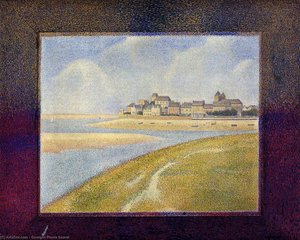 Le Crotoy, Upstream - Georges Seurat
In Le Crotoy, Upstream , Georges Seurat captures a fragment of eternal sunlight, freezing the shimmering tides of Normandy within a delicate web of color. As one of the most profound highlights among the top 25 artworks in the Detroit Institute of Arts, this masterpiece stands as a monumental achievement of Neo-Impressionism. Seurat transcends mere landscape painting through his revolutionary Pointillist technique; by applying thousands of minuscule, unmixed dots of pigment, he allows the viewer's eye to perform the alchemy of optical mixing. The canvas breathes with a luminous vitality, where blues and ochres dance across the water’s surface, reflecting the sun’s brilliance through scientific precision.
The scene—populated by quiet boats and grazing horses near a distant castle—evokes a sense of profound serenity and historical charm. This rhythmic harmony of light and structure offers a sophisticated focal point for modern interiors, bringing a meditative calm to any space. For those seeking to possess this scientific poetry, our museum-quality, hand-painted oil reproductions recreate the palpable texture of Seurat's brushstrokes, allowing the luminous spirit of the DIA's collection to reside in your own home.
Nocturne in Black and Gold, The Falling Rocket - James Abbott McNeill Whistler
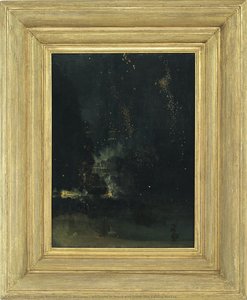 Nocturne in Black and Gold, The Falling Rocket - James Abbott McNeill Whistler
There is a transformative energy in Nocturne in Black and Gold, The Falling Rocket by James Abbott McNeill Whistler that lingers long after you turn away. As one of the most profound highlights among the top 25 artworks in the Detroit Institute of Arts, this piece does not merely depict a scene; it captures a fleeting moment of cosmic drama. Whistler’s radical "art for art's sake" philosophy is palpable here, as he rejects literal storytelling to embrace the pure, sensory rhythm of light and shadow. The dramatic interplay of deep blacks and shimmering golds creates a visual pulse, where the fiery descent of a rocket is felt through texture rather than mere sight.
To stand before this masterpiece is to witness the birth of modern abstraction. The way the gold leaf catches the light acts as a mirror to our own fleeting inspirations, reminding us that beauty exists in the transient and the atmospheric. For those seeking to bring this sense of nocturnal mystery into their own homes, our hand-painted oil reproductions capture every delicate wash and intentional brushstroke, preserving the ethereal glow of Whistler’s vision for generations.
Mosquito Nets - John Singer Sargent
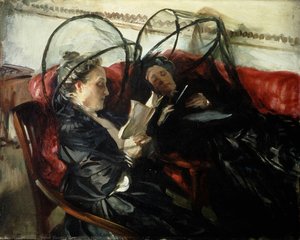 Mosquito Nets - John Singer Sargent
In the quiet corners of the Detroit Institute of Arts, John Singer Sargent’s 1912 masterpiece, Mosquito Nets , offers a profound meditation on intimacy and the sanctuary of the domestic sphere. Moving away from his famed, high-society portraits, Sargent captures an enigmatic moment of repose between two women, draped in the delicate, translucent layers of fine fabric. The painting’s enduring mystery lies in its ability to transform a private, mundane scene into a poetic study of light and stillness. Through a muted palette of creams, soft browns, and subtle greens, Sargent invites us into a world of quiet companionship and intellectual leisure.
The visual language of Mosquito Nets —characterized by its soft, diffused glow and masterful handling of texture—resonates deeply with contemporary desires for mindfulness and slow living. As we navigate an increasingly frenetic digital age, the tranquil atmosphere of this work serves as a vital cultural touchstone for curated spaces seeking elegance and calm. For those looking to bring this sense of Gilded Age serenity into their own homes, our museum-quality handmade oil reproductions capture every delicate brushstroke and play of light found in this essential piece of the DIA’s collection.
Saint Jerome in His Study - Jan van Eyck
 Saint Jerome in His Study - Jan van Eyck
To encounter Saint Jerome in His Study by Jan van Eyck is to witness the very moment light was captured by human hands; it is a jewel within the Detroit Institute of Arts collection that feels less like a painting and more like a window into the fifteenth century. As one of the top 25 artworks in Detroit, this masterpiece exemplifies the revolutionary alchemy of Early Netherlandish art. Van Eyck utilizes his signature technique of translucent oil glazes to create a luminous depth, where the flickering candlelight dances across aged parchment and the heavy textures of scholarly robes.
The scene is an intimate study of intellectual devotion, featuring the saint absorbed in scripture beside a resting lion, rendered with such microscopic precision that every fiber of the scholar's beard seems palpable. For the discerning collector, this work represents the pinnacle of refined aesthetics. Its profound stillness and rich, tonal complexity offer a timeless elegance that transcends eras, making a high-quality oil reproduction an unparalleled centerpiece for any sophisticated interior seeking to evoke a legacy of wisdom and quiet grandeur.
The Four-Leaf Clover - Winslow Homer
 The Four-Leaf Clover - Winslow Homer
In the quiet corners of the Detroit Institute of Arts, Winslow Homer’s 1873 watercolor, The Four-Leaf Clover , offers a cinematic pause—a breath of stillness amidst the grandeur of the museum's collection. The scene unfolds with a soft, luminous intimacy: a young girl sits perched on a garden bench, her gaze lost in the delicate blossoms visible through a sun-drenched window. Homer, a master of American Realism, eschews heavy oils for the ethereal transparency of watercolor, allowing light to filter through the composition as if passing through actual glass.
The atmosphere is thick with the scent of damp earth and blooming flora, rendered through subtle gradations of green and floral hues that evoke a profound sense of pastoral peace. This work does more than document a moment; it captures a yearning for simplicity and the quiet hope symbolized by the clover itself. For the modern collector, bringing a reproduction of this masterpiece into a home provides an anchor of tranquility, inviting a sense of nostalgic reflection and organic beauty into any contemporary living space.
Berthe Morisot - Édouard Manet
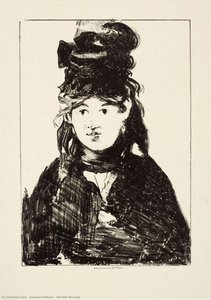 Berthe Morisot - Édouard Manet
In Édouard Manet’s 1869 portrait of Berthe Morisot, we encounter a profound moment of quietude that transcends the boundaries of time. There is a haunting intimacy in her downward gaze, a sense of private introspection that invites the viewer to share in her silent contemplation. As one of the most significant works within the Detroit Institute of Arts collection, this piece stands as a cornerstone of the transition from Realism to Impressionism. Manet eschews the rigid academicism of his era, instead utilizing loose, evocative brushstrokes and a muted, almost monochromatic palette to capture the fleeting essence of Parisian modernity.
The painting’s inclusion in the top 25 artworks at the DIA is well-deserved; it captures the shifting social landscape of the Second Empire, portraying Morisot not merely as a subject, but as an intellectual presence. This delicate balance of light and shadow creates a tactile depth that remains breathtaking centuries later. At ArtsDot.com, we strive to preserve this very soul. Our master artists hand-paint meticulous oil reproductions on 100% cotton canvas, ensuring that the visible brushstrokes and emotional weight of Manet’s genius can be brought into your own home, serving as a lasting window into the heart of art history.
Marine - Édouard Manet
 Marine - Édouard Manet
To stand before Édouard Manet’s Marine is to feel the sudden, salt-sprayed chill of a restless sea and the palpable energy of a world in motion. This masterful etching captures more than just a bustling harbor; it encapsulates the very heartbeat of Parisian modernity, where the turbulent waves serve as a profound metaphor for the social shifts of the 19th century. Manet’s ability to use aquatint and bitten tones to mimic the shimmering light on sailcloth creates a sensory experience that transcends the medium.
As one of the essential highlights within the Detroit Institute of Arts, Detroit collection, this work earns its place among the top 25 artworks through its raw, unidealized honesty. It eschews academic perfection to find beauty in the struggle of ordinary figures against the elements. At ArtsDot.com, we believe such evocative moments should not be confined to museum walls. Our artisans specialize in creating hand-painted oil reproductions that preserve this exact emotional depth and textural complexity, allowing you to invite Manet’s dynamic spirit and the timeless allure of the sea into your own private gallery.
Maternity - Pierre-Auguste Renoir
 Maternity - Pierre-Auguste Renoir
In the quietude of Pierre-Auguste Renoir’s "Maternity," a single, breathless moment of devotion is frozen in time, transcending the decades to touch the modern soul. As one of the most profound highlights within the top 25 artworks in the Detroit Institute of Arts, Detroit , this masterpiece captures the eternal sanctuary of maternal love through the lens of early Impressionism. Renoir moves away from rigid academic precision, instead using a luminous, almost shimmering application of paint that makes light appear to emanate from the subjects themselves.
The composition is a sensory triumph; the soft, velvety textures and diffused tones create an atmosphere of profound stillness, where the rhythmic breath of the infant and the steady heartbeat of the mother are palpable. For the discerning collector or interior designer, this painting serves as more than a historical relic—it is an emotional anchor. Its gentle gradations of shadow and warmth offer a sense of peace, making it an exquisite choice to inspire calm and sophistication in a contemporary library or master suite.
Louis Valtat - Pierre-Auguste Renoir
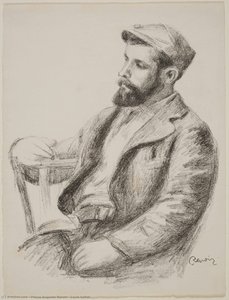 Louis Valtat - Pierre-Auguste Renoir
In the Portrait of Louis Valtat , Pierre-Auguste Renoir moves away from his signature luminous color palettes to master a profound, monochromatic chiaroscuro. The work relies entirely on the delicate interplay of light and shadow, using charcoal and pencil to sculpt form from the darkness. A soft, diffused light illuminates Valtat’s profile, catching the contemplative curve of his hand and chin, while deep hatching creates a sense of psychological weight and atmospheric depth. This command over tonal gradation allows Renoir to capture not just a likeness, but an emotional state of quiet melancholy.
As one of the standout treasures within the Detroit Institute of Arts collection, this piece demonstrates how light can define character without the need for pigment. For the discerning collector, owning a high-quality oil reproduction of such a masterwork allows this dramatic play of light to transform a contemporary space. The visible texture of hand-painted brushstrokes in a faithful reproduction brings a sophisticated, museum-grade elegance to any room, offering a timeless window into the introspective soul of Impressionism.
Detroit Industry: East Wall - Diego Rivera
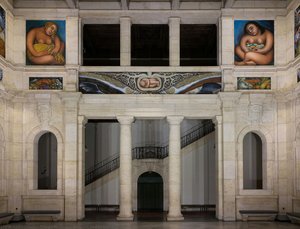 Detroit Industry: East Wall - Diego Rivera
In the presence of Detroit Industry: East Wall by Diego Rivera, one is immediately struck by the rhythmic, pulsing energy of the colossal figures that dominate the composition. There is a profound sense of shared purpose in the gaze of the workers; their eyes do not merely look at the machinery, but reflect a stoic, unwavering dedication to the collective human spirit. As one of the most significant pieces among the top 25 artworks in Detroit Institute of Arts, Detroit, this fresco captures the psychological tension between the raw power of industrial machinery and the resilient soul of the laborer.
Rivera utilizes the luminous fresco technique to weave a tapestry of fiery reds and deep industrial blues, creating a visual symphony that celebrates progress amidst the shadows of the Great Depression. To bring this monumental narrative into your own home through a hand-painted oil reproduction is to invite a sense of strength and historical gravity into your space. Much like the museum's grand halls, displaying such a powerful work can transform a private study or living area into a sanctuary for profound reflection on human ingenuity and the enduring beauty of labor.
Conclusion
As the light fades over the Beaux-Arts marble of the Detroit Institute of Arts, one realizes that these twenty-five masterpieces are far more than mere relics of a bygone era or static entries in an exhibition catalog. They are living, breathing presences that continue to pulse with the same emotional intensity they possessed the moment the artist’s brush first met the canvas. Whether it is the quiet introspection found in a Dutch portrait or the vibrant, rhythmic energy of an American landscape, these works exist in a state of eternal dialogue with us, bridging the gap between the historical past and our contemporary lives.
To encounter these paintings is to witness the enduring resilience of the human spirit—a reflection of Detroit itself. They possess a unique power to transcend their museum walls, moving beyond the gilded frames to inhabit our most intimate spaces. When we bring the essence of such greatness into our homes, we do not merely decorate a room; we invite a profound sense of history, culture, and beauty to reside with us, shaping our moods and inspiring our daily contemplations. These works remind us that art is not a distant luxury, but a fundamental part of our emotional architecture.
We invite you to continue this journey of discovery and bring a piece of this storied legacy into your own sanctuary by exploring our full collection . In every hand-painted stroke of our reproductions, we strive to preserve that same spark of wonder, ensuring that the timeless connection between the master's vision and the viewer's soul remains unbroken for generations to come.