Early Life & Artistic Foundations: Dublin Roots and Slade Training
William Newenham Montague Orpen was born on 27th. November, 1878, the fourth son of Arthur Herbert Orpen, a well-known Dublin solicitor, and his wife Anne ...
William Newenham Montague Orpen, born in 1878 into a comfortably middle-class Dublin family, possessed an artistic temperament that blossomed early. His father, a solicitor, and his mother, an amateur painter herself, fostered a creative environment within their home, ‘Oriel’. This nurturing atmosphere, coupled with the presence of artistically inclined siblings – notably his architect brother Richard – laid the groundwork for Orpen’s future path. However, it was his enrollment at the Dublin Metropolitan School of Art at the remarkably young age of thirteen that truly ignited his passion and revealed a precocious talent. He swiftly dominated the school's competitions, securing every major prize before venturing to London in 1897 to study at the prestigious Slade School.
The Slade proved transformative. Unlike the more traditional approaches prevalent elsewhere, the school emphasized rigorous observation of Old Masters – a practice that would become central to Orpen’s own methodology. He immersed himself in the works of Jan van Eyck and Édouard Manet, absorbing their techniques and philosophies. This period also saw him experimenting with composition and effect, foreshadowing his later penchant for incorporating mirrors into his paintings—a device not merely decorative but deeply symbolic, reflecting both reality and illusion. His 1899 Slade prize-winning painting, ‘The Play Scene from Hamlet’, already demonstrated a sophisticated understanding of light, shadow, and narrative complexity.
The Edwardian Portraitist: Capturing Society's Gaze
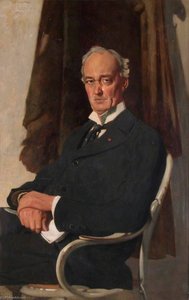
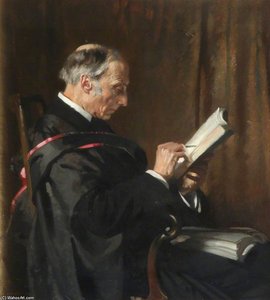 Charles Buller Heberden, Principal
Admire 'Charles Buller Heberden, Principal' by Sir William Orpen – a captivating Edwardian portrait showcasing masterful draughtsmanship & quiet contemplation.
Upon leaving the Slade, Orpen quickly established himself as a sought-after portrait painter in London’s vibrant Edwardian society. He possessed an uncanny ability to capture not just physical likeness but also the *essence* of his sitters – their character, social standing, and inner lives. This wasn't simply flattery; it was astute observation combined with masterful draughtsmanship. His studio became a hub for the wealthy and influential, drawn to his skill in presenting them at their most favorable yet authentic. He understood the power dynamics inherent in portraiture, subtly revealing as much about the subject’s aspirations and anxieties as their outward appearance.
Paintings like ‘Charles Buller Heberden, Principal’ exemplify this talent. The composition is deceptively simple – a dignified gentleman seated in contemplation – yet Orpen imbues the work with a quiet psychological depth. The meticulous rendering of fabric, the subtle play of light on skin, and the carefully considered pose all contribute to a portrait that feels both intimate and authoritative. This ability to balance technical brilliance with insightful characterization cemented his reputation as *the* portraitist of the era.
Beyond Likeness: Realism, Psychology, and Orpen’s Distinct Style
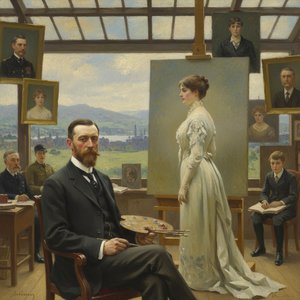
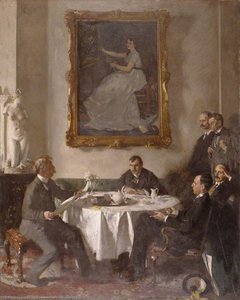
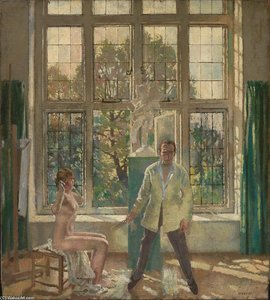 Selfportrait with model (also known as Summer Afternoon)
Explore 'Selfportrait with Model,' a stunning 1905 oil painting by Sir William Orpen. Captivating realism & dramatic light evoke Edwardian beauty & artistic creation. #Orpen #ArtHistory #Portraiture
While celebrated for his portraits, reducing Orpen to a mere chronicler of Edwardian society would be a profound disservice. His work is underpinned by a deeper engagement with realism – not simply as a technical approach but as a philosophical pursuit. He sought to depict the world *as it was*, unvarnished and often unflattering. This commitment extended beyond surface appearances, delving into the psychological complexities of his subjects.
‘Self-Portrait with Model (also known as Summer Afternoon)’ from 1905 offers a fascinating glimpse into this artistic process. The painting is not merely a depiction of Orpen at work; it’s a meditation on creation itself, the interplay between artist and muse, and the inherent subjectivity of perception. The dramatic lighting, the captivating realism of both figures, and the palpable tension in the scene all contribute to a work that transcends conventional portraiture. He wasn't afraid to reveal his own vulnerabilities and anxieties within his self-portraits, using them as vehicles for exploring themes of identity and mortality.
Orpen and the Great War: Witnessing and Documenting a Changing World
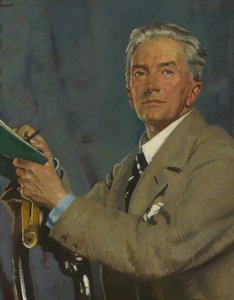
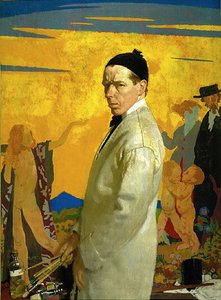 Sir William Newenham Montague Orpen
Sir William Orpen was an Irish painter renowned for his striking portraits and poignant war art, capturing the realities of WWI with raw realism & psychological depth.
The outbreak of World War I irrevocably altered Orpen’s artistic trajectory. Appointed an official war artist in 1917, he traveled to the Western Front, becoming arguably the most prolific painter documenting the conflict for Britain. Unlike many artists who focused on heroic narratives or grand battlescapes, Orpen chose to depict the brutal realities of trench warfare – the ordinary soldiers, the dead, and the psychological toll of prolonged conflict.
His unflinching depictions of these scenes were often disturbing, challenging conventional notions of patriotism and glory. He produced 138 works for the British government, many of which now reside in the Imperial War Museum. These paintings are not romanticized visions; they are raw, honest portrayals of suffering and loss. His access to high-ranking military officials allowed him extended stays on the front lines, providing a unique perspective rarely seen in contemporary war art.
Self-Portraiture as Reflection: Identity, Mortality, and Artistic Struggle
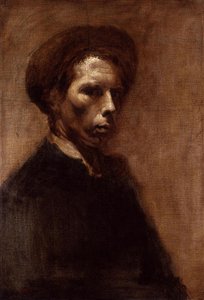
Throughout his career, Orpen consistently returned to the subject of self-portraiture. These works are not vanity projects but rather profound explorations of identity, mortality, and the artistic process itself. ‘The Artist as a Young Man’ (1900) reveals a confident yet introspective figure, already grappling with the complexities of his chosen profession. Later self-portraits, particularly those painted after the war, reveal a growing sense of disillusionment and anxiety.
His use of mirrors within these compositions is particularly significant. They serve not merely as compositional devices but as metaphors for self-reflection, fragmentation, and the elusive nature of truth. The inclusion of symbolic objects – such as the dead ptarmigan in one notable example – adds layers of meaning, hinting at themes of loss, decay, and the fragility of life. These paintings offer a rare glimpse into the inner world of a complex and often tormented artist.
Legacy and Rediscovery: Orpen's Enduring Influence on 20th-Century Art
Despite his initial success and official recognition – including a knighthood in 1918 – Orpen’s reputation suffered a decline after his premature death in 1931. Critics dismissed his work as superficial, lacking the intellectual depth of other contemporary artists. For decades, his paintings remained largely out of public view.
However, beginning in the 1980s, a renewed interest in Orpen’s art emerged, fueled by scholarly research and exhibitions that highlighted the complexity and psychological depth of his work. Today, he is recognized as a pivotal figure in Edwardian portraiture and a significant chronicler of World War I. His influence can be seen in the works of subsequent generations of artists who sought to capture the realities of modern life with unflinching honesty and psychological insight. ArtsDot.com offers a curated selection of Orpen’s masterpieces, allowing art enthusiasts to experience the brilliance and enduring power of this remarkable artist firsthand.