The Genesis of the Unconscious: Philosophical Foundations of the Surrealist Movement
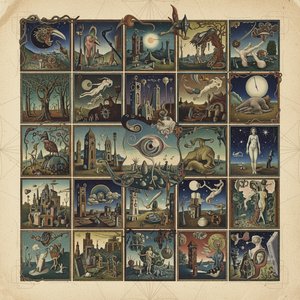
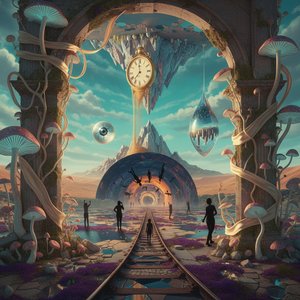
The dawn of Surrealism was far more than a mere aesthetic rebellion; it was a profound philosophical insurrection against the hegemony of rationalism. Emerging from the turbulent intellectual landscape of the early twentieth century, the movement sought to dismantle the rigid structures of logic that had failed to prevent the horrors of global conflict. At its heart lay the revolutionary influence of psychoanalysis, particularly the theories of Sigmund Freud, which provided the movement with its most potent tool: the exploration of the unconscious mind. Surrealists believed that by bypassing the conscious censor, they could access a more authentic reality—a "surreality" where the boundaries between the waking world and the dream state dissolved entirely.
This intellectual pursuit was not merely about depicting strange imagery but about reclaiming the human psyche from the constraints of societal expectation. The movement invited us to look inward, into the labyrinthine corridors of memory, desire, and fear. By embracing the irrational, artists sought to uncover a deeper truth that resided beneath the surface of everyday perception, transforming the canvas into a window through which the hidden depths of the soul could be glimpsed.
Painting the Subconscious: Innovative Techniques and the Visual Language of Dreams
To capture the ephemeral and often fragmented nature of a dream, Surrealist masters had to invent entirely new visual grammars. Traditional techniques were often insufficient to convey the fluid, metamorphic qualities of the subconscious. Instead, artists turned to experimental methods that allowed for chance and spontaneity to guide the brush. One of the most significant innovations was decalcomania, a technique famously utilized by Max Ernst. By spreading pigment across a surface and then pressing paper or another object against it, artists could create intricate, organic textures that mimured the haunting landscapes of the mind, where nature and decay seem to intertwine.
This visual language was characterized by a tension between hyper-realistic detail and impossible compositions. The use of biomorphic abstraction, as seen in the works of Roberto Matta, introduced soft, organic shapes that suggested life without being explicitly representational. These forms, reminiscent of microscopic organisms or celestial bodies, invited viewers to project their own subconscious imagery onto the work. Through the meticulous application of layers and the manipulation of texture, Surrealist painters achieved a visceral depth, making the intangible elements of thought and sensation feel tangibly present on the canvas.
Architects of Illusion: A Journey Through the Masterworks of Dalí, Ernst, and Beyond
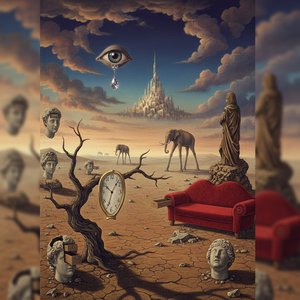
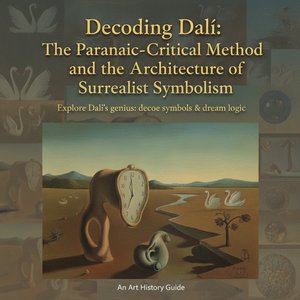
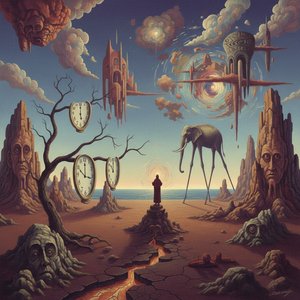
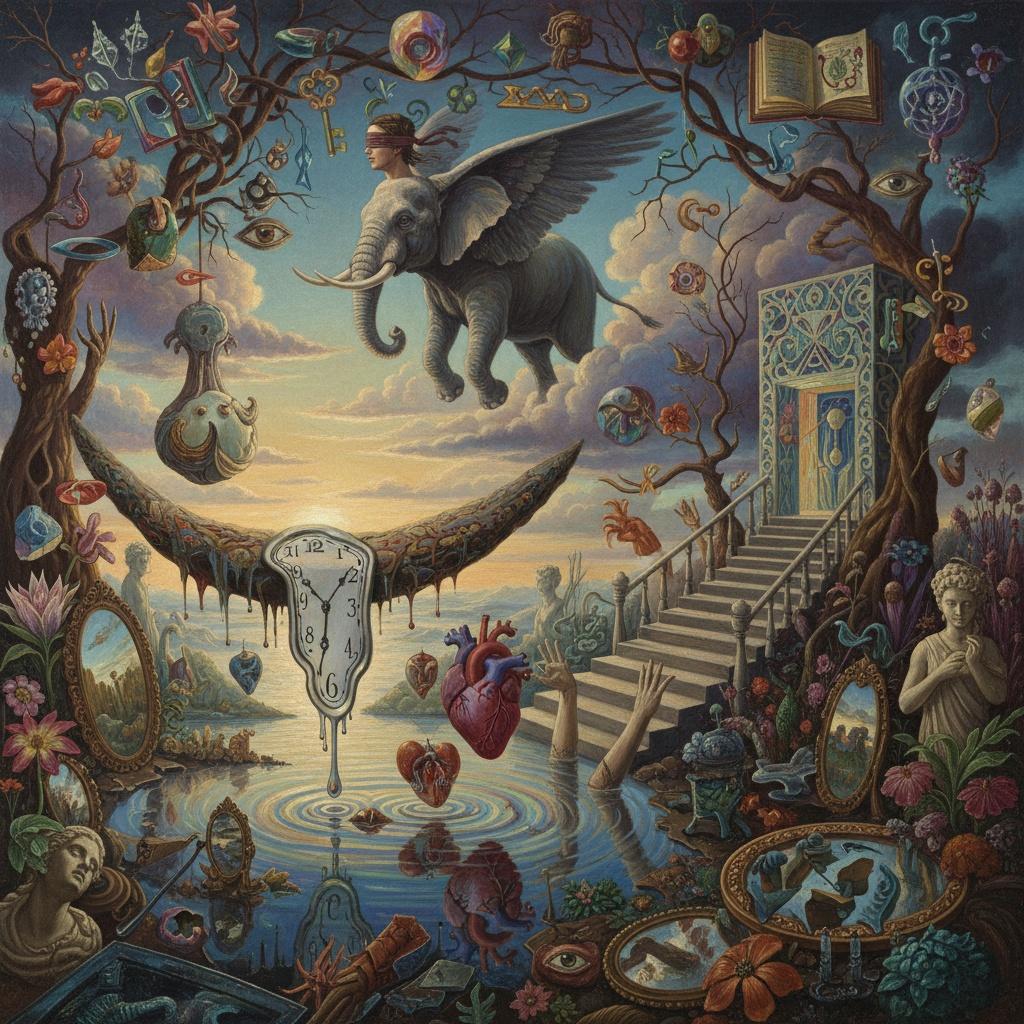
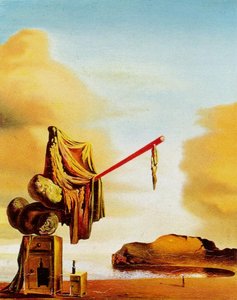
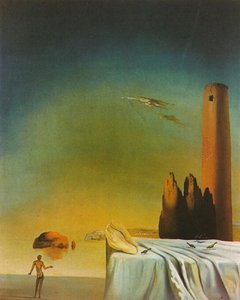
The true architects of this grand illusion were those who could render the impossible with startling, almost photographic clarity. Salvador Dalí remains perhaps the most iconic figure of this era, a master of what he termed the "paranoiac-critical method." His works, such as "Couple with Their Heads Full of Clouds" and the evocative "Untitled (Dreams on the Beach), 1934," invite us into landscapes where the laws of physics are suspended. In Dalí’s world, objects undergo metamorphosis; a landscape can become a face, and a cloud can inhabit the very thoughts of a subject, creating a sense of profound psychological intimacy.
Alongside Dalí, Max Ernst provided a more haunting, atmospheric dimension to the movement. His work, particularly "The Eye of Silence," utilizes decaying ruins and dense, primordial vegetation to evoke a sense of ancient, forgotten truths. These landscapes are not merely settings but are active participants in the psychological drama, blending the organic with the architectural to create a sense of profound unease. The brilliance of these artists lay in their ability to use recognizable motifs—clocks, landscapes, human figures—and recontextualize them within a dreamlike logic, forcing the viewer to question the stability of their own perceptions.
The Ethereal Boundary: Navigating the Uncanny Intersection of Reality and Delusion
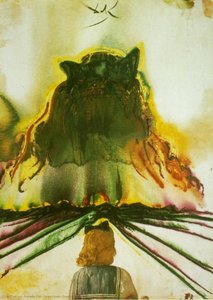
Navigating the Surrealist landscape requires an acceptance of the uncanny—that unsettling sensation when something familiar is rendered strange or even grotesque. There exists a delicate, often precarious boundary where reality meets delusion. This intersection is explored through the darker, more symbolic elements of the movement, such as the works of Gyula Hincz. His paintings, steeped in themes of superstition and the apocalypse, utilize the grotesque to evoke the primal fears that reside in the shadows of the human experience.
This tension is also present in the dream visions of artists like Frits van den Berghe, whose work bridges the gap between expressionism and surrealism. In these works, the boundary is not just a line but a permeable membrane. The viewer finds themselves caught in a state of flux, unable to discern where the external world ends and the internal hallucination begins. It is within this very ambiguity that the power of Surrealism resides, challenging us to find meaning in the chaos and to recognize the profound connection between our perceived reality and our deepest, most hidden delusions.
Surrealism’s Enduring Legacy: The Movement's Impact on Modern Visual Aesthetics
The legacy of Surrealism is not confined to the early twentieth century; it continues to pulse through the veins of contemporary visual culture. Its influence can be seen in everything from the dreamlike sequences of modern cinema to the abstract textures of contemporary fine art. The movement’s emphasis on symbolism, psychological depth, and the liberation of form paved the way for Abstract Expressionism and beyond, forever altering our understanding of what art can achieve.
Today, we continue to find inspiration in the ability to "remix" history, bringing these profound explorations of the human condition into our modern spaces. At ArtsDot.com, we are dedicated to preserving this extraordinary heritage. Through our meticulous process of creating handmade oil reproductions and museum-quality prints, we ensure that the haunting beauty and intellectual depth of Surrealist masterpieces remain accessible to collectors and enthusiasts worldwide, allowing the dreams of the past to continue inspiring the realities of the present.