The Silent Piazza: Defining the Eerie Stillness of Metaphysical Art
--- title: Metaphysical Art | Tate url: https://www.tate.org.uk/art/art-terms/m/metaphysical-art hostname: tate.org.uk description: Tate glossary definition for metaphysical art: Early twentieth century Italian art movement typified by dream-like vie...
To step into a Metaphysical painting is to enter a world where time itself seems to have held its breath. Unlike the vibrant, light-drenched moments we adore in Impressionism—where the sun dances upon the Seine or flickers through a garden of poppies—Metaphysical art offers a profound, unsettling stillness. This movement, known in its original Italian as Pittura Metafisica, does not seek to capture the fleeting optical sensation of a moment, but rather the enduring, haunting resonance of a memory. It is an art of the interval, found in the heavy silence between heartbeats.
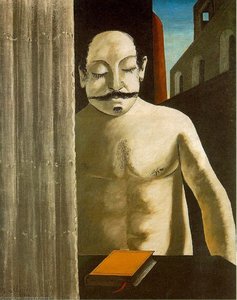
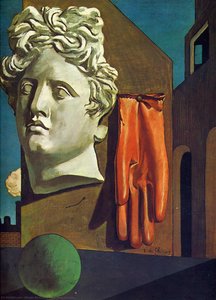
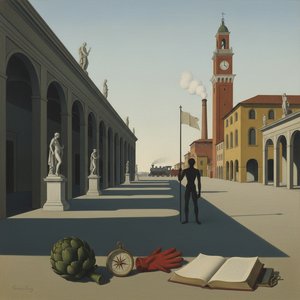
The hallmark of this style is a peculiar, dream-like view of reality. One encounters vast, arcaded squares that appear unnaturally empty, as if the inhabitants have suddenly vanished into the ether. There is a deliberate use of unexpected juxtapositions; a lonely statue might stand beside a discarded glove, or a train may loom in a distance that feels both near and impossibly far. These elements are rendered with a startling realism, yet they are arranged in a way that defies logic, creating an atmosphere of profound mystery. It is a landscape not of the eyes, but of the soul, where the familiar becomes strange and the mundane becomes monumental.
Shadows of the Mind: Giorgio de Chirico and the Poetics of Absence
 Giorgio de Chirico: Metaphysical Realities & the Poetics of Absence
The Genesis of Metaphysical Painting: A Rejection of Modernism Wikipedia: Giorgio de Chirico Giuseppe Maria Alberto Giorgio de Chirico ( KIRR-ik-oh; Italian: [ˈdʒordʒo de ˈkiːriko]; 10 July 1888 – 20 November 1978) was an Italian artist and writer bo...
At the heart of this enigmatic movement stands the visionary Giorgio de Chirico. Born in Volos, Greece, to Italian parents, his very identity was a tapestry of classical heritage and modern alienation. While his early training provided him with the rigorous technical foundation required for classical representation, his spirit wandered far beyond the boundaries of traditional realism. De ChirChirico sought to capture what he called the "metaphysical"—the hidden reality that exists beneath the surface of our visible world.
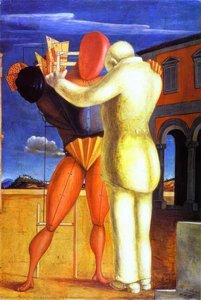
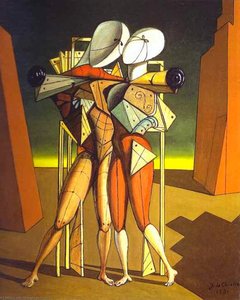
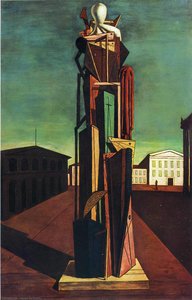
His work is a masterclass in the poetics of absence. In his iconic 'Metaphysical Town Square' series, the architecture of Florence and other Italian cities serves as a stage for an unseen drama. Through the use of dramatic chiaroscuro, long, stretching shadows creep across deserted piazzas, creating a sense of spatial ambiguity that disorients and intrigues the viewer. These shadows are not merely absences of light; they are presences in their own right, heavy with the weight of unspoken histories. Through his brush, de Chirico transformed the classical landscape into a psychological terrain, where faceless mannequins and looming statues act as silent observers to our own existential reflections.
A Bridge to Dreams: The Profound Connection Between Metaphysical Painting and Surrealism
Surrealism is an art and cultural movement that developed in Europe in the aftermath of World War I in which artists aimed to allow the unconscious mind to express itself, often resulting in the depiction of illogical or dreamlike scenes and ideas. I...
While Metaphysical art is often viewed as a precursor to the more famous Surrealist movement, it possesses a distinct, more structured melancholy. If Surrealism, led by André Breton, sought to resolve the contradictions of dream and reality into a "super-reality" through spontaneous psychic automatism, Metaphysical art operates through a more calculated, architectural dreamscape. It is often described as proto-Surrealism, providing the foundational vocabulary of illogical imagery that artists like Max Ernst would later expand upon.
Where Surrealism might embrace the chaotic and the grotesque, Metaphysical painting maintains a certain classical dignity. It utilizes the tools of realism—precise lines, recognizable forms, and deep tonal ranges—to construct its illusions. This creates a tension that is uniquely captivating: the viewer recognizes the objects presented, yet cannot reconcile their placement within the composition. This bridge between the tangible world and the subconscious allowed for a new way of experiencing art, where the uncanny is not found in monsters, but in the unsettling stillness of a familiar street corner at twilight.
Architectural Enigmas: Unexpected Juxtapositions and the Uncanny Landscape
 Beyond Reality's Veil: Exploring the Enigmatic World of Metaphysical Art
The Dawn of Metaphysical Painting: Giorgio de Chirico's Early Influences Wikipedia: Giorgio de Chirico Giuseppe Maria Alberto Giorgio de Chirico ( KIRR-ik-oh; Italian: [ˈdʒordʒo de ˈkiːriko]; 10 July 1888 – 20 November 1978) was an Italian artist and...
The power of Metaphysical art lies in its ability to manipulate space and scale to evoke the uncanny. The movement utilizes classical architectural elements—Roman arcades, heavy pedestals, and grand porticos—not as mere backdrops, but as active participants in a psychological narrative. These structures often feature skewed perspectives that create a sense of vertigo, making the viewer feel as though they are tilting into an abyss of thought.
This architectural enigma is heightened by the placement of objects that seem entirely divorced from their original context. A sudden appearance of a classical bust next to a modern industrial object creates a temporal friction, a sense of being unstuck in time. This technique forces us to reconsider our relationship with the physical world. By stripping objects of their utility and placing them within these eerie, silent landscapes, the artists invite us to contemplate the essence of the objects themselves—their form, their shadow, and the mystery they carry into the void.
The Philosophical Canvas: Nietzsche, Schopenhauer, and the Search for Hidden Truths
 Giorgio de Chirico
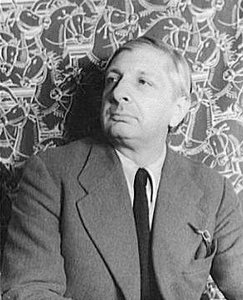
A Dreamscape of the Mind: The Life and Art of Giorgio de Chirico Born in 1888 in Volos, Greece, to Italian parents—a Genoese mother and a Sicilian father—Giorgio de Chirico’s artistic journey was one steeped in both classical heritage and a burgeonin...
To truly understand the depth of Metaphysical art, one must look toward the intellectual ferment of pre-war Europe. De Chirico’s creative spirit was deeply ignited by the philosophical currents of his time, particularly the works of Friedrich Nietzsche and Arthur Schopenhauer. These thinkers explored the irrationality of human desire, the subjective nature of reality, and the profound weight of existence—themes that are etched into every canvas of the movement.
The art reflects a rejection of the superficiality found in contemporary movements like Cubism or Futurism, which de Chirico felt focused too much on fragmentation or speed. Instead, he turned inward, seeking a realm where memory and emotion converge. The paintings serve as visual meditations on the human condition: our longing for the unattainable, our fear of isolation, and our eternal search for meaning within the silence. In every long shadow and empty square, we find a reflection of our own philosophical inquiries, making Metaphysical art a timeless mirror for the complexities of the human spirit.
At ArtsDot.com, we celebrate the enduring legacy of the masters. While our heart beats most passionately for the luminous light of the Impressionists, we hold a profound reverence for the enigmatic depths of the Metaphysical movement. We invite you to explore our collection of exquisite, hand-painted oil reproductions, where every brushstroke is a tribute to the history of human creativity. Whether you seek the soft glow of a Monet or the haunting shadows of a de Chirico-inspired landscape, our master artists are dedicated to bringing these profound visions into your home with unparalleled authenticity and care.