
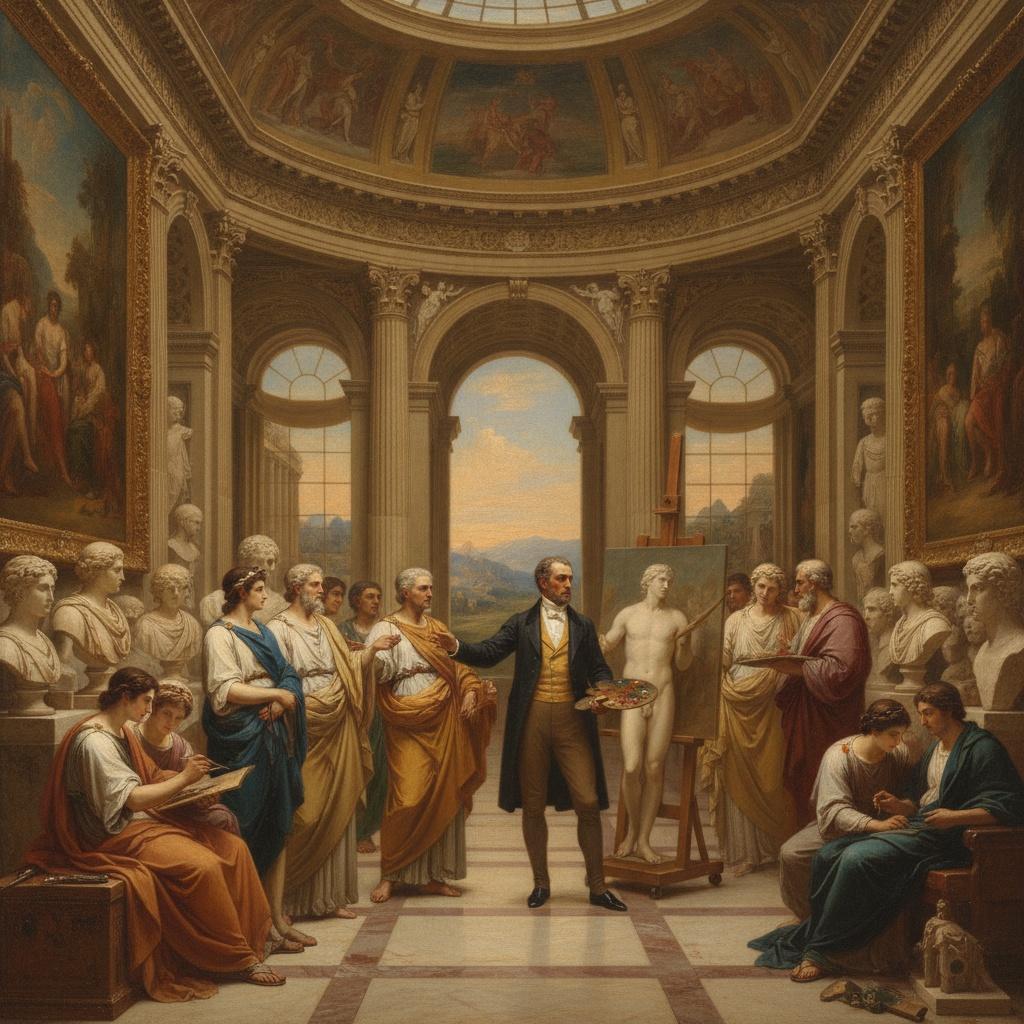
The Intellectual Framework: Defining the Order and Logic of Academic Realism
 Mastering Reality: A Definitive Guide to the Precision and Elegance of Academic Realism
The Intellectual Framework: Defining Academic Realism and its Pursuit of Order Mastering Perfection: A Definitive Guide to the Elegance and Precision of Academic Classicism The Foundations of Order: Defining the Principles of Academic Classicism Mast...
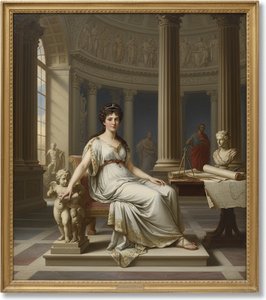
To step into the world of Academic Realism is to leave behind the frantic, unscripted energy of the modern age and enter a sanctuary of profound logic and historical reverence. It is not merely an aesthetic preference or a passing trend that captures the eye; rather, it is a disciplined, intellectual pursuit of truth through the lens of order and clarity. At its very core, Academic Classicism emerged as a necessary reaction against the perceived chaos of more emotive, spontaneous styles, seeking instead to anchor the human spirit in the timeless principles of antiquity. There is a profound allure in this movement, one that invites the viewer to look beyond the surface of the canvas and into a rigorous intellectual framework that governs every stroke.
This pursuit of perfection demands far more than raw talent; it requires a dedication to the belief that art should serve as a mirror to the idealized, permanent structures of the universe rather than the fleeting shadows of a single moment. By adhering to established canons of proportion and composition, the Academic artist seeks to capture the eternal essence of human experience. Through the structured language of line and form, they communicate universal truths that resonate across centuries, providing a sense of stability and quiet power that transcends the ephemeral nature of daily life. It is an art form rooted in the conviction that true beauty is found not in the accidental or the raw, but in the carefully structured and the mathematically harmonious.
The Pillars of Mastery: Anatomy, Proportion, and the Rigor of Form
 Académie d'homme
A Study in Form: Jean-François Millet’s *Académie d'homme* This captivating work by Jean-François Millet, titled *Académie d'homme*, offers a compelling glimpse into the artist’s mastery of anatomical study and his engagement with the academic tradit...
The foundation of this venerable tradition rests upon a bedrock of technical excellence, where the artist's hand is guided by an intimate understanding of the physical world. The mastery of anatomy serves as a primary pillar, a dedication to representing the human form with such precision that muscle and bone appear to possess their own vitality. We see this beautifully exemplified in works such as Jean-François Millet’s Académie d'homme, where the artist utilizes his foundational skills in anatomical study to render a nude male figure with striking dynamism. This is not a static pose, but an étude—a dedicated exploration of movement and the intricate interplay of musculature under the skin.
Beyond anatomy, the discipline of proportion and the mastery of form create a sense of monumental grace. The Academic artist employs meticulous observation to ensure that every element of a composition adheres to a sense of balance and weight. This rigor extends to the use of light and shadow, or chiaroscuro, which is employed not just for dramatic effect, but to define the three-dimensional reality of the subject. Through the careful application of paint—sometimes using thick, textured impasto to lend a tactile quality to the flesh—the artist achieves a level of realism that feels both physically present and spiritually elevated. It is this unwavering commitment to technical precision that allows the work to achieve its characteristic elegance.
A Legacy of Excellence: From the French Academies to Global Traditions
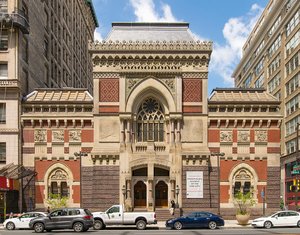 Pennsylvania Academy of Fine Arts
A Living Legacy of American Artistry In the heart of Philadelphia, where the echoes of history meet the vibrant pulse of modern creativity, stands the Pennsylvania Academy of Fine Arts (PAFA). More than a mere repository for canvas and stone, PAFA se...
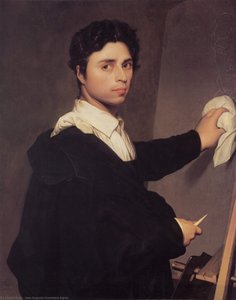
The influence of the European academies, particularly the prestigious Académie des Beaux-Arts in France, radiated throughout the Western world for centuries. Reaching its apogee in the 19th century, this movement established standards that would define the very concept of fine art. Figures such as Jean-Auguste-Dominique Ingres became architects of a style that synthesized elements of Neoclassicism and Romanticism, creating a lineage of excellence that inspired countless institutions across the globe. This tradition was not confined to the salons of Paris; it found fertile ground in the founding of venerable schools like the Pennsylvania Academy of Fine Arts in 1805, which stands as a living testament to the evolution of the aesthetic spirit.
This legacy of formal training and institutional prestige created a global language of art. From the Royal Academy of Fine Arts in Antwerp, established by David Teniers the Younger, to the prestigious Central Academy of Fine Arts in China, the principles of meticulous observation and faithful representation have been passed from master to pupil. Even in the contemporary era, we see the echoes of this tradition in the works of artists like Jin Shangyi, whose neoclassical realism prioritizes a deliberate counterpoint to avant-garde trends through his dedication to traditional techniques. This continuity of instruction ensures that the flame of artistic innovation remains tethered to the profound wisdom of the past.
The Pursuit of Ideal Beauty: Balancing Technical Precision with Emotional Depth
 Academic Realism's Finest: 10 Masterpieces for Art Lovers & Home Decor
Introduction To gaze upon these ten masterpieces is to step back into a world where skill reigned supreme, and art served as a mirror reflecting not just appearances, but the very soul of human experience. The Academic Realism movement, born from the...
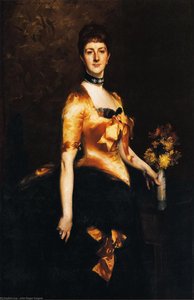
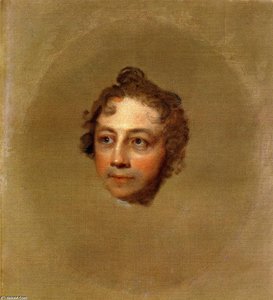
While the hallmark of Academic art is often its precision, the true mastery lies in the delicate balance between technical rigor and emotional resonance. An artist may possess the ability to render a landscape or a portrait with photographic accuracy, yet without the infusion of soul, the work remains merely a technical exercise. The most captivating works are those that use the structured language of the academy to convey profound psychological depth. We see this in the way a portrait can capture not just the likeness of a subject, but the very essence of their character, using subtle nuances of expression and light to invite the viewer into an intimate dialogue.
This pursuit of ideal beauty seeks to elevate the everyday, transforming the mundane into something monumental. It is a movement that celebrates the grace found in the refined and the poetic precision found in the delicate. Whether it is the way light dances across fine fabric or the serene dignity of a landscape, the Academic artist strives to present a version of reality that is polished and perfected. This does not mean the art is devoid of feeling; rather, the emotions are channeled through a controlled medium, preventing the "emotional fervor" of movements like Romanticism from overwhelming the underlying logic of the composition. It is a sophisticated emotionality, one that respects the intellect as much as the heart.
Timelessness in the Modern Age: Preserving the Academic Spirit in Contemporary Art
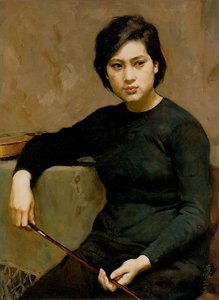 Jin Shangyi
Jin Shangyi: A Master of Neoclassical Realism Jin Shangyi (born December 1934 in Jiaozuo, Henan Province, China) stands as a towering figure within the landscape of contemporary Chinese oil painting, firmly rooted in the neoclassical realism movement...
In our current era, characterized by rapid technological shifts and a fragmented visual culture, the principles of Academic Realism offer a much-needed sanctuary. To engage with these works today is to reconnect with a sense of permanence and historical continuity. The movement continues to thrive not as a stagnant relic of the past, but as a living tradition that finds new relevance in the modern world. Contemporary artists who embrace classical realism remind us that the fundamental truths of beauty, proportion, and human experience remain unchanged by the passage of time.
Preserving this spirit requires a commitment to the craftsmanship that defines it—the physical act of painting on canvas, the layering of oils, and the careful application of varnish to protect the work for generations. As we navigate an age of digital reproduction, the tactile depth of a hand-painted oil work—with its visible brushstrokes and rich tonal range—serves as a powerful reminder of the human touch. By honoring these traditions, we ensure that the profound logic, historical reverence, and breathtaking elegance of Academic art continue to inspire and captivate collectors and enthusiasts for centuries to come.
At ArtsDot.com, we are dedicated to preserving this magnificent legacy. Our mission is to make the grandeur of the Old Masters and the precision of Academic Realism accessible to everyone through exquisite, hand-painted reproductions. Each of our works is a labor of passion, meticulously crafted by master artists on 100% cotton canvas to ensure museum-quality longevity. Whether you seek to transform a personal memory into a masterpiece via our Custom Painting from Photo service, or wish to explore the breathtaking textures of a Handmade Oil Reproduction, we invite you to join us in celebrating the enduring beauty of art history.