The Veil of Perception: Defining the Symbolist Movement
To gaze upon a Symbolist masterpiece is to step through a threshold, leaving the tangible certainties of the material world for a realm where shadows possess weight and silence speaks in metaphors. Emerging in the late 19th century as a profound reaction against the literalism of Naturalism and the fleeting impressions of Impressionism, Symbolism sought something far more enduring: the expression of ideas, emotions, and the unseen currents of the human psyche. It was not an attempt to replicate the light hitting a haystack or the movement of water, but rather to capture the internal resonance of those sights within the soul.
The movement functioned as a bridge between the visible and the invisible. Where the Realists documented the grit of industrial life, the Symbolists deloresed in the depths of myth, dream, and the occult. They believed that art should not merely represent the external world but should serve as a vessel for the subjective experience. Through carefully curated motifs—often shrouded in mystery—these artists invited viewers to engage in a private dialogue with their own subconscious, making every canvas a gateway to an introspective journey.
Echoes of the Unseen: The Poetics of Odilon Redon and the Dreamscape
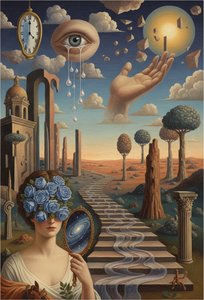
Perhaps no artist embodies the haunting elegance of this movement more profoundly than Odilon Redon. His work acts as a visual poem, where the boundaries between life and hallucination dissolve into a soft, ethereal haze. In seminal works such as Apparition, we encounter a world that feels both ancient and intimately personal. Redon’s ability to manipulate light and shadow creates a sense of profound mystery; his figures often emerge from a nebulous darkness, suggesting the way memories or dreams flicker into consciousness before retreating once more into the void.
Redon’s mastery lies in his capacity to evoke l'invisible. His dreamscapes are not chaotic; they possess a structured, quiet intensity. By utilizing symbolic figures and enigmatic compositions, he invites us to contemplate the spiritual dimensions of existence. To study Redon is to learn the language of the nocturnal mind, where every floating eye or spectral bloom serves as a sigil for an emotion too complex for mere words. His legacy remains a cornerstone for anyone seeking to understand how art can illuminate the darkest corners of our inner landscape.
Surrealist Legacies: From Dalí’s Desires to Contemporary Visions
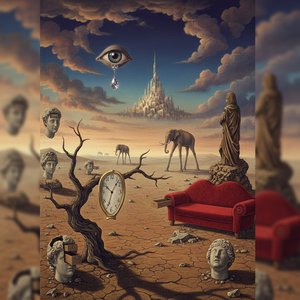
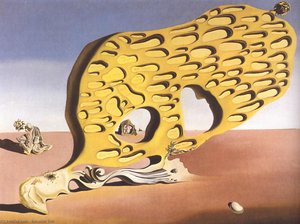
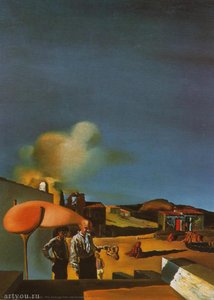
As the centuries progressed, the seeds planted by the Symbolists blossomed into the full-scale psychological revolutions of Surrealism. The movement took the symbolic language of the 19th century and applied it to the burgeoning science of psychoanalysis. Salvador Dalí, a titan of this era, transformed the dreamscape into a hyper-lucid stage of anatomical precision and impossible geometries. In works like Accommodations of Desire, Dalí employs a meticulous, almost photographic texture to render scenes that defy all logic, blending vivid imagery with a profound sense of psychological tension.
This lineage of visual storytelling does not end with the masters of the past; it breathes through the works of contemporary practitioners. Modern artists continue to utilize these surrealist techniques to explore identity, trauma, and desire. The connection between the Symbolist's mythic metaphors and the Surrealist's Freudian explorations is a continuous thread of human inquiry. Whether through the distorted landscapes of the mid-20th century or the evocative, emotive paintings of today’s contemporary surrealists like Hilary Edwards, the pursuit remains the same: to use the canvas as a mirror for the complexities of the human heart.
The Architecture of the Subconscious: Intricate Realism and Fantastical Landscapes
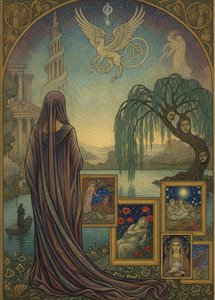
Beyond the ethereal mists of Redon lies another facet of the dreamlike world: the intersection of rigorous technical realism and impossible architecture. This is a realm where the precision of Flemish-inspired detail meets the logic of a fever dream. Artists such as Jacek Yerka exemplify this breathtaking approach, creating works like Subconscious Tower that demand a slow, meditative gaze. Here, the landscape is not merely a setting but a living, breathing entity composed of layered meanings and architectural marvels that defy gravity.
This style relies heavily on the viewer's ability to recognize detail—the texture of stone, the glint of light on water—only to realize that these familiar elements are arranged in a way that contradicts physical reality. It is an architecture of the mind, where every window might lead to a different memory and every tower holds a secret. This marriage of technical excellence and fantastical imagination creates a profound sense of awe, reminding us that our internal worlds are just as vast and intricate as the universe we inhabit.
Decoding the Canvas: How Symbolism Translates Emotion into Visual Language
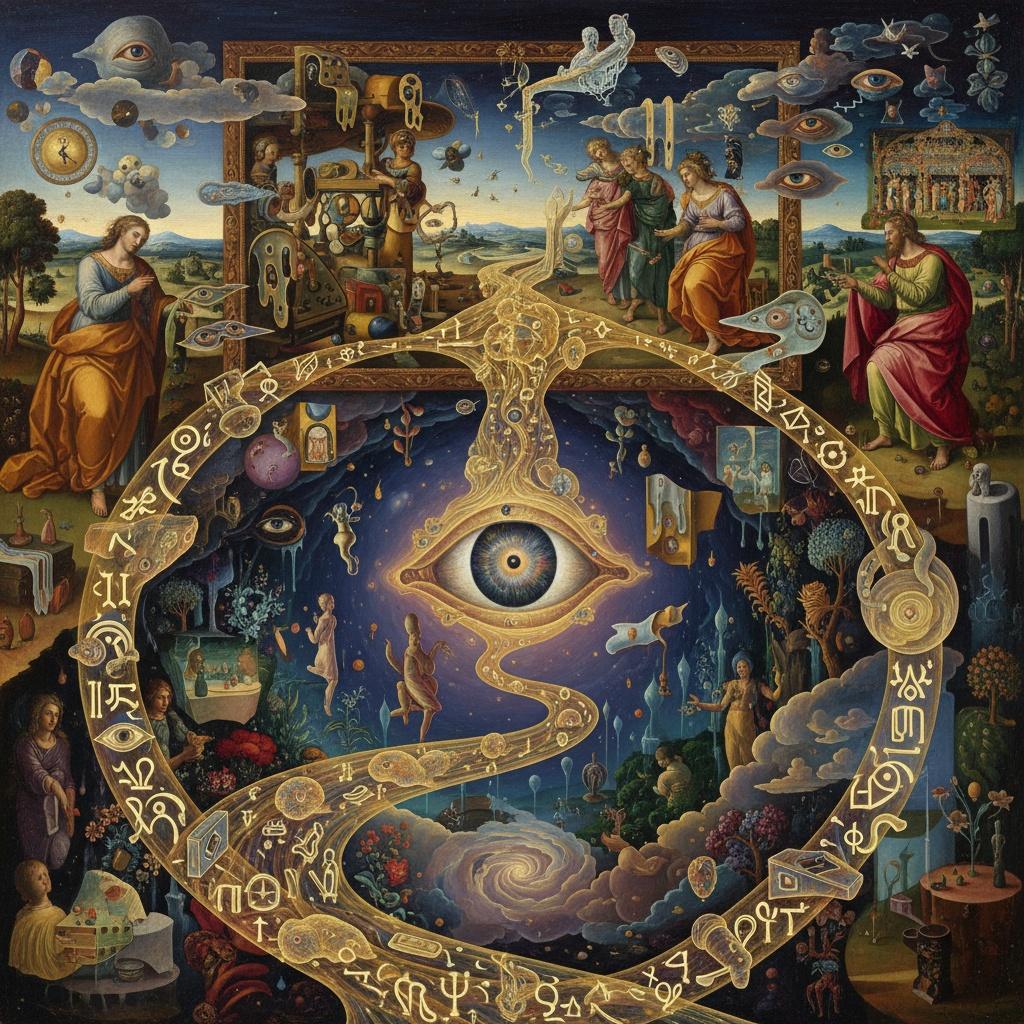
To truly appreciate Symbolist art, one must learn to decode its visual vocabulary. The movement relies on a system of motifs where objects are imbued with secondary, often spiritual, meanings. A wilting flower is rarely just a botanical study; it is an emblem of mortality and the passage of time. A closed eye represents the withdrawal from the external world into the sanctuary of thought. This layer of meaning allows the artist to communicate profound truths without the need for literal depiction.
This translation of emotion into imagery requires an active participant—the viewer. The art is not a passive experience but a cognitive one. As we navigate the textures and colors of these works, we are essentially performing an act of interpretation. This depth is what gives Symbolist-inspired art its enduring power; it remains fresh and provocative because each viewing allows for new layers of personal meaning to emerge, much like the shifting patterns of a dream upon waking.
Preserving the Ethereal: Bringing Masterful Symbolism into the Modern Home
In an age dominated by the rapid and the superficial, there is a growing desire to surround ourselves with art that possesses soul, depth, and permanence. Integrating the dreamlike aesthetics of Symbolism into a contemporary interior offers more than mere decoration; it provides a window into a more contemplative way of living. Whether through a large-scale oil reproduction that commands a room or a delicate Giclée print that invites quiet study, these works serve as anchors for reflection.
At ArtsDot.com, we celebrate this enduring passion for the masters. Our mission is to make the profound accessible, offering everything from meticulously hand-painted oil recreations—where artists apply multiple layers of pigment to capture the tactile essence of the original—to museum-grade Giclée prints. We understand that a true collector seeks more than a copy; they seek the spirit of the era. Through our bespoke services, such as transforming personal memories into the style of historical masters or creating multi-panel sets for grand architectural spaces, we help you curate a sanctuary of beauty and mystery that transcends the boundaries of reality.