The Art of Deception: Understanding Trompe l'oeil and the Mastery of Realism
To gaze upon a true masterpiece of illusion is to enter into a silent, sophisticated dialogue with the artist, where the boundaries between the canvas and reality begin to dissolve. This profound manipulation of perception finds its most exquisite expression in Trompe l'oeil, a term derived from the French command to "deceive the eye." It is an art form that demands more than mere observation; it requires a surrender of one’s certainty. When we encounter these works, we are not simply looking at pigment on fabric, but witnessing a triumph of technical virtuosity where shadows are cast with such precision and textures appear so tactile that the mind instinctively reaches out to touch them.
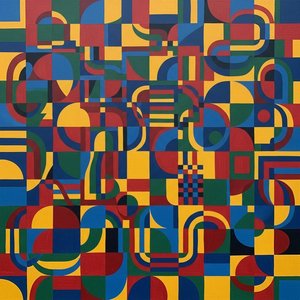
The history of this deceptive mastery is rooted in an obsession with the tangible. Artists have long sought to replicate the subtle interplay of light on stone, the delicate weight of a draped cloth, or the architectural depth of a window opening onto a distant landscape. In works such as Martin Battersby’s 1960 oil painting, Trompe l'oeil (Architecture), we see how the meticulous application of detail can transform a flat surface into a structural marvel. The brilliance lies in the artist's ability to master light and shadow—the chiaroscuro—ensuring that every highlight and every deep crevice aligns perfectly with a perceived light source, thereby tricking the brain into perceiving three-dimensional volume where none exists.
Ultimately, the allure of Trompe l'oeil lies in the delightful tension it creates within the viewer. There is a momentary, breathless pause when the eye realizes that the object it perceived as real is, in fact, an illusion. This realization does not diminish the art; rather, it elevates it, turning the act of viewing into a sophisticated game of perception and discovery.
Geometric Distortions: The Mathematical Precision of Op Art and Optical Depth
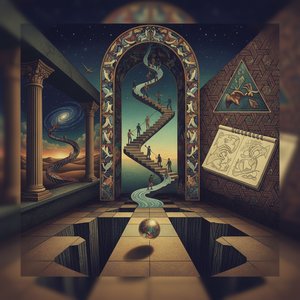
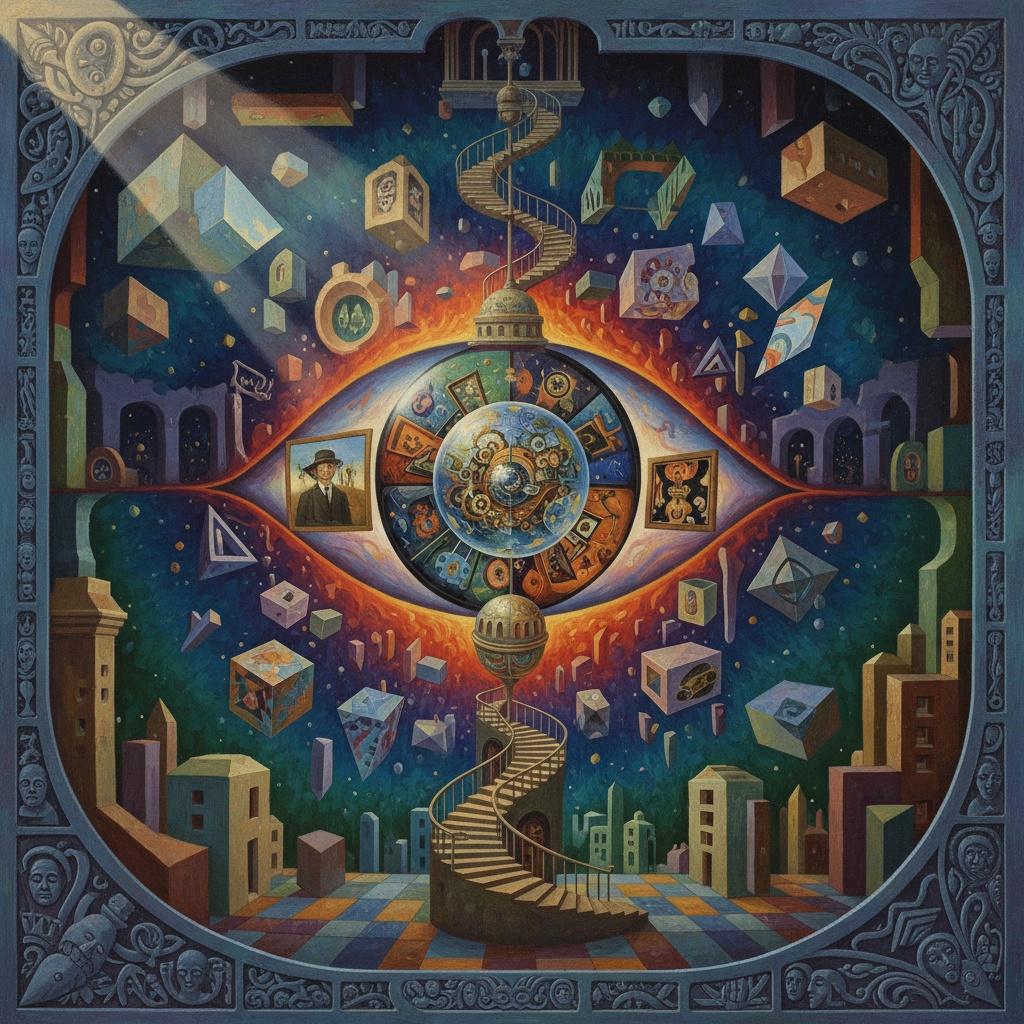
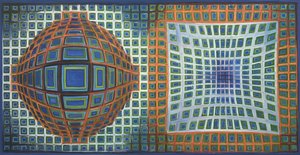
Moving away from the literal mimicry of reality, we encounter a different, more cerebral form of visual wonder: the hypnotic realm of Op Art. If Trompe l'oeil seeks to deceive through realism, Op Art seeks to unsettle through geometry. This movement, which gained significant momentum in the mid-20th century, utilizes the mathematical precision of lines, shapes, and colors to create sensations of movement, vibration, and depth. It is an art of pure optical energy, where the canvas becomes a kinetic field of shifting patterns that seem to pulse before our very eyes.
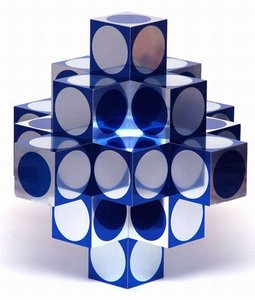
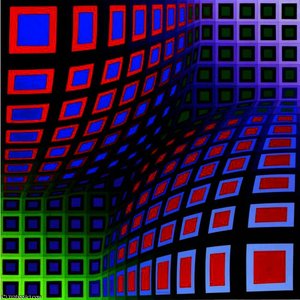
Consider the profound impact of Victor Vasarely’s Study of trompe l'oeil from 1936. Here, we see the precursors to the Op Art movement, where geometric forms and warm, carefully calibrated colors are arranged to create an unsettling sense of depth. The eye is drawn into a labyrinth of shapes that appear to recede or advance rhythmically. This is not a deception of subject matter, but a deception of space itself. Through the strategic use of contrast and repetitive patterns, artists can induce a physiological response—a slight dizziness or a shimmering sensation—that forces the viewer to confront the limitations of human vision.
The sophistication of this style lies in its reliance on the science of perception. By understanding how the retina processes high-contrast edges and rhythmic repetitions, Op Art masters create works that are never truly static. Each movement of the viewer’s head or change in ambient lighting alters the perceived vibration of the pattern, ensuring that the artwork remains a living, breathing entity of mathematical beauty.
Pop Art Playfulness: Reimagining Everyday Objects through Illusionary Lenses
In the vibrant landscape of the 20th century, the boundaries of illusion were pushed once more by the irreverent spirit of Pop Art. This movement took the high-concept techniques of classical illusion and applied them to the mundane, the mass-produced, and the everyday. It stripped away the solemnity of traditional fine art, replacing it with a playful, often ironic, exploration of consumer culture and graphic iconography.
A quintessential example of this delightful subversion is found in Roy Lichtenstein’s Trompe L'oeil with Leger Head and Paintbrush. In this work, the artist utilizes the bold, dot-heavy aesthetic of comic books to present a surreal arrangement of objects—a paper head adorned with a green necklace alongside a paintbrush and broom. Here, the "illusion" is not meant to mimic a photograph, but to mimic the graphic language of print media itself. It plays with our expectations of texture and depth by using flat colors and heavy outlines to create a sense of layered reality.
This era of art reminds us that illusion does not always require the pursuit of hyper-realism; it can also be found in the way we recontextualize the familiar. By elevating everyday objects through clever composition and unexpected juxtapositions, Pop artists invite us to find wonder in the ordinary, proving that even a paintbrush or a broomstick can become a protagonist in a grand, illusory drama.
The Architecture of Sight: Integrating Illusion into Modern Interior Spaces
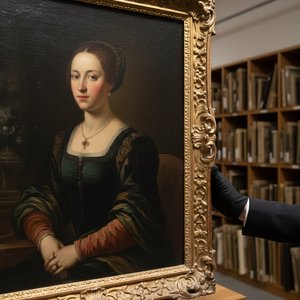
The impact of illusionary art extends far beyond the confines of a gilded frame; it has the power to fundamentally redefine the architecture of our living environments. For the discerning collector and interior designer, the integration of Trompe l'oeil or large-scale optical works offers an unparalleled opportunity to manipulate the perceived dimensions of a room. An expertly placed mural can create the illusion of an expansive ceiling, while a textured, illusory fresco can add a sense of historical grandeur to a contemporary hotel or private residence.
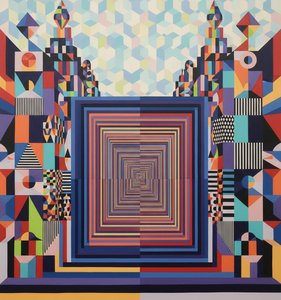
Integrating such profound works requires a delicate balance of light and placement. Large-format murals, painted on massive canvas rolls, allow for the recreation of historical masterpieces—such as the breathtaking ceiling frescoes of the Renaissance—within modern architectural settings. These works act as "windows" into other eras or dimensions, breaking the monotony of flat walls and providing a focal point that commands attention. The use of multi-panel, group set paintings can also serve to guide the eye through a space, such as a staircase or a wide gallery, creating a seamless flow of visual narrative.
When executed with professional precision, these illusions do not merely decorate a room; they transform it. They provide depth where there is none, texture where there is smoothness, and a sense of infinite possibility within the physical limits of a structure.
Preserving the Illusion: The Craftsmanship Behind High-Fidelity Art Reproductions
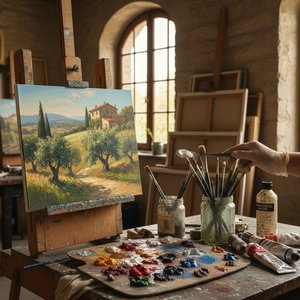
To truly appreciate and possess the magic of these masterpieces, one must respect the rigorous craftsmanship required to reproduce them. A true high-fidelity reproduction is not a mere copy; it is a labor of devotion aimed at capturing the "soul" of the original. This process begins with the meticulous application of multiple layers of oil paint, building up a tactile, three-dimensional texture known as impasto. It is this physical depth—the visible, heavy brushstrokes—that allows a reproduction to retain the light-catching qualities and the living energy of the museum piece.
The longevity of such an investment depends on the chemistry of art. Using premium pigments with high lightfastness and flexible gesso ensures that the artwork resists cracking and fading over decades. The application of a final Damar varnish serves as a protective shield against the elements, preserving the vibrancy of the colors for generations. Whether it is a Giclée print utilizing 12-color pigment-based inks or a bespoke oil painting commissioned to transform a personal memory into a classical masterpiece, the goal remains the same: to preserve the illusion against the passage of time.
At ArtsDot.com, we believe that every collector deserves access to this level of excellence. From our transparent digital order management system to our global logistics that ensure your treasure arrives safely in any corner of the world, we are dedicated to bridging the gap between the legendary masters of the past and the sophisticated enthusiasts of the present. We invite you to explore our vast library and discover how the wonders of illusion can become a permanent part of your own visual legacy.