The Escape from Europe: Gauguin’s Quest for the Primal
To understand the soul of Paul Gauguin, one must first understand the profound restlessness that drove him away from the structured, industrializing heart of Europe. Born into a world of burgeoning modernity, Gauguin felt an irrepressible pull toward something more ancient, more unadulter/ed. His departure from the comforts of Paris and the familiar landscapes of Brittany was not merely a geographical relocation but a spiritual exodus. He sought a realm where the boundaries between the human spirit and the natural world remained porous, a place untouched by the encroaching shadows of Western materialism.
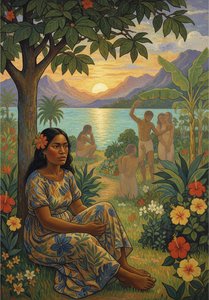
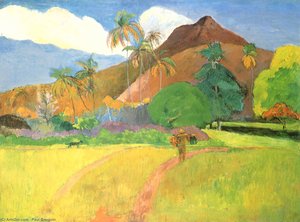
This quest for the primal led him to the lush, sun-drenched landscapes of Tahiti, a destination that would forever alter the trajectory of modern art. In these islands, Gauguin did not merely find new scenery; he found a new way of seeing. He sought to strip away the layers of academic artifice to uncover a raw, visceral truth. This movement, often termed tropical primitivism, was less about a romanticized view of "the savage" and more about an artist’s desperate attempt to reconnect with a sense of mythic origin and elemental existence.
His journey was marked by a deliberate rejection of the fleeting impressions captured by his contemporaries. While the Impressionists chased the ephemeral dance of light upon water, Gauguin sought the permanent, the symbolic, and the eternal. He wanted to capture the weight of tradition and the depth of belief, finding inspiration in the rhythms of Polynesian life and the profound stillness of the tropical landscape.
A Palette of Paradise: The Revolutionary Use of Color
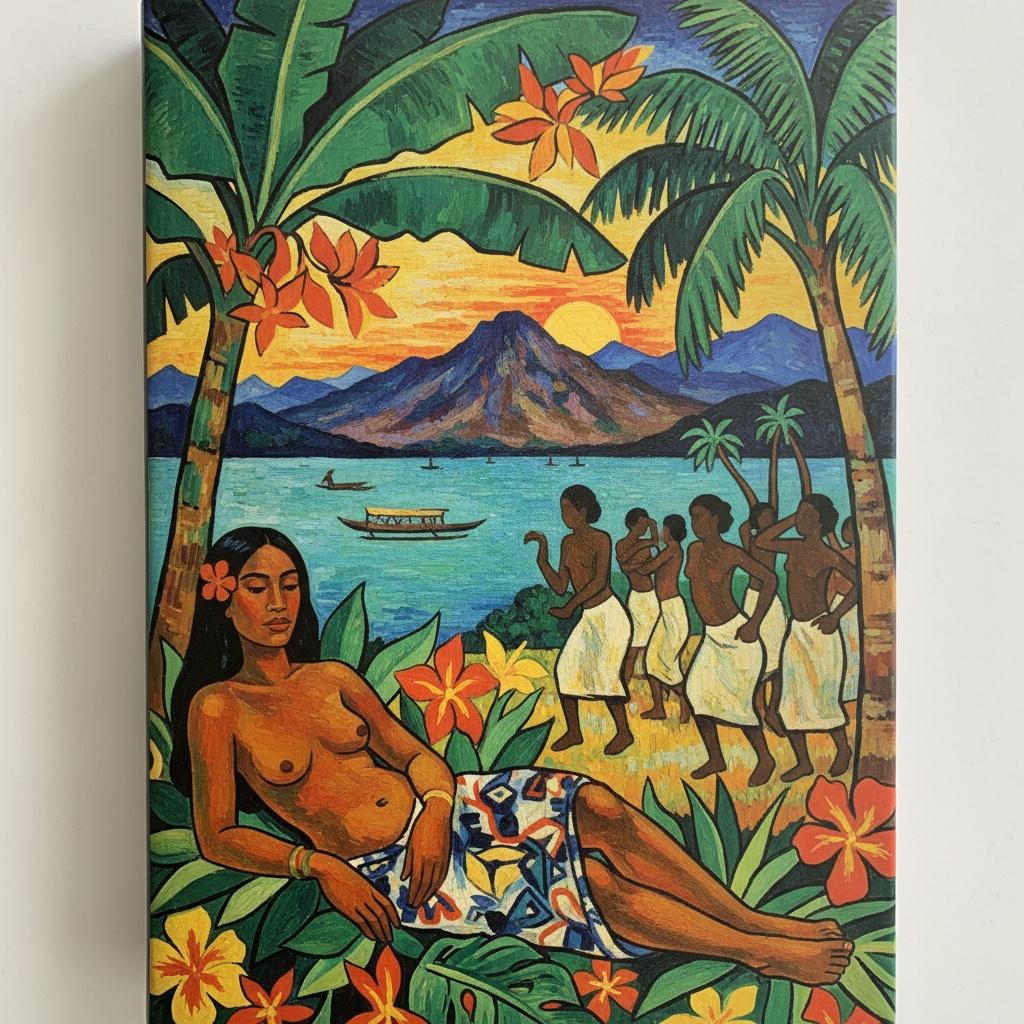
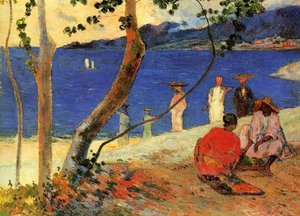
The moment Gauguin’s brush touched the canvases of the South Pacific, his palette underwent a radical transformation. The muted tones of his European period gave way to an explosion of saturated, non-naturalistic hues that challenged every established convention of the time. He began to use color not as a tool for mere description, but as a vehicle for emotion and spiritual resonance. In works such as The Canoe: A Tahitian Family, we witness this mastery; the vibrant, bold colors do more than depict a beach scene—they evoke the very heat, humidity, and vitality of the island itself.
Gauguin’s technique involved large, flat areas of color, a style known as Cloisonnism, which utilized dark outlines to separate distinct fields of pigment. This approach gave his compositions a stained-glass quality, lending them a sacred, almost liturgical weight. He was not afraid of the unexpected; he might pair a deep, bruised violet with a searing ochre or a sudden burst of emerald green to create a visual tension that keeps the viewer’ even decades later in a state of heightened awareness.
This revolutionary use of color served to decouple art from reality. By moving away from the subtle gradations of light and shadow, Gauguin invited the viewer into a dreamscape where color functioned as its own language. Each shade was a deliberate choice intended to stir the subconscious, making his paintings feel less like windows into a world and more like portals into an internal, psychological landscape.
Symbolism and the Sacred: Decoding the Tahitian Narrative
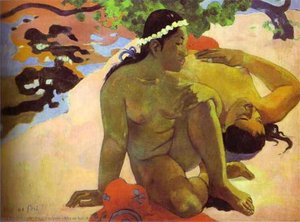
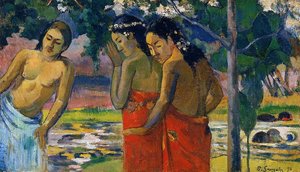
Beyond the surface brilliance of his colors lies a complex web of symbolism that demands deep contemplation. Gauguin’s Tahitian works are rarely just portraits or landscapes; they are tapestries of meaning, woven with threads of local myth, Christian iconography, and personal philosophy. He utilized the figures within his compositions to act as vessels for larger, often esoteric, ideas regarding life, death, and rebirth.
In many of his most profound works, there is a palpable sense of the sacred. He integrated elements of Tahitian spirituality with a heavy, almost melancholic sense of destiny. The figures in his paintings often possess an introspective, stoic quality, as if they are aware of their place within a vast, cosmic cycle. This layering of meaning creates a narrative depth that transcends the physical subject matter, turning a simple depiction of a person into a meditation on the human condition.
Decoding these works requires an appreciation for the artist's ability to blend the seen with the unseen. He used motifs—a specific flower, a certain posture, or the way light falls across a face—to hint at deeper truths. This symbolic language allowed him to communicate complex emotional states and spiritual inquiries without relying on traditional Western narrative structures, creating a visual poetry that remains as enigmatic as it is beautiful.
From Portraiture to Myth: Capturing Human Emotion and Spirit
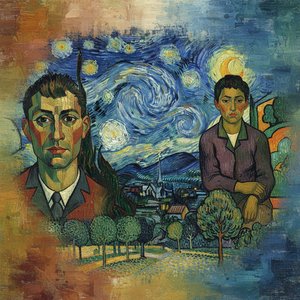
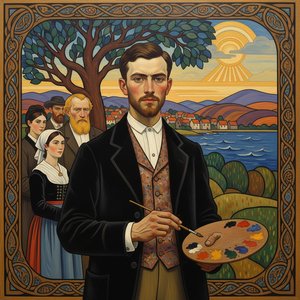
Gauguin’s approach to the human figure was equally transformative. He moved away from the formal, often stiff portraiture of the academy toward a more intimate, soulful representation of his subjects. Whether depicting the tender vulnerability in Portrait of a Child (Aline Gauguin) or the rugged, artistic presence in Aube the Sculptor and His Son, he sought to capture the essence of the individual's spirit rather than just their physical likeness.
There is an incredible emotional depth in his portraits; they often convey a sense of profound solitude or quiet strength. He had a unique ability to imbue his subjects with a certain dignity, even when portraying them in moments of repose or sorrow. This was achieved through a careful balance of bold, expressive brushwork and a sensitive understanding of facial expression and gesture.
In these works, the line between portraiture and myth begins to blur. His subjects often feel as though they belong to another era, or perhaps to a realm of legend. By stripping away the contemporary trappings of his subjects, he elevated them to archetypes. This ability to capture the universal within the particular is what gives his portraiture such enduring power; we do not just see a Tahitian child or a fellow artist, we see the very embodiment of innocence or the creative struggle.
The Legacy of Post-Impressionism: Gauguin's Enduring Influence
The ripples of Gauguin’s innovations continue to expand through the history of modern art. His liberation of color and his embrace of symbolism paved the way for the Fauvists, whose wild palettes would take his experiments to even more extreme conclusions. Furthermore, his interest in the "primitive" and the non-Western aesthetic provided a foundational influence for the development of Primitivism and later movements like Cubism, which sought to deconstruct form entirely.
Gauguin’s legacy is not found merely in the museums that house his masterpieces, but in the very way we perceive the relationship between art and reality. He taught us that art does not have to be a mirror held up to nature; it can be a prism that refracts and transforms it. His courage to abandon the familiar in search of the profound remains an inspiration to all who seek to find their own authentic voice.
At ArtsDot.com, we celebrate this enduring legacy by bringing the textures and emotions of these historical masterpieces into the modern home. Through our dedicated team of master artists, we offer hand-painted oil reproductions that honor the thick impasto and vibrant tonal ranges of Gauguin’s original works. Whether you are looking to transform a personal memory through our custom portrait services or wish to adorn your space with the bold spirit of Post-Impressionism, our mission is to make the profound beauty of art history accessible to every collector worldwide.