The Genesis of Expression: The Sketch as an Artist's First Breath
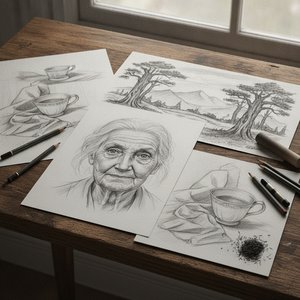
Before the grand, sweeping gestures of a finished oil masterpiece emerge upon the canvas, there exists a moment of pure, unadulterated vulnerability. This is the genesis of expression—the sketch. It is the artist’s first breath, a private dialogue between the eye and the hand where no correction is yet possible and no artifice can hide the truth of the subject. In these preliminary marks, we witness the raw impulse of creativity, stripped of the heavy layers of glaze and the calculated precision of final compositions. To look upon a sketch is to eavesdrop on the very thoughts of a master, catching them in that fleeting instant before they are codified into formal art.
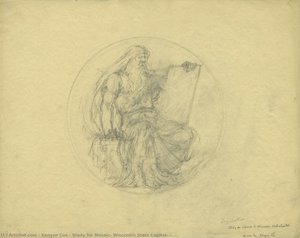
The sketch serves as an intellectual laboratory, a space where ideas are tested, discarded, or refined. There is an inherent honesty in the charcoal smudge or the hurried graphite stroke; it lacks the performative grandeur of a finished portrait but possesses a psychological depth that is often more profound. In this stage, the artist is not concerned with the perfection of light or the richness of pigment, but rather with the fundamental essence of the subject—the weight of a limb, the tilt of a head, or the sudden flicker of an emotion. It is here that the soul of the artwork is truly born.
Anatomy and Precision: The Scientific Rigor of the Preparatory Study
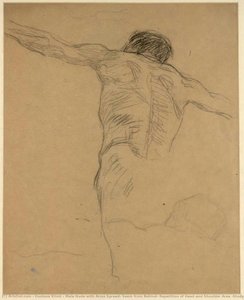
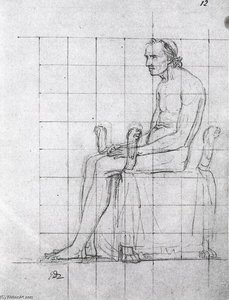
While the sketch may appear spontaneous, it is often underpinned by a rigorous commitment to anatomical truth. For the classical artist, the study of form is a scientific endeavor. We see this mastery in works such as Benjamin West’s Study for The Woman Clothed in the Sun, where a detailed charcoal exploration of a hand reveals a profound understanding of skeletal structure and muscular tension. Such studies are not merely exercises in drawing but are essential investigations into the mechanics of life itself. By deconstructing the human or animal form into its constituent parts, the artist builds a foundation of realism that allows for later embellishment.
This scientific rigor extends deeply into the animal kingdom as well. Consider the influence of George Stubbs, whose anatomical precision revolutionized equine portraiture. Modern echoes of this tradition can be found in works like Clara Drummond’s Horse Study, where graphite hatching techniques are employed to map the complex musculature of the horse. These preparatory studies serve a dual purpose: they educate the artist's hand and provide a blueprint for the final work, ensuring that when the brush finally meets the canvas, every movement is grounded in an unshakeable biological reality.
The Poetry of Line: Capturing Kinetic Energy and Fluid Motion
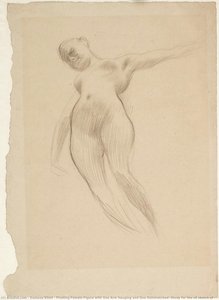
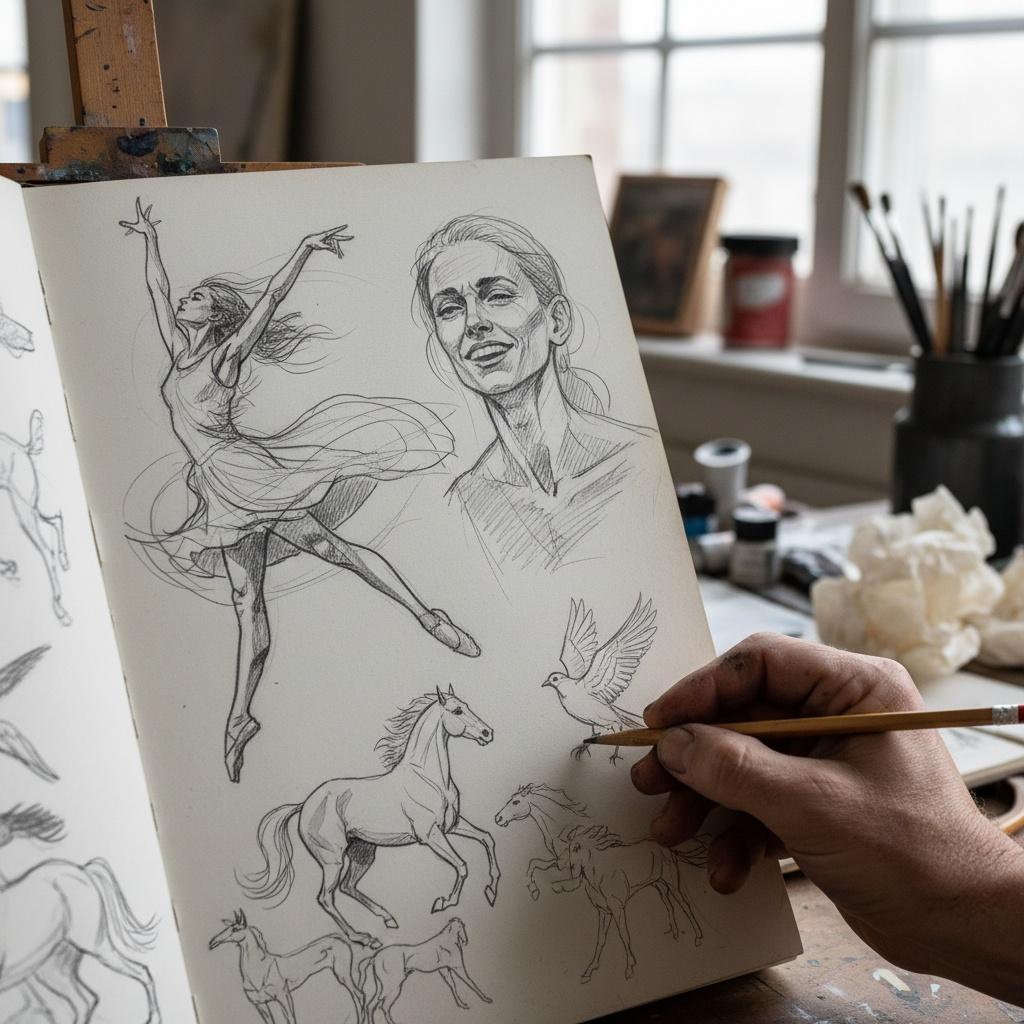
Beyond the structural certainty of anatomy lies the more ethereal pursuit of motion. A sketch possesses a unique ability to capture what a finished painting might struggle to hold: the ephemeral quality of movement. Through the strategic use of line, an artist can suggest the velocity of a galloping horse or the gentle sway of a figure in repose. There is a rhythmic poetry in the way a single, continuous contour can define the grace of a reclining woman, much like the captivating pencil work found in Hugo Robus’s Study for Figure in a Hammock.
This kinetic energy is achieved through the variation of pressure and speed. A heavy, dark line conveys weight and permanence, while a light, wispy stroke suggests airiness or fleeting presence. When an artist masters this vocabulary, the paper ceases to be a flat surface and becomes a stage for motion. The viewer’s eye is led along the path of the artist's hand, experiencing the same sense of momentum that the creator felt during the act of drawing. It is in this dance of line and shadow that the true vitality of life is captured.
Charcoal and Graphite: Exploring the Alchemy of Monochrome Mediums
The choice of medium dictates the emotional temperature of the sketch. Charcoal, with its deep, velvety blacks and ability to be smudged into soft gradients, offers a dramatic, almost melancholic atmosphere. It is a medium of shadow and light, perfect for exploring the chiaroscuro effects that define much of the Renaissance-inspired tradition. The carbon particles cling to the paper with a tactile grit, allowing for a range of tones that can mimic the depth of the darkest midnight or the softest twilight.
In contrast, graphite provides a precision and clarity that charcoal lacks. It is the medium of the architect and the anatomist, capable of producing incredibly fine, sharp lines that define edges with surgical accuracy. The alchemy occurs in the interplay between these two; when an artist utilizes both, they create a multidimensional world of texture. The grit of the charcoal provides the atmosphere, while the graphite provides the structure, resulting in a monochrome landscape that is as rich and complex as any full-color oil painting.
From Ephemeral Mark to Eternal Masterpiece: The Evolution of the Sketch into Oil
The transition from paper to canvas is a journey of transformation. What begins as a tentative mark in graphite or a bold sweep of charcoal eventually finds its way into the permanent, textured world of oil paint. This evolution is a process of layering and enrichment. The structural truths discovered during the sketching phase are translated into the impasto techniques of the final work, where visible brushstrokes add a physical dimension to the composition. The light-drenched atmosphere of an Impressionist landscape or the dramatic shadows of a Baroque portrait all find their roots in these initial, humble drawings.
This metamorphosis is what allows a simple idea to achieve immortality. At ArtsDot, we celebrate this very progression, as our master artists utilize these classical foundations to create hand-painted reproductions that honor the original's intent. Whether it is a "period shift" that reimagines a modern moment in the style of Rembrandt or a custom commission that breathes life into a personal photograph, the goal remains the same: to take the raw emotion found in the sketch and elevate it through the enduring, tactile majesty of oil on canvas.
Preserving the Unfinished: The Enduring Allure of the Preliminary Work
There is a profound, lingering beauty in the unfinished. There is an allure to the "non finito"—the sense that the artwork is still breathing, still evolving, and still inviting the viewer to complete it with their own imagination. These preliminary works remind us that art is not merely a destination but a process of discovery. They offer a window into the artist's struggle, the triumphs of realization, and the quiet moments of doubt.
For the collector and the enthusiast, preserving this sense of immediacy is vital. Whether through the acquisition of fine art prints that capture the essence of a drawing or the commissioning of a bespoke oil painting that retains the energy of a study, we find that the most powerful art often resides in the tension between the planned and the spontaneous. In the end, the sketch remains the heartbeat of all great art, a timeless testament to the enduring power of human creativity.
About ArtsDot.com
Since 2004, ArtsDot has been dedicated to making fine art accessible to a global audience. We specialize in high-quality, hand-painted oil reproductions and custom commissions, working with academy-trained artists to transform personal memories and historical masterpieces into museum-grade treasures. From personalized portraits to large-scale architectural murals, our mission is to preserve the soul of human creativity for the modern collector.