The Alchemy of Pigment and Plaster: Understanding the Buon Fresco Technique
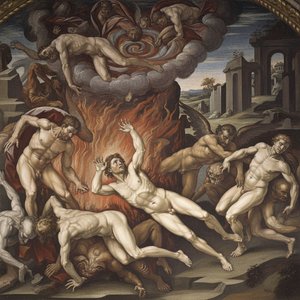
To understand the fresco is to understand a profound marriage between chemistry and devotion. Unlike the more forgiving nature of oil on canvas, buon fresco—or true fresco—demands an absolute surrender to the moment. The artist does not merely paint upon a surface; they become part of the wall itself. This technique requires the application of pigments mixed with water onto a layer of fresh, wet lime plaster, known as the intonaco. As the plaster undergoes its slow carbonization process, it chemically binds the pigment into the very fabric of the architecture.
This is an art form that permits no error. There is no erasing, no layering over mistakes, and no hesitation. The artist must work with a rhythmic precision, applying color only to the portion of the wall that remains damp, a section known as the giornata, or a day's work. This temporal constraint creates a unique tension in the medium, where the vibrancy of the colors is inextricably linked to the moisture of the lime. The result is a luminous, matte finish that possesses an ethereal quality, where light seems to emanate from within the wall rather than merely reflecting off its surface. It is a demanding alchemy, turning common earth and water into a permanent, breathing skin of color.
Narrative in Stone: The Role of Frescoes in Renaissance Storytelling
Beyond the technical rigor lies the soul of the fresco: its capacity for monumental storytelling. In an era where literacy was a privilege of the few, the walls of churches, palaces, and public halls served as the great visual libraries of humanity. Frescoes were never mere decoration; they were didactic instruments designed to transport the viewer into the realm of the divine or the heights of civic virtue. Through sweeping compositions and dramatic gestures, these works transformed cold stone into vibrant theaters of human emotion and spiritual revelation.
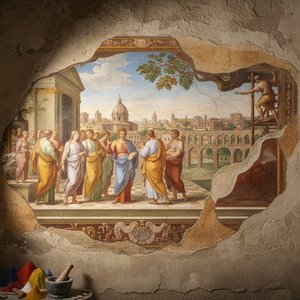
The power of this medium lies in its ability to command space. A well-executed fresco does not sit upon a wall; it expands it. By utilizing trompe l'oeil effects and masterful perspective, Renaissance masters could dissolve the boundaries of a room, opening up vistas of celestial heavens or ancient landscapes. These narratives functioned as a bridge between the earthly and the eternal, allowing the faithful to witness the stigmata of a saint or the triumphs of a king as if they were unfolding in their very presence. The scale of the fresco allows for a complexity of detail that invites the eye to wander, discovering hidden symbols and subtle allegories embedded within the grander movement of the scene.
Masters of the Wall: Analyzing the Works of Ghirlandaio and Nicolo di Pietro
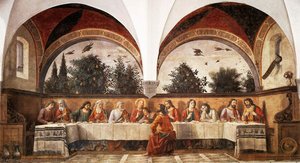
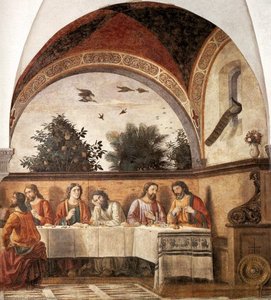
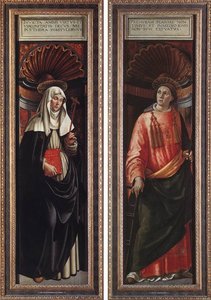
The history of the fresco is written in the hands of masters who pushed the boundaries of realism and religious intensity. Consider the Florentine virtuoso Domenico Ghirlandaio, whose work represents the pinnacle of Renaissance narrative clarity. In his breathtaking cycles, such as the Test of Fire before the Sultan or the poignant details of the Stigmata of St Francis, one observes a meticulous attention to both the sacred and the secular. Ghirlandaio possessed an uncanny ability to weave contemporary Florentine life into biblical drama, populating his holy scenes with recognizable landscapes and richly textured drapery that grounded the divine in the palpable world.
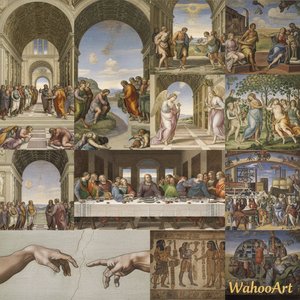
In a similar vein, the Early Renaissance period was shaped by pivotal figures like Nicolo di Pietro, whose works, including the Last Supper in Chiusi, showcased an emerging mastery of realism and religious gravity. These artists were not merely painters but architects of vision, managing vast surfaces to create cohesive theological programs. Their work required a deep understanding of anatomy, light, and the symbolic weight of every figure placed within the composition. To study their frescoes is to witness the evolution of human perception—a journey from the stylized icons of the medieval past toward the profound, humanistic depth that would define the height of the Renaissance.
Architectural Permanence: The Enduring Legacy of Frescoed Grandeur
There is a certain nobility in the permanence of fresco. While other mediums may succumb to the yellowing of varnish or the cracking of aged oils, a true fresco remains remarkably resilient, its colors preserved by the very process of their creation. This durability has allowed the great works of the past to endure through centuries of political upheaval and environmental change, standing as silent witnesses to the passage of time. The fresco becomes an architectural element, as essential to the structure as the columns or the arches themselves.
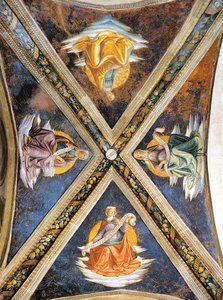
This permanence creates a sense of timeless grandeur that is difficult to replicate in any other medium. When one stands beneath a frescoed ceiling, there is a profound sense of stability and continuity. The art does not feel like an addition to the room; it feels like the room's very essence. This legacy continues to influence our understanding of monumental art, reminding us that true greatness is found in works that are built to last, intended to speak to generations yet unborn with the same clarity and passion as they did on the day the final giornata was completed.
Bringing History Home: Preserving the Spirit of Classical Art in Modern Interiors
In our contemporary era, the desire to surround ourselves with the echoes of greatness remains undiminated. While we may not all possess the vast palazzos of the Medici, the spirit of the fresco can be reimagulated within the modern home. The appreciation for classical aesthetics—the love for texture, depth, and historical narrative—allows us to bridge the gap between the museum and the living space. Through high-quality reproductions and large-format murals, the grandeur of the Renaissance can be integrated into modern architectural design, providing a sense of soul and heritage to even the most minimalist environments.
Whether it is through the tactile depth of an oil reproduction that mimics the impasto of a master or the sweeping scale of a custom ceiling mural, bringing art history into one's personal sanctuary is an act of cultural preservation. It allows us to curate an environment that is not merely fashionable, but meaningful. By selecting works that resonate with our personal values and aesthetic sensibilities, we ensure that the dialogue between the past and the present remains vibrant, allowing the timeless beauty of the fresco to continue its eternal dance with light and shadow in the homes of the modern connoisseur.
At ArtsDot.com, we are dedicated to this very mission: making the masterpieces of human history accessible to a global audience. From meticulously handcrafted oil reproductions that capture every brushstroke to museum-quality prints that preserve the luminous clarity of the Old Masters, our passion is to bring the grandeur of the past into your contemporary world with unparalleled quality and artistry.