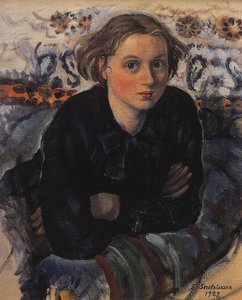
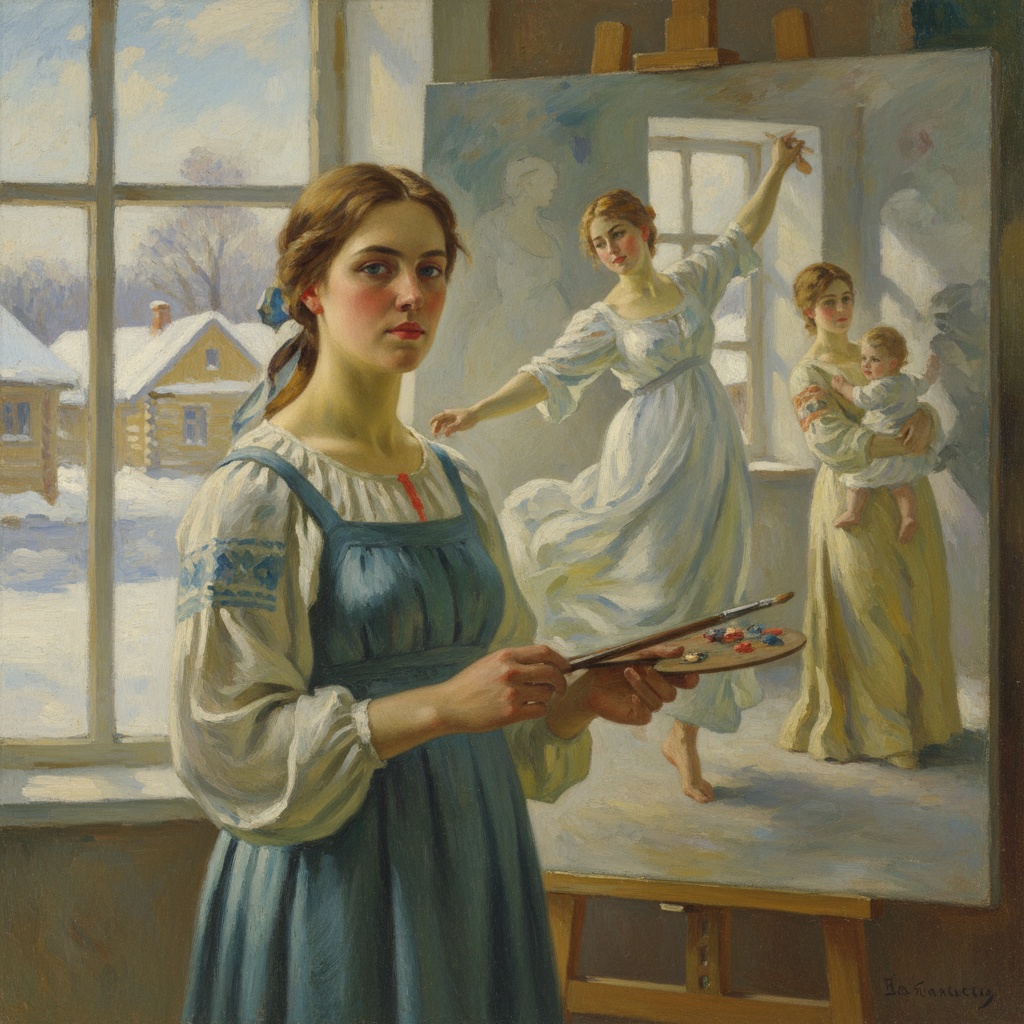
Early Life & Artistic Lineage: A Foundation Forged in Russian Culture
Modernism was an early 20th-century movement in literature, visual arts, performing arts, and music that emphasized experimentation, abstraction, and subjective experience. Philosophy, politics, architecture, and social issues were all aspects of thi...
Zinaida Yevgenyevna Serebriakova, born Lansere in 1884 on the estate of Neskuchnoye near Kharkov, emerged from a remarkably artistic family—a lineage that profoundly shaped her aesthetic sensibility. Her father, Evgeny Aleksandrovich Lansere, was a gifted sculptor, and her mother, Ekaterina Benois, possessed a painter’s eye. But it was her grandfather, Nicholas Benois, the esteemed architect and chairman of the Russian Academy of Science, and her uncle, Alexandre Benois, founder of the influential *Mir iskusstva* (World of Art) movement, who truly nurtured her burgeoning talent. This environment wasn't merely one of encouragement; it was an immersion in a world where artistic expression was not simply valued but considered integral to life itself. The Benois family’s embrace of beauty, coupled with their intellectual curiosity and commitment to preserving Russia’s cultural heritage, laid the groundwork for Serebriakova’s distinctive style.
Early exposure to Italy—a journey undertaken in 1902-1903—further refined her artistic vision. While still a teenager, she absorbed the Renaissance masters, developing a keen understanding of form and composition. Formal training followed at the art school founded by Princess Maria Tenisheva and later with Ilya Repin, whose emphasis on realism would become a cornerstone of Serebriakova’s approach. However, it was her time studying portraiture under Osip Braz that truly began to unlock her unique voice—a voice that would soon resonate throughout the Russian art world.
The Intimism of Everyday Life: Serebriakova’s Unique Vision
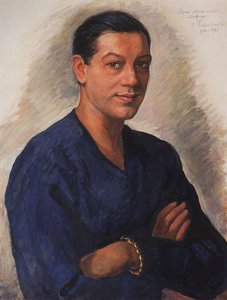
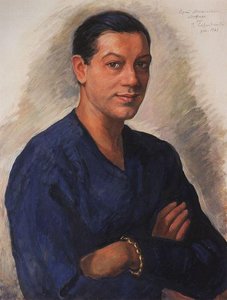 Portrait of S.M. Lifar
Discover Zinaida Serebriakova's captivating 'Portrait of S.M. Lifar,' a 1961 impressionistic masterpiece showcasing a dancer’s profile with subtle light and shadow.
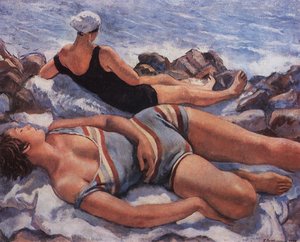
Serebriakova distinguished herself by turning away from grand historical narratives and instead focusing on the quiet beauty of everyday life. Her paintings are not filled with dramatic events or heroic figures; rather, they depict intimate scenes of Russian rural existence—peasants working in fields, families gathered around a table, women engaged in domestic tasks. This focus wasn’t simply a matter of subject matter; it was a deliberate aesthetic choice rooted in what would become known as Intimism – an exploration of the emotional and psychological nuances within private moments.
Her palette is often described as luminous and delicate, employing soft tones and subtle gradations to create a sense of warmth and tranquility. Paintings like *Sleeping Nude* (1932) exemplify this approach—a masterpiece that captures not just the physical form but also the vulnerability and serenity of the subject. The loose brushstrokes contribute to an impressionistic quality, yet there’s a grounding realism that prevents her work from becoming overly ethereal. Serebriakova wasn't merely *representing* life; she was conveying its emotional weight—the joys, sorrows, and quiet dignity of ordinary people.
Self-Portraiture as Exploration: Capturing Identity and Interiority
Zinaida Yevgenyevna Serebriakova (Russian: Зинаида Евгеньевна Серебрякова; née Lansere (Лансере), called in French Zénaïde Lanceray ; 10 December [O.S. 28 November] 1884 – 19 September 1967) was a Russian painter. == Early life and education == Zi...
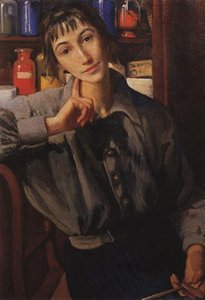
Perhaps the most compelling aspect of Serebriakova’s oeuvre is her prolific series of self-portraits. These are not simply likenesses; they are profound explorations of identity, interiority, and the evolving role of women in early 20th-century society. *Self-Portrait with a Brush* (1924) offers a particularly insightful glimpse into her artistic process—a moment of self-reflection captured with exquisite detail and honesty. The rich colors and intimate details reveal not just her physical appearance but also her intellectual curiosity and unwavering dedication to her craft.
Her *Self-Portrait at the Dressing Table* (1909) is a pivotal work, painted during a period of isolation due to harsh winter weather. The composition—framed by the mirror—creates a direct connection with the viewer, inviting us into her private world. The subtle arch of an eyebrow suggests a sly humor and self-awareness, hinting at a complex personality beneath the surface. Serebriakova’s self-portraits are not about vanity; they are about understanding herself as an artist, a woman, and a member of a rapidly changing society.
Navigating Revolution & Exile: Resilience and Continued Creativity
The outbreak of the October Revolution in 1917 irrevocably altered Serebriakova’s life. The loss of her husband Boris to typhus in 1919 left her responsible for four children and a financially precarious existence. The family estate was plundered, forcing her to adapt and find new ways to support herself and her family. Despite these immense challenges, she persevered, continuing to paint and draw even under the most difficult circumstances.
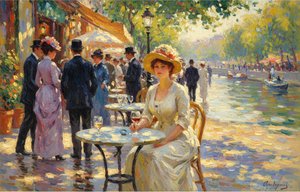
In 1924, Serebriakova embarked on a period of exile in Paris, where she sought refuge from the political turmoil in Russia. While initially hopeful, life abroad proved challenging. She struggled to gain recognition in a saturated art market and faced financial hardship. Nevertheless, she continued to produce work—portraits of fellow émigrés, scenes of Parisian life, and studies of classical mythology—demonstrating remarkable resilience and unwavering commitment to her artistic vision.
Serebriakova's Legacy: A Lasting Impact on Modern Art
Zinaida Serebriakova’s contribution to Russian Modernism is undeniable. Her unique blend of realism, Intimism, and psychological depth set her apart from her contemporaries. She challenged conventional notions of femininity and explored the emotional lives of women with unprecedented honesty and sensitivity. Her paintings offer a poignant glimpse into a bygone era—a world of quiet beauty, resilience, and unwavering artistic dedication.
Though she faced periods of obscurity during her lifetime, Serebriakova’s work has experienced a resurgence in recent decades, earning her recognition as one of the most important Russian painters of the 20th century. Her legacy continues to inspire artists today, reminding us of the power of art to capture not just what we see but also how we feel. Discover more about Serebriakova’s captivating paintings and explore intimate scenes of Russian life with ArtsDot.com, where museum-quality reproductions bring her masterpieces into your home.