Aloysius Pikonganna: Echoes of the Alaskan Arctic
Aloysius Pikonganna (1909-1986) represents a singular voice within Inupiaq artistic heritage, transcending mere craftsmanship to embody an unparalleled communion with ancestral traditions. Born in Nome, Alaska—a town pulsating with Inuit resilience and steeped in ancient lore—Pikonganna’s creative trajectory unfolded against the backdrop of accelerating Western expansion into Arctic territories.
Early Life & Influences: Pikonganna's formative years were indelibly shaped by immersion within Inupiaq daily life, absorbing narratives passed down through generations. The austere grandeur of the Alaskan tundra—characterized by sweeping snowscapes interlaced with migrating caribou migrations—became an unwavering catalyst for his artistic vision. Despite limited formal training, Pikonganna honed his skills through meticulous observation and emulation of master Inuit artisans, inheriting a legacy of painstaking detail and symbolic representation rooted in profound spiritual understanding.
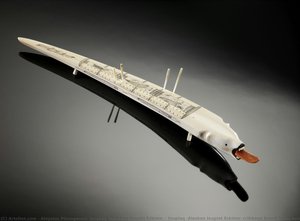
The Art of Cribbage Boards & Carvings: Pikonganna’s renown rests principally upon his exquisitely crafted cribbage boards—objects that elevate the act of gaming to become visual chronicles of Inupiaq cosmology. These boards are adorned with intricate carvings depicting polar bears, walruses, seals, and other animals emblematic of Alaska's Arctic ecosystem. Each animal carries specific spiritual resonance within Inuit belief systems, symbolizing fortitude, fecundity, and an unbreakable bond with the natural world—a reflection of the Inupiat’s intimate relationship with their environment.
Technique & Style: Pikonganna’s artistic approach was defined by unwavering patience and mastery of traditional wood carving techniques honed over decades. He skillfully employed knives meticulously sharpened through familial lineage, sculpting remarkably lifelike figures from ivory tusks—a readily accessible material owing to Alaska's abundant walrus hunting traditions. This dedication to meticulous craftsmanship ensured that each piece bore testament to the enduring spirit of Inuit artistry.
Recognition & Legacy: Pikonganna’s work garnered international acclaim throughout the latter half of the twentieth century, securing its place within the annals of Alaskan Native art history. Museums showcased his cribbage boards and carvings, attracting considerable admiration from collectors and scholars globally. His creations achieved impressive auction valuations, validating the enduring significance of Inuit artistic expression and demonstrating its capacity to convey profound cultural narratives—a legacy that continues to inspire artists today. Aloysius Pikonganna’s contribution serves as a poignant reminder of a disappearing culture, encapsulating the spirit of Alaska's indigenous peoples through his evocative depictions of Arctic wildlife and symbolism.
Historical Significance: Pikonganna’s cribbage boards stand as tangible embodiments of Inuit spirituality and storytelling—offering invaluable insights into the worldview of Alaska’s native inhabitants during a period of dramatic cultural transformation. His art transcends mere decorative function; it is a testament to the enduring power of tradition and a poignant reflection on the challenges faced by Alaskan communities adapting to modernity.