The Enigmatic Vision of Daniel Seiter
Daniel Seiter remains a figure shrouded in artistic mystery, largely due to the scarcity of reliable biographical information that survives from his era. However, what emerges from scholarly accounts—primarily Houbraken’s Lives of Distinguished Artists, published in 1718—paints a portrait of a Viennese painter who decisively embraced the Venetian Baroque tradition and achieved considerable renown throughout Europe. Born around 1642/1647, likely on the border between Switzerland and Austria, Seiter’s early life remains obscure, yet his artistic journey would eventually lead him to the most prestigious studios of Italy.
His formative years were defined by a profound connection to the Venetian school. Records indicate he received his initial artistic training in Venice, where he apprenticed with Johann Carl Loth—a partnership that profoundly shaped his stylistic sensibilities. The influence of Loth is unmistakable in Seiter’s meticulous attention to detail, his masterful use of tenebroso—the dramatic interplay of deep shadows and piercing light—and his dynamic compositions reminiscent of the great Venetian masters. This foundation allowed him to develop a technique so seamless that contemporary critics often found it impossible to distinguish his hand from that of his mentor.
A Journey Through Rome and the Baroque Spirit
As his talent matured, Seiter’s ambitions drew him toward Rome, where he continued to refine his craft within the studio of Carlo Maratta. It was during this period that he became part of the Bentvueghels, a spirited society of artists dedicated to documenting landscapes and exploring new visual frontiers. Within this group, he adopted the moniker “Marantello” or “Morgenstar,” a name reflecting his penchant for capturing ethereal dawn scenes and the soft, burgeoning light of new beginnings. This association fostered a fascination with exotic cultures and contributed to his artistic exploration of dramatic, sweeping visual narratives.
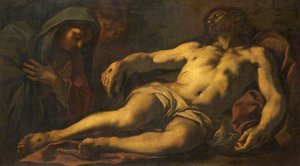
Seiter’s work during this era exemplifies the grandeur of the Baroque period, blending religious devotion with theatrical spectacle. His most celebrated works include the Martyrdom of St Catherine (1685) and the Martyrdom of St Lawrence, monumental frescoes that adorn the vestibule of Santa Maria del Popolo in Rome. These paintings are not merely depictions of suffering; they are profound theological contemplations rendered through artistic virtuosity, where every muscle tension and every drop of light serves to elevate the spiritual narrative.
Legacy of a Courtly Master
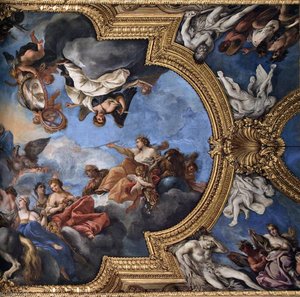
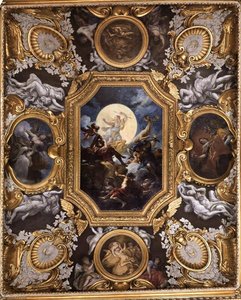
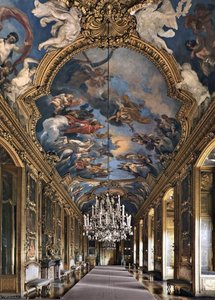
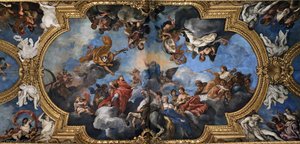
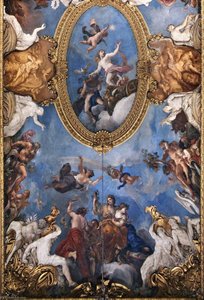
The reach of Seiter’s influence extended far beyond the borders of Italy, as his reputation for excellence earned him the patronage of European royalty. He served as a court painter for Victor Amadeus II of Sardinia and undertook significant commissions in Turin, where his breathtaking frescoes transformed the Royal Palace into a testament to Baroque grandeur. His dedication to his craft was so highly regarded that he was eventually knighted by Victor Amadeus II, a rare and prestigious recognition of his artistic excellence.
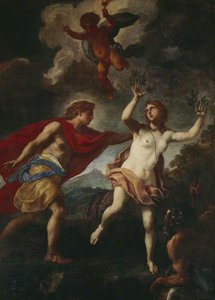
Beyond his religious iconography, Seiter demonstrated a remarkable ability to breathe life into classical mythology. Works such as The Judgment of Paris (1699) and Apollo and Daphne showcase his mastery of complex figure arrangements and vibrant color palettes. In these canvases, the viewer is transported to an ancient world where gods and mortals interact with intense emotion and fluid movement. Today, Seiter is remembered as a bridge between the rigorous traditions of the North and the luminous, dramatic spirit of the Italian Baroque, leaving behind a legacy of light, shadow, and enduring beauty.