A Legacy Carved in Ivory
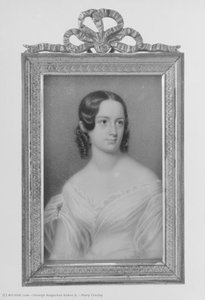
In the bustling heart of nineteenth-century New York, a young artist was already tracing the delicate contours of destiny. George Augustus Baker Jr., born in 1821, did not merely stumble into the world of fine art; he was born into its very marrow. As the son of a respected miniaturist, his childhood was steeped in the meticulous discipline of the brush and the subtle glow of ivory. By the tender age of sixteen, Baker had already demonstrated a precocious mastery, completing over one hundred and fifty miniatures that captured the fleeting essence of his subjects with remarkable grace. This early period of his life, defined by the intimate scale of miniature painting, laid the foundation for a career that would eventually transcend the small and move toward the grand, evocative realms of portraiture and genre painting.
European Refinement and the Expansion of Vision
The horizon of Baker’s ambition expanded significantly in 1844 when he embarked on a transformative two-year journey through Europe. This period of study allowed him to absorb the classical influences and sophisticated techniques of the Old World, breathing new life into his American sensibilities. Upon his return to New York, the artist transitioned from the delicate ivory portraits of his youth toward more expansive canvases. He established a studio that would soon become a cornerstone of the local art scene, earning him election to the prestigious National Academy of Design in 1851. As his reputation grew, so did his reach; even as he spent much of his life in New York, the final fourteen years of his journey were spent in the serene surroundings of Darien, Connecticut, where he continued to pursue his craft with unwavering dedication.
The Poetics of Portraiture and Genre
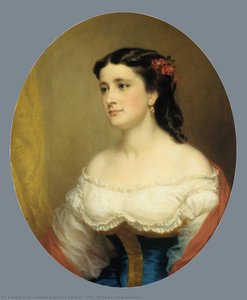
Beyond the mere likeness of a face, Baker’s true genius lay in his ability to infuse his subjects with a sense of idyllic wonder. He became a master of capturing the innocence of childhood and the ethereal beauty of womanhood, often imbuing his scenes with a romantic, almost dreamlike quality. His most celebrated ideal works serve as windows into this sentimental mastery; in Love at First Sight, he captures the sudden spark of human connection, while Wild Flowers celebrates the untamed beauty of the natural world. In pieces such as Children of the Wood, Faith, and The May Queen, Baker utilized a rich palette and a lifelike rendering of flesh tones to create a visual language that spoke to the heart of the American Victorian era. Through his ability to blend Neoclassical elegance with a tender, genre-driven narrative, he left behind a legacy of light, color, and profound emotional resonance that continues to captivate the art world.