Menú
Asesoría de arte gratuita

Jean Pierre Norblin De La Gourdaine

1745 - 1830

Breves datos

  • Top 3 works:
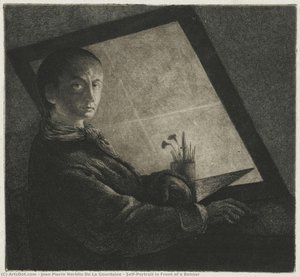
    • Self-Portrait in Front of a Banner
    • Untitled (AQZVHW)
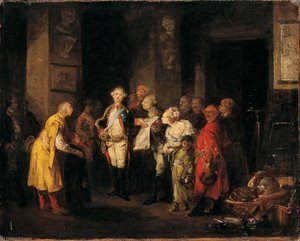
    • English Prince Adam Kazimierz Czartoryski in Corps of Cadets Polski Książę Adam Kazimierz Czartoryski w Szkole Rycerskiej
  • Copyright status: Public domain
  • Also known as: Jan Piotr Norblin
  • Works on APS: 7
  • Museums on APS: Kunsthalle Bremen
  • Nationality: Francia
  • Ver más…

Jean Pierre Norblin de La Gourdaine: Polish Painter of the Enlightenment

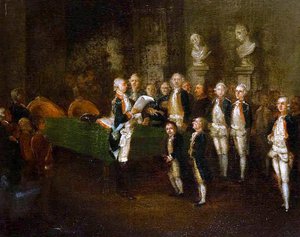
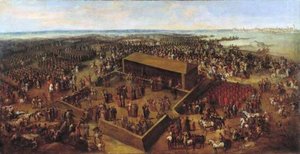
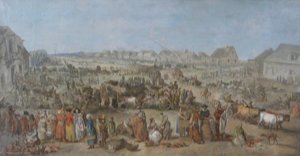
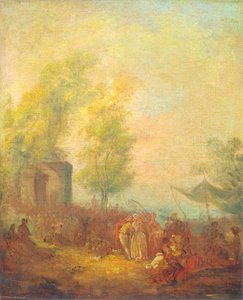
Jean Pierre Norblin de La Gourdaine (Polish: Jan Piotr Norblin; 15 July 1745 – 23 February 1830) stands as a pivotal figure in the artistic landscape of Poland during the Enlightenment, recognized for his masterful blend of Rococo elegance and journalistic observation. Born in France, he embarked on an illustrious career that culminated in establishing himself as a celebrated artist within the Polish court, leaving an indelible mark on both visual art and cultural history. His journey began in Misy-sur-Yonne, where he was born into a bourgeois family; his father owned the La Gourdaine estate. Little is known about his early life beyond this foundational detail—a fact that underscores the scarcity of biographical information surrounding him. However, from his youth, Norblin demonstrated an aptitude for artistic pursuits, immersing himself in the formative influences of Parisian art academies and studios. Early Life & Training: Norblin’s artistic education commenced under the tutelage of François Boucher and Louis Michel Vanloo—luminaries whose mastery of classical painting techniques profoundly shaped his stylistic vision. These masters instilled in him a deep appreciation for harmonious compositions, balanced proportions, and subtle tonal gradations—principles that would permeate throughout his subsequent oeuvre. Furthermore, he absorbed inspiration from Rembrandt—particularly his masterful use of chiaroscuro—a technique that conveyed dramatic emotion and heightened visual impact. The influence of Antoine Watteau – the undisputed champion of fêtes galantes – became equally significant; Watteau’s idyllic scenes infused with delicate emotion served as a guiding aesthetic for Norblin, fostering an unwavering commitment to portraying subjects with psychological nuance. The Polish Connection: A serendipitous encounter with Adam Kazimierz Czartoryski in 1772 irrevocably altered the trajectory of Norblin's artistic life. Invited to serve as the prince’s court artist, he relocated to Poland and spent nearly two decades documenting the opulent lifestyle of Czartoryski’s estate—a monumental undertaking that yielded a breathtaking panorama of aristocratic grandeur. During this period, Norblin meticulously captured portraits of prominent figures—members of the nobility, statesmen, and intellectuals—demonstrating his exceptional skill in portraying individuals with remarkable accuracy and psychological depth. His work served as invaluable documentation of Polish society during the Enlightenment, capturing its social customs, artistic tastes, and intellectual debates. Royal Patronage & Artistic Output: Norblin’s patronage extended beyond Czartoryski; he collaborated closely with King Stanisław August Poniatowski, adorning Arkadia Palace (Nieborów) – a symbol of Polish Romantic idealism – and undertaking ambitious decorative projects that transformed the palace into a masterpiece of Rococo artistry. Notably, he illustrated Ignacy Krasicki’s poem “Myszeida,” cementing his reputation as a versatile artist adept at diverse mediums—a testament to his intellectual curiosity and artistic versatility. His contribution to Arkadia Palace exemplifies Norblin's ability to elevate architectural spaces through visual art, creating immersive environments that conveyed both grandeur and refined taste. Style & Technique: Norblin’s artistic style epitomized the Rococo tradition, prioritizing graceful compositions and pastel hues reminiscent of Watteau’s fêtes galantes. However, he distinguished himself from purely decorative conventions by incorporating meticulous realism—a deliberate departure from stylistic trends prevalent at the time. He skillfully blended classical influences with contemporary observations—capturing not only idealized beauty but also the complexities of Polish aristocratic life. His portraits were particularly noteworthy for their psychological depth and accuracy; Norblin’s ability to convey inner emotions through subtle facial expressions and gestures underscored his mastery of artistic technique. Legacy & Significance: Jean Pierre Norblin de La Gourdaine's oeuvre constitutes a cornerstone of Polish art history—a testament to the enduring power of artistic vision to illuminate historical epochs. He mentored Jan Rustemas, fostering the artistic education of future generations, and his work continues to inspire admiration for its harmonious fusion of elegance and observation—a singular achievement that transcends stylistic boundaries. His legacy resides not merely in the beauty of his paintings but also in their profound reflection on the intellectual and social currents shaping Poland during the Enlightenment—a contribution that secures his place among the most influential artists of his time.

Test de arte

Cada pregunta tiene una única respuesta correcta.

Pregunta 1:
Q1
Pregunta 2:
Q2
Pregunta 3:
Q3
Pregunta 4:
Q4
Pregunta 5:
Q5