The Architect of a Nation's Soul
John Smith Murdoch stands as a pivotal figure in the architectural history of Australia, recognized primarily for his leadership role at the Commonwealth Public Works Department and, crucially, for designing Canberra’s Parliament House—a building that embodies the nation's ideals of and civic grandeur. Born in Scotland in 1862, Murdoch’s formative years instilled within him a profound appreciation for classical design principles and meticulous craftsmanship, influences that would permeate his entire career. His journey from the intellectual landscapes of Glasgow University to the burgeoning administrative heart of a young Australian nation is a testament to a life dedicated to the marriage of functionality and aesthetic beauty.
Murdoch’s early connection to the Glasgow School of Art, where he served as a janitor, provided him with an unexpected yet invaluable vantage point. This role allowed him to observe firsthand the evolving landscape of architectural innovation and the importance of public service, fostering a dedication to formal education and design that would later define his professional ethos. When he arrived in Australia, he brought with him a refined sensibility that sought to distance the new nation from its colonial past, aiming instead to establish a modern center of government through the language of Stripped Classical design.
A Legacy Carved in Stone and Timber
The ascent of Murdoch’s career began in earnest in 1904 when he was appointed Chief Architect for the newly established Commonwealth Public Works Department. Under his stewardship, the department undertook ambitious projects aimed at shaping Canberra, a deliberate effort to create a capital that reflected Australian identity. His most enduring achievement remains the design of the Provisional Parliament House, which served as the home of the Australian Parliament from 1927 to 1988. This project was not merely about masonry and mortar; it was an exercise in creating a space for democracy.
Murdoch’s brilliance extended far beyond the structural shells of buildings, reaching into the very furniture that facilitated the nation's governance. His design philosophy embraced a cohesive aesthetic that unified the architecture with its interior elements:
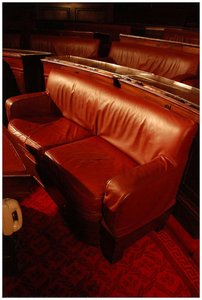
- The Senate Chamber Bench Seat: A masterpiece of functional elegance, featuring red leather upholstery and blackwood construction, designed to accommodate the unique semicircular arrangement of the Senate.
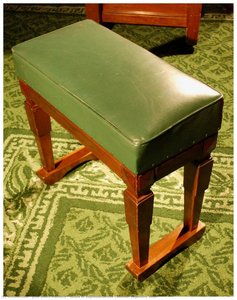
- The House of Representatives Chamber Reporters Stool: A piece that utilized Australian blackwood and green leather, reflecting a commitment to local materials and the dignity of parliamentary proceedings.
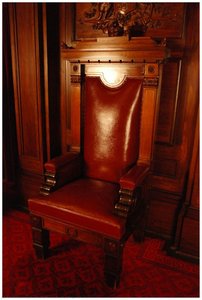
- The Vice Regal Chair: An imposing symbol of authority, adorned with acanthus leaf scrolls and a crown, illustrating Murdoch's ability to blend ceremonial grandeur with precise craftsmanship.
The Stripped Classical Vision
In an era of heavy ornamentation, Murdoch championed a style known as Stripped Classical. This approach eschewed the excessive flourishes of old-world Europe in favor of a clean, pragmatic elegance that spoke to the needs of a developing, modern nation. The Museum of Australian Democracy at Old Parliament House stands as a profound example of this vision, where a three-story brick facade communicates strength and stability without the need for superficial decoration. This architectural language was essential in creating a sense of permanence for a country still finding its footing on the global stage.
Throughout his career, Murdoch remained a figure of quiet influence and immense dedication. His work at the Federal Capital Commission and his leadership in the Architects Department allowed him to shape the physical landscape of Canberra, ensuring that the nation's capital was not just a collection of offices, but a cohesive architectural statement. Even as the world transitioned through the early 20th century, Murdoch’s commitment to the principles of functionality, clarity, and civic pride ensured that his designs would remain the foundational heartbeat of Australian democratic life for generations.