The Introspective Lens of Joseph M. Mills
Born in the quiet landscape of Beloit, Wisconsin, in 1951, Joseph Martin Mills emerged as a profound voice in American visual arts, weaving together the threads of personal struggle and urban observation. His journey into the heart of artistic expression was not merely a professional pursuit but a deeply spiritual and psychological necessity. A pivotal moment in his early life—a period spent within a mental institution at the age of twenty-one—served as a crucible for his creative vision. This experience profoundly shaped his aesthetic, instilling in him a desire to move away from broad social landscapes toward a more intimate, focused exploration of the individual soul. For Mills, art became a vital process of self-discovery, a way to navigate the complexities of perception and the internal architecture of the human experience.
His artistic development was marked by a rigorous academic foundation, having studied at prestigious institutions such as the Maryland Institute College of Art, the Corcoran School of Art, and the Rochester Institute of Technology. This technical training allowed him to master diverse mediums, ranging from the delicate precision of photography to the textured depth of collage. His work often exists in a liminal space between reality and dream, particularly in his celebrated surreal photomontages. By incorporating found materials into his compositions, Mills created works that possessed an almost tactile, object-like quality, blurring the boundaries between the captured image and the physical world.
Urban Echoes and the Art of Discovery
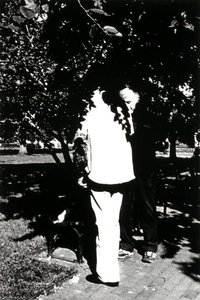
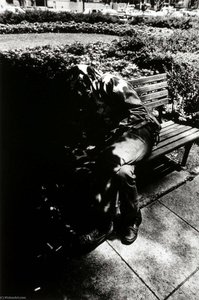
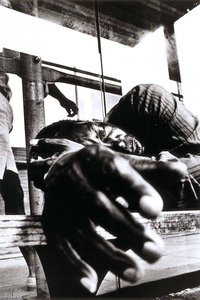
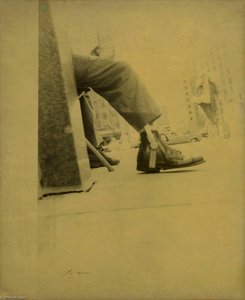
As his career progressed, Mills became deeply rooted in the Washington, D.C., metropolitan area, finding a rich, albeit gritty, subject matter in the changing urban landscape. He gained significant recognition for his ability to document the raw, unvarnished realities of city life. His landmark monograph, Inner City, stands as a testament to this period, featuring evocative black-and white photographs that captured the poverty and decay of Washington D.C. during the late 1980s. These works were not merely journalistic; through his unique use of outdated paper and the application of varnish, he imbued these scenes of marginalization with a haunting, permanent beauty that forced the viewer to confront the ephemeral nature of urban existence.
The breadth of his contribution to American art is reflected in the prestigious institutions that house his legacy. His explorations of street photography and intimate photographic series have earned him a place in some of the most esteemed collections in the United States, including:
- The Smithsonian American Art Museum, where his gelatin silver prints are preserved as vital historical and artistic records.
- The Corcoran Gallery of Art, which hosted his significant solo museum exhibition, Inner City.
- The Museum of Fine Arts, Houston, recognizing the enduring impact of his visual narratives.
- The Virginia Museum of Fine Arts, highlighting his connection to the Mid-Atlantic artistic community.
Ultimately, the significance of Joseph M. Mills lies in his ability to transform the personal into the universal. Whether through the meticulous construction of a collage or the stark honesty of a street photograph, his work remains an enduring exploration of how we perceive ourselves and our surroundings. He remains a distinctive voice whose art continues to resonate with those seeking truth within the shadows of the modern world.