The Alchemy of Precision: The Legacy of Landis & Gyr
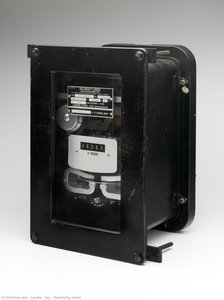
To contemplate the history of Landis & Gyr is to witness a rare convergence of industrial rigor and an almost poetic devotion to the fine details of existence. While often categorized within the realm of technological innovation, the story of this Swiss entity is one deeply rooted in the aesthetic of precision. Founded in 1896 as Theiler & Co. in the serene landscape of Zug, Switzerland, the company’s origins were forged by the hands of Richard Theiler and Adelrich Gyr. Their early work was not merely about the mechanical measurement of electricity; it was an exercise in capturing the invisible, translating the ephemeral flow of energy into a tangible, readable, and reliable form. This fundamental pursuit—the marriage of accuracy with beauty—became the cornerstone of a legacy that would eventually span the globe.
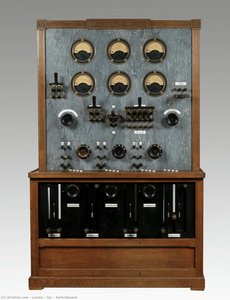
The evolution of their craft was marked by a series of transformative milestones that mirrored the rapid industrialization of the twentieth century. As Heinrich Landis joined the venture in 1903 and restructured the partnership, the company’s vision expanded beyond the borders of Switzerland. The early decades were characterized by an expansion of both reach and complexity, as the firm moved from simple meters to sophisticated instruments capable of navigating the growing demands of a modernizing world. During the turbulence of the First World War, Landis & Gyr found itself at the heart of industrial necessity, providing the vital tools required for large-scale production. This era solidified their reputation not just as manufacturers, but as essential architects of the electrical age, where every gear and dial was a testament to Swiss engineering excellence.
Innovation as an Artistic Pursuit
As the mid-century approached, the company’s trajectory took a profound leap toward the digital frontier. The year 1958 stands as a monumental moment in their history, witnessing the introduction of the first microprocessor-based electricity meter. This was more than a technical achievement; it was a paradigm shift that redefined how humanity interacts with its resources. By integrating microprocessors, Landis & Gyr began to automate the monitoring of energy, turning the once-static measurement of power into a dynamic, intelligent dialogue between the grid and the consumer. This period of innovation reflected a deeper philosophy: that technology, when executed with absolute precision, can become an invisible yet indispensable part of the cultural fabric.
The company’s growth was never solely focused on the mechanical; it was accompanied by a surprising and profound embrace of cultural enrichment. Through the establishment of the Landis & Gyr Foundation in 1971, the spirit of patronage became an intrinsic part of their identity. This commitment to the arts—supporting contemporary writers, musicians, and visual artists across Switzerland and beyond—demonstrated a belief that progress is hollow without the nourishment of the human spirit. In this way, Landis & Gyr bridged the gap between the cold logic of the machine and the warm complexity of human creativity, fostering an environment where technological advancement and artistic expression could coexist and inspire one another.
A Global Impression
The historical significance of Landis & Gyr lies in its ability to remain a global leader while maintaining the meticulous soul of a local craftsman. From their expansion into New York and Australia in the 1920s to their role in shaping modern smart grids, their influence is felt in the very infrastructure of contemporary life. Their work with telemetry and remote control products in the 1930s paved the way for the interconnected world we inhabit today. Even as the company underwent various structural transformations and eventual integration into larger technological ecosystems like Siemens, the core principles established by Landis and Gyr remained unshakeable.
Today, the name remains synonymous with a certain standard of excellence—a standard where:
- Precision is treated as a fundamental virtue.
- Innovation serves the dual purpose of utility and progress.
- Legacy is measured not just in patents, but in the enduring support of cultural landscapes.
Ultimately, the story of Landis & Gyr is a reminder that the tools we use to measure our world are themselves works of profound significance, reflecting our deepest desires for order, clarity, and an ever-expanding horizon of possibility.