Francisco José de Artiga y Orús: A Renaissance Polymath Embodied in Paint and Stone
Francisco José de Artiga y Orús (1645 – 1711) stands as a remarkable testament to the intellectual fervor of the Spanish Baroque era, an artist whose prodigious talents extended far beyond the canvas into realms of architecture, mathematics, astronomy, literature, and engraving. Born in Huesca, Aragon, he wasn’t merely a painter; he was a true humanist scholar who shaped the cultural landscape of his time with unwavering dedication and inventive spirit—a figure whose influence reverberates through the annals of Spanish Renaissance art and intellectual history.
Early Life & Education: The Seeds of Genius
Artiga's formative years were steeped in humanist ideals fostered by the Universidad de Huesca, where he excelled as a professor of mathematics. This academic grounding profoundly influenced his artistic vision—particularly his meticulous attention to perspective and proportion—elements that would become hallmarks of his oeuvre. His understanding of geometric principles permeated every aspect of his creative endeavors, informing not only his paintings but also his architectural designs and even his scientific investigations. The Universidad’s emphasis on rational thought instilled in him a belief that beauty could be achieved through precise observation and reasoned calculation – a conviction that underpinned his artistic pursuits.
Painting: Capturing Light and Spirit
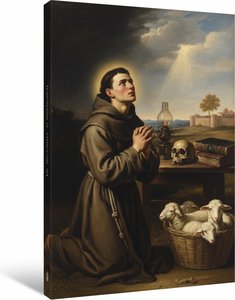
Artiga’s artistic output was prolific and diverse. He produced captivating landscapes imbued with atmospheric depth, capturing the grandeur of the Spanish countryside with masterful brushstrokes—scenes rendered with an acute awareness of chiaroscuro, utilizing light and shadow to convey emotion and heighten visual impact. Equally impressive were his depictions of biblical scenes – Sibyls, Annunciations, and Conception – rendered with a sensitivity to detail and infused with spiritual contemplation. His canvases demonstrate an understanding of classical ideals blended seamlessly with Baroque dynamism; he skillfully employed pyramidal compositions and vibrant color palettes to elevate the narrative power of his subjects. Notably, Artiga’s work aligns closely with that of Vincencio Juan de Lastanosa, demonstrating a shared commitment to humanist principles and artistic innovation.
Architectural Transformations: Shaping Huesca's Future
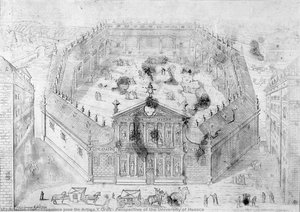
Perhaps Artiga’s most enduring legacy resides in his architectural endeavors. He spearheaded the ambitious redesign of the Universidad de Huesca’s façade, transforming it into a monumental masterpiece that embodies the Renaissance spirit—a bold departure from prevailing Gothic styles and reflecting Artiga's commitment to innovation. Prior to this transformative project, the University’s edifice stood as a symbol of medieval austerity; Artiga envisioned a building that would inspire awe and promote intellectual enlightenment – utilizing classical architectural forms and incorporating innovative structural techniques. The resulting façade remains a testament to his vision—a harmonious blend of elegance and grandeur that continues to captivate visitors today.
Engraving & Literary Pursuits: Expanding Horizons
Beyond painting and architecture, Artiga was a skilled engraver, producing striking prints of architectural designs and artistic subjects – meticulously crafted reproductions that showcased his technical prowess and disseminated his ideas throughout Spain. Furthermore, he authored several books exploring varied disciplines—a treatise on perspective offering groundbreaking insights into visual representation; a poetic work demonstrating his mastery of rhetoric; and an analysis of monetary policy reflecting his intellectual curiosity. These writings underscore Artiga’s belief in the interconnectedness of art and science—a conviction that fueled his creative endeavors and cemented his reputation as a multifaceted scholar.
Scientific Contributions & Patronage: A Renaissance Ideal
Artiga’s fascination with science extended to astronomy and hydraulic engineering. He notably participated in the construction of the Arguis Dam, showcasing his practical skills alongside his theoretical knowledge – applying mathematical principles to solve real-world challenges. His involvement within the influential circle of Vincencio Juan de Lastanosa cemented his reputation as a leading intellectual figure—a man who championed reason and artistic excellence; Artiga’s legacy transcends mere artistry—he represents the embodiment of the Renaissance humanist ideal: a scholar, an artist, and an innovator dedicated to advancing knowledge and beautifying the world around him. His engravings are housed in Museo Central del Banco de España.