The Architect of Dreams: The Visionary World of René Moulaert
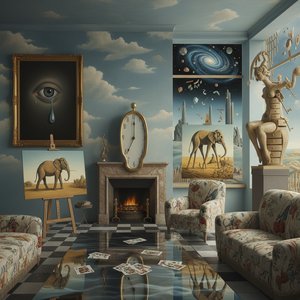
René Moulaert (1901–1965) was far more than a mere designer of scenery; he was an architect of dreams, a master of atmosphere who meticulously crafted environments that breathed life into narratives and captivated the collective imagination. Born in Brussels, Belgium, Moulaert possessed an innate fascination with visual storytelling—a passion that would propel him to become one of the most celebrated figures in Belgian art history and a pivotal contributor to the golden age of European cinema. His distinctive style was a sophisticated tapestry, blending the structured elegance of Art Deco with subtle, haunting Surrealist influences. Through his work, sets transcended mere decoration, becoming active participants in conveying deep emotion and psychological depth.
Moulaert’s artistic journey began with a rigorous dedication to classical principles at the École Supérieure des Beaux-Arts de Bruxelles. It was here that he absorbed the stylistic currents of his era, honing a technical precision that would later allow him to render both opulent grandeur and unsettling dreamscapes with equal ease. This foundational training in the fine arts provided him with the tools to manipulate space, light, and texture, ensuring that every architectural rendering and lighting scheme served the soul of the story. His ability to marry classical discipline with an openness to experimental, avant-garde ideas proved crucial for his ascent within the burgeoning film industry.
A Cinematic Trailblazer and the Magritte Connection
The 1930s marked Moulaert’s breakthrough onto the silver screen, establishing him as a trailblazer in film set design. His early collaborations with directors such as Pierre Verne and Henri Vernes yielded iconic productions like The Marriage of Mademoiselle Beulemans, where he skillfully evoked the opulent grandeur of Belle Époque Paris. He possessed a rare talent for historical reconstruction, using architectural detail to transport audiences across time and geography. As his career progressed through the 1940s and 50s, his filmography expanded into a vast repertoire of atmospheric works, including Strange Inheritance, Night Shift, and The Loves of Colette, each showcasing his ability to adapt his aesthetic to diverse genres.
Perhaps the most enduring and intellectually profound chapter of Moulaert’s legacy lies in his artistic partnership with the Surrealist master René Magritte. Together, they conceived and executed breathtaking sets for Magritte’s cinematic explorations, notably works such as The Son of Man, Golconda, and Under the Cards. In these collaborations, Moulaert’s designs mirrored Magritte’s philosophical inquiries, creating physical spaces where the boundaries between reality and illusion blurred. His sets did not just house characters; they embodied the surrealist concept of the uncanny, providing a tangible stage for the impossible.
Legacy of a Master Scenographer
The historical significance of René Moulaert lies in his ability to elevate the role of the art director from a technical necessity to an essential artistic voice. His work bridged the gap between the decorative arts and the cinematic experience, leaving behind a legacy that continues to inspire those interested in the intersection of architecture, stagecraft, and film. His contributions can be summarized through several key pillars of his career:
- Stylistic Synthesis: The seamless integration of Art Deco sophistication with Surrealist mystery.
- Cinematic Innovation: A prolific body of work that helped define the visual language of mid-century European cinema.
- Collaborative Genius: His profound ability to translate the complex, abstract visions of avant-garde artists like Magritte into physical, immersive environments.
- Architectural Storytelling: The use of space and light as narrative tools to evoke specific historical eras and psychological states.
Though he passed away in 1965, the echoes of Moulaert’s visionary designs remain etched in the history of Belgian art. He remains a foundational figure for anyone studying the evolution of production design, reminding us that the spaces we inhabit—whether on stage or screen—are the very vessels through which our most profound stories are told.