The Living Threads of Terengganu: Guardians of a Golden Legacy
In the vibrant, coastal heart of Terengganu, Malaysia, there exists a textile tradition that breathes with the rhythmic pulse of the sea and the golden light of ancestral memory. The art of limar songket weaving is far more than a mere method of cloth production; it is a profound expression of cultural identity and a woven narrative of a people. For the Terengganu limar songket craft entrepreneurs, every thread serves as a bridge between the past and the present, embodying a legacy that has weathered the tides of modernization to remain a breathtaking testament to Malay craftsmanship.
The very nomenclature of this art form whispers stories of its prestigious origins. The term limar refers to the traditional sarong, while songket denotes the meticulous technique of supplementary weft weaving, often incorporating shimmering gold or silver threads. Historically, these textiles were not common attire but were reserved exclusively for royalty and nobility during ceremonial occasions, serving as a visible signifier of status, wealth, and prestige. To wear such a garment was to drape oneself in the history and the very soul of the Malay Archipelago.
A Symphony of Technique and Symbolism
The creation of a limar songket piece is an extraordinary feat of patience and specialized skill, requiring a level of artistry that is often honed through years of dedicated apprenticeship. The process is incredibly labor-intensive, as artisans must painstakingly interlace fine silk threads with precious gold filaments using intricate binding techniques. This method, which has largely vanished from the rest of the world, requires the weaver to manipulate the loom with mathematical precision to create patterns that appear both seamless and structurally complex.
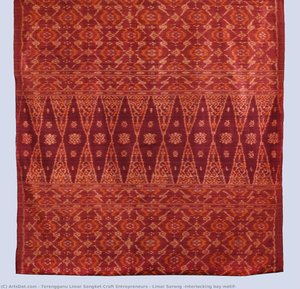
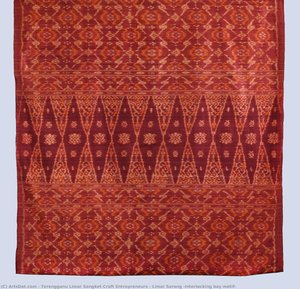
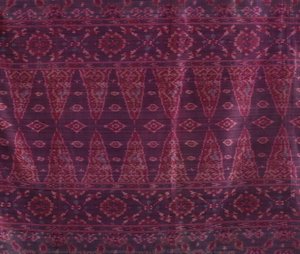
Central to the visual language of these textiles is the interlocking bay motif. This stylized, geometric pattern acts as a rhythmic representation of the undulating waves and the intricate coastal geography of the Terengganu region. It reflects a deep-seated maritime connection, symbolizing the fluid relationship between the land and the sea that defines the lives of the local community. Beyond the sea, the weavers often incorporate subtle imagery related to Islamic beliefs and Malay folklore, weaving spiritual and cultural values directly into the fabric's architecture.
The color palettes used by these entrepreneurs are equally evocative, designed to capture the sensory essence of the Malaysian landscape:
- Fiery Hues: Deep crimsons, burnt oranges, and warm ambers that evoke the warmth of a tropical sunset.
- Earthly Undertones: Subtle hints of brown and yellow that provide a multidimensional depth to the weave.
- Lustrous Accents: The integration of gold thread which catches the light with every movement, creating an illusion of infinite motion.
Resilience Amidst Modernity
The mid-20th century brought significant challenges to this delicate art form. As modernization swept across Malaysia, a shift toward Western fashion and the economic hardships faced by rural artisans led to a decline in the practice of traditional weaving. The disappearance of specialized skills threatened to turn this living heritage into a mere museum relic. However, the dedication of these craft entrepreneurs has prevented such a tragedy.
Through concerted efforts and international recognition—including the importance placed on such crafts by organizations like UNESCO—there has been a renewed global interest in intangible cultural heritage. Today, these artisans are not merely preserving a dying craft; they are actively reviving it. By collaborating with contemporary designers and educational institutions, the Terengganu limar songket entrepreneurs have ensured that their ancestral techniques find new life in modern contexts. Their work remains a vital, breathing connection to the maritime soul of Malaysia, ensuring that the golden threads of their history continue to shimmer for generations to come.