

 プレビュー
プレビュー
 プリントを購入
 シェアする
シェアする シェアする
シェアする
 詳細を見る
詳細を見る

 ダウンロード
 似ている作品
 X線調査
X線調査 スライドショー
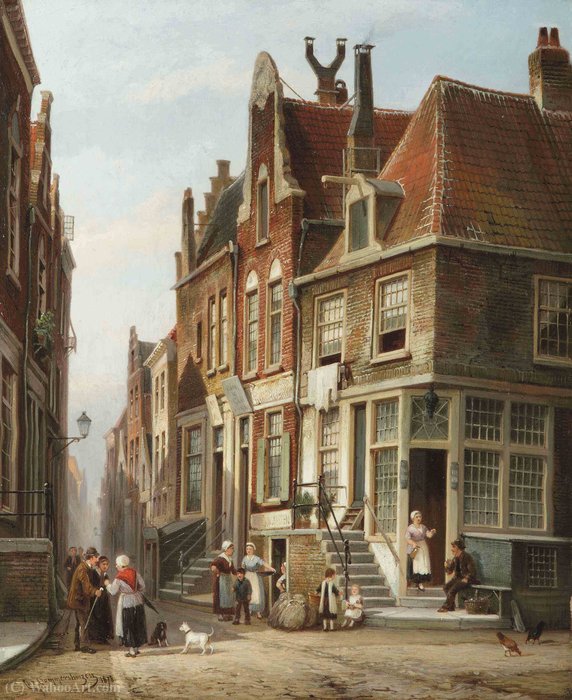
The Jewish quarter, Amsterdam
 詳細を見る
詳細を見る




































作品のオリジナル比率に合わせた、当店の規定サイズからお選びください。

特定のフレームやスペースに合わせて、ご希望のサイズをご入力いただけます。選択されたサイズが元の画像の比率と異なる場合、アートワークをトリミングするか、手描きで要素を追加して絵画を拡張いたします。デジタルモックアップ を制作し、制作開始前にご確認(承認)をいただきます。
画面上のプレビューは、実際のトリミングや拡張を正確に反映しているものではありません。最終的な構図は、モックアップによってのみ正確にご確認いただけます。
カスタムサイズもご利用いただけますが、元の比率を維持するためには、あらかじめ用意されたリストからサイズを選択することをお勧めいたします。
ご注文後、ArtsDot.com チームより詳細な指示をお送りするとともに、仕上がりイメージ(モックアップ)をご提供いたします。


 ガラスオプションは、110cm未満のサイズでのみご利用いただけます。

The Jewish quarter, Amsterdam
複製技法
複製画のサイズ
-


合計金額
$ 263
関連作品









アーティストの略歴
A Legacy of Light and Landscape: The Life of Pieter Cornelis Dommerson
In the grand tapestry of nineteenth-century European art, few threads are as delicately woven as those belonging to Pieter Cornelis Dommerson. Born in the historic city of Utrecht in 1833, Dommerson emerged from a lineage where the brush was as much a part of family identity as the name itself. As the son of a painter, his early years were steeped in the visual language of the Netherlands, an environment that nurtured a profound sensitivity to the interplay of light and shadow. While history often remembers the titans of the Dutch Golden Age, Dommerson represents a vital bridge between classical traditions and the burgeoning romanticism of his era, capturing a world caught in the transition between old-world stillness and modern observation.
His artistic evolution was profoundly shaped by his early training in Amsterdam, where he studied under the influential Anton Mauve. This mentorship introduced him to the subtle nuances of the Hague School's approach—a style that favored a more atmospheric, almost impressionistic handling of light while maintaining a rigorous commitment to naturalism. From Mauve, Dommerson learned that a landscape was not merely a collection of trees and rivers, but a vessel for emotion. He mastered the ability to render the fleeting qualities of the Dutch sky, translating the damp, silvery atmosphere of the Low Countries into textures that felt palpable to the viewer. This period of his life established the foundational technique that would define his career: a masterful blend of academic precision and an evocative, painterly softness.
A Wanderer’s Vision: From the Netherlands to England
The trajectory of Dommerson’s life was marked by movement and exploration, mirroring the expansive nature of his subject matter. Around 1855, he transitioned from his native Netherlands to England, a move that would significantly broaden his artistic horizons. This migration allowed him to bring his distinctively Dutch sensibility to the British landscape, creating a unique dialogue between the two regions. As he traveled through Belgium, France, and even America, his work became a record of a continent in motion. He was not merely a spectator but a chronicler of scenery, specializing in sea, land, and river-scapes that resonated with the nineteenth-century revival of interest in topographical beauty.
His family life was equally intertwined with his professional vocation. Dommerson’s artistic journey was often a shared endeavor; he frequently traveled and painted alongside his brother, Cornelis Christiaan Dommersen, and later with his son, William Raymond Dommersen. This familial continuity created a small but potent dynasty of landscape painters, all dedicated to the same pursuit of capturing the serene majesty of the natural world. His ability to depict the bustling energy of European cityscapes—such as the intricate details of Amsterdam or the historic vistas of Prague—alongside the quiet solitude of a sun-drenched meadow, speaks to a versatile genius capable of navigating both the urban and the pastoral.
Artistic Mastery and Historical Resonance
The significance of Dommerson’s oeuvre lies in its ability to evoke a sense of timelessness. His paintings are characterized by a deliberate patience; unlike the rapid-fire sketches of pure Impressionists, Dommerson’s works suggest long periods of quiet contemplation. He sought to capture the soul of a place, whether through the golden light reflecting off a Dutch river or the misty morning air clinging to an English coastline. His technical proficiency allowed him to manipulate watercolor and oil with equal grace, making him a master of both the delicate wash and the robust, textured stroke.
Throughout his career, Dommerson achieved notable recognition, exhibiting his works in prestigious venues such as the Royal Academy and the Royal Society of British Artists. His contributions to the art world helped sustain the romantic ideal of the landscape as a site of spiritual reflection. Today, his legacy survives through the enduring beauty of his compositions, which continue to offer modern viewers a window into a more tranquil, observant era. To look upon a Dommerson landscape is to experience a moment of stillness, a testament to a life spent chasing the light across the landscapes of Europe.
pieter cornelis dommerson
1834 - 1908 , Netherlands
基本情報
- Artistic Movement Or Style: Romanticism
- Artists Or Movements Influenced By This Artist: ['Romantic Painting']
- Artists Who Influenced This Artist: ['Johannes Hendrik Willem Lingeman']
- Date Of Birth: December 6, 1833
- Date Of Death: November 18, 1918
- Full Name: Pieter Cornelis Dommerson
- Nationality: Dutch
- Notable Artworks:
- Dutch River Scene
- The Weighing House, Alkmaar
- The Jewish quarter, Amsterdam
- Place Of Birth: Utrecht, Netherlands

