A Moment of Childhood Wonder: Exploring Adriaen van der Werff’s Baroque Masterpiece
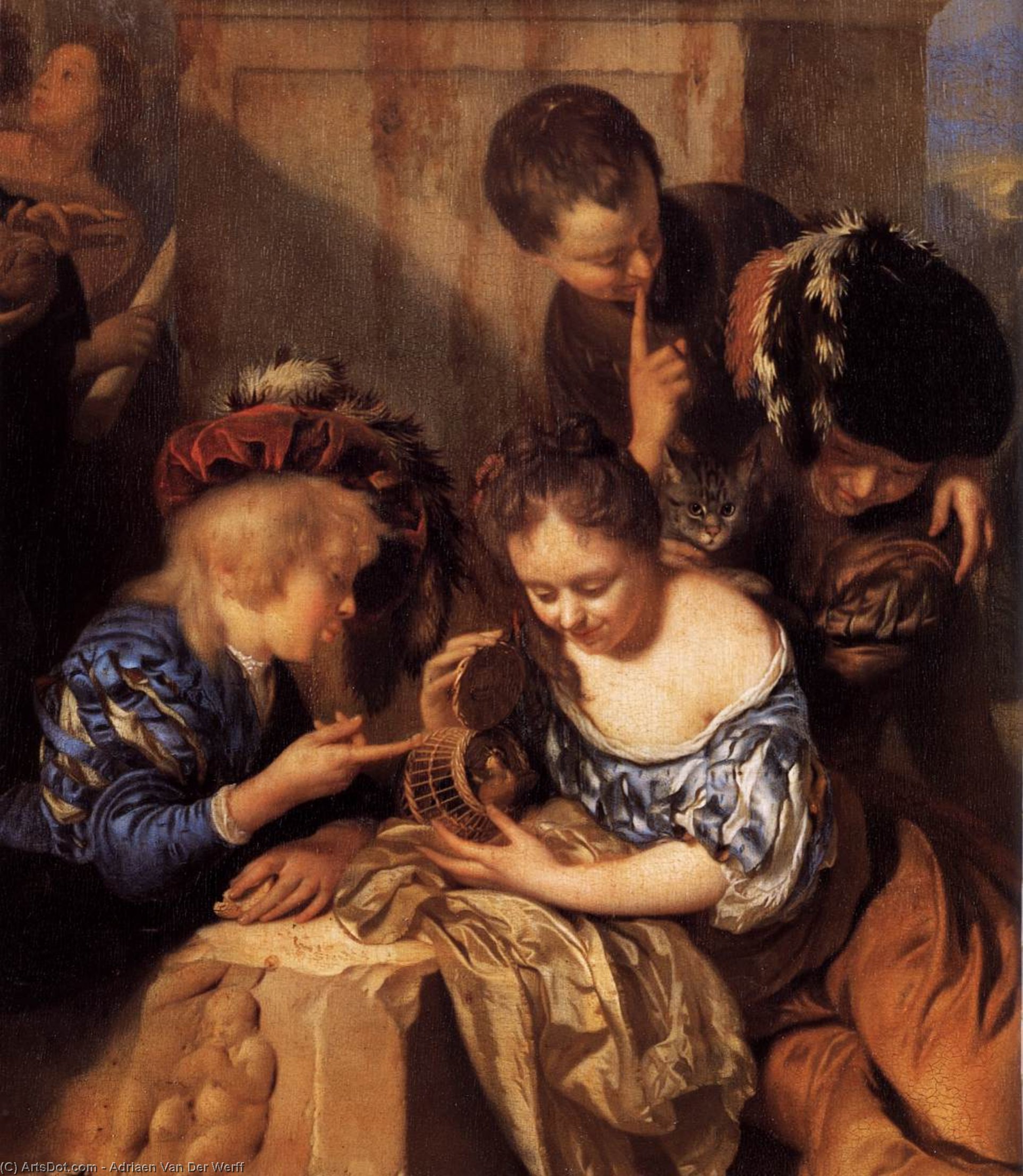
Adriaen van der Werff's “Children Playing before a Hercules Group (detail),” painted in 1687, is more than just a charming depiction of youthful curiosity; it’s a meticulously crafted window into the heart of the Dutch Golden Age. This exquisite Baroque painting, currently housed within the Alte Pinakothek in Munich, captures a fleeting moment of innocent observation amidst a grand mythological narrative – a subtle interplay between the mundane and the divine that speaks volumes about the era's artistic sensibilities.
The scene unfolds within a richly appointed interior, likely a private study or salon. A group of children, rendered with remarkable detail and sensitivity, are gathered around a table examining a caged bird. Their postures – one reaching out tentatively, another intently focused on the creature’s movements – convey a palpable sense of wonder and fascination. The presence of a Hercules Group (a small sculpted representation of the hero) in the background subtly anchors the scene within its mythological context, suggesting a connection between youthful exploration and heroic ideals. Van der Werff masterfully uses light to draw our attention to these figures, bathing them in a warm, diffused glow that highlights their expressions and gestures.
The Baroque Embrace: Technique and Composition
Van der Werff’s skill as a painter is immediately evident in the painting's technical execution. He employs a masterful use of chiaroscuro – the dramatic contrast between light and shadow – to create a sense of depth and volume, imbuing the figures with a tangible presence. The brushwork is incredibly fine and detailed, particularly noticeable in the rendering of the children’s clothing and the intricate textures of the furniture. The artist's meticulous attention to drapery, a hallmark of his style, adds an air of elegance and sophistication to the scene. Notice how he captures the folds of fabric with such precision, creating a sense of realism that is both captivating and comforting.
Compositionally, the painting is carefully balanced, drawing the eye towards the central group of children while subtly incorporating the mythological elements into the background. The arrangement feels intimate and inviting, as if we’ve been granted access to a private moment of childhood delight. The use of perspective creates a sense of space, pulling us into the scene and allowing us to fully appreciate the details of the composition.
Symbolism and Context: A Reflection of Dutch Society
“Children Playing before a Hercules Group” offers a fascinating glimpse into 17th-century Dutch society. The depiction of children engaged in quiet observation reflects a growing emphasis on education and intellectual pursuits during this period. The inclusion of the Hercules Group, a popular subject for paintings at the time, speaks to the enduring fascination with classical mythology and its moral lessons. It’s important to note that Hercules represented strength, virtue, and perseverance – qualities highly valued in Dutch society.
Furthermore, the scene can be interpreted as an allegory of human nature itself: the children represent innocence and curiosity, while the caged bird symbolizes freedom and a longing for something beyond their immediate surroundings. The juxtaposition of these elements creates a layered meaning that invites contemplation. The painting’s popularity during its time suggests it resonated deeply with viewers, offering both visual pleasure and intellectual stimulation.
A Timeless Masterpiece: Reproduction and Legacy
Today, “Children Playing before a Hercules Group” stands as a testament to Adriaen van der Werff's artistic genius. Reproductions of this captivating painting offer an accessible way to experience its beauty and complexity. Whether displayed in a grand salon or a cozy study, this Baroque masterpiece continues to evoke a sense of wonder and delight, reminding us of the enduring power of art to capture fleeting moments of human emotion and imagination. Consider commissioning a high-quality reproduction – a faithful recreation that preserves the painting’s original charm and detail for generations to come.