A Window Into Ancient Egypt: The Majesty of Giza
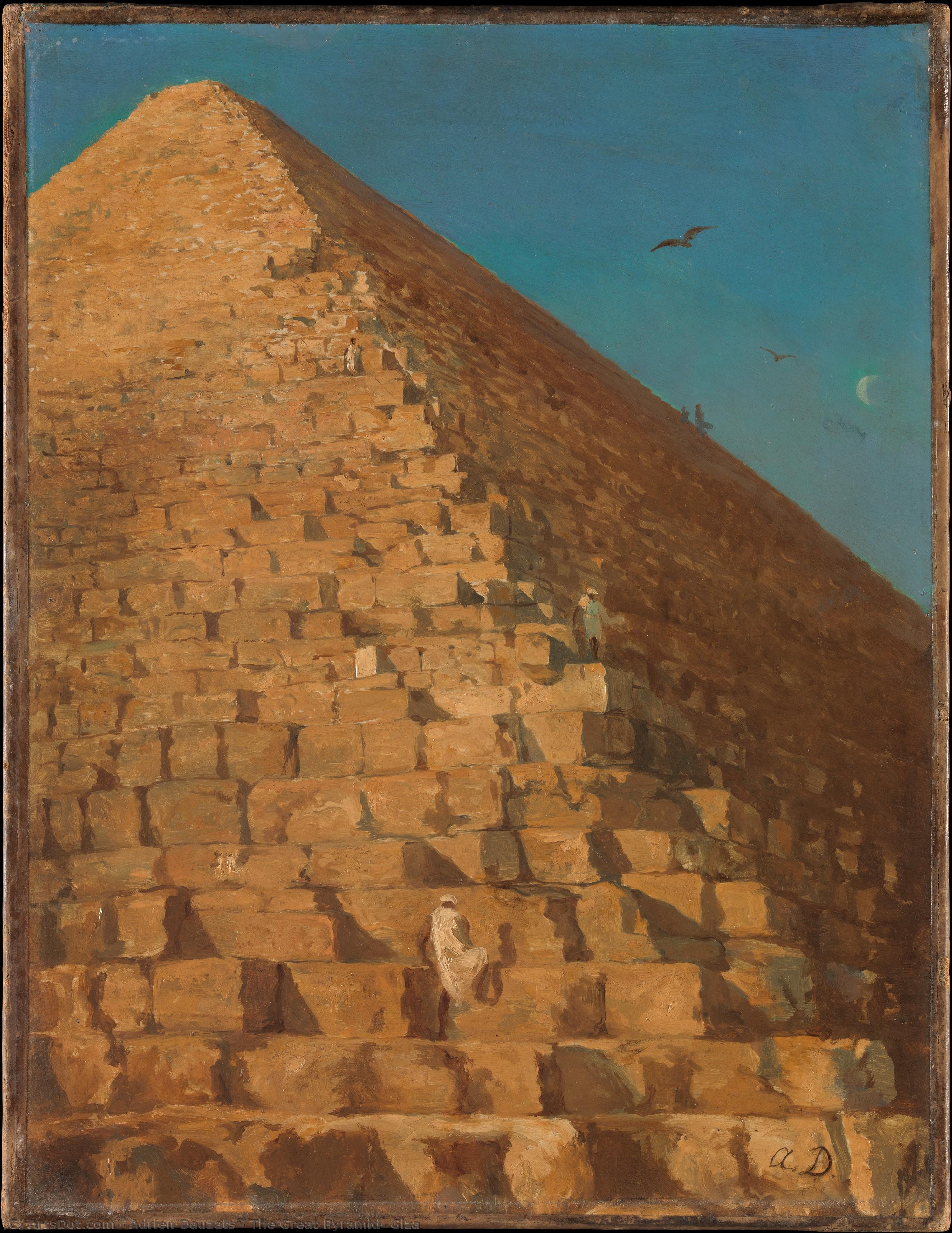
In his evocative 1830 masterpiece, "The Great Pyramid, Giza," Adrien Dauzats invites the viewer to step through a portal into the heart of antiquity. Painted shortly after the artist’s transformative expedition to Egypt alongside Baron Taylor, this canvas is far more than a mere topographical record of a desert landmark. It is a profound embodiment of Romantic Orientalism, a movement defined by a deep-seated European fascination with the mysteries of the East, fueled by a potent blend of scientific curiosity and boundless artistic imagination. As the eye meets the monumental silhouette of the pyramid, one does not simply see stone and sand; one feels the weight of millennia and the ethereal pulse of a civilization that once commanded the world.
The painting captures a pivotal moment in the European consciousness, where the rigid certainties of the Enlightenment began to yield to the emotional depth of Romanticism. Dauzats presents a dramatic vista of Giza’s most iconic structure set against a backdrop of hazy, sun-drenched desert skies. The presence of soaring birds and scattered figures around the base of the monument breathes life into the scene, transforming an isolated architectural study into a bustling, atmospheric landscape. These small, human elements serve to emphasize the staggering scale of the pyramid, creating a sense of awe that resonates with anyone standing before the canvas.
Mastery of Light and Romantic Technique
To behold this work is to witness Dauzats’s masterful command over light and texture. Employing the hallmark techniques of the Romantic era, the artist utilizes loose, expressive brushstrokes and subtle tonal gradations to convey the immense scale of the Great Pyramid and the shimmering, ephemeral quality of a desert dawn. There is a deliberate tension in his use of perspective; by compressing the pyramid’s height, he amplifies its imposing presence, making it feel as though the structure is looming over the viewer with an inescapable gravity.
The artist’s dedication to accurate observation is evident in the meticulous rendering of the weathered stone blocks, yet this realism is never clinical. Instead, it is softened by a subtle interplay of light and shadow that casts a cool, pearlescent luminescence across the landscape. This delicate balance between detail and atmosphere creates an illusion of profound depth, drawing the spectator into the hazy heat of the Egyptian morning. For the collector or interior designer, such technical brilliance ensures that the piece possesses a dynamic energy, capable of anchoring a room with its sophisticated interplay of warmth and shadow.
An Eternal Legacy for the Discerning Collector
Beyond its aesthetic splendor, "The Great Pyramid, Giza" carries a heavy symbolic weight. It represents the intersection of scholarly enthusiasm and artistic passion, reflecting the burgeoning era of Egyptology that captivated the 19th-century intellect. The painting serves as a bridge between the tangible reality of archaeological discovery and the intangible allure of myth. It is an invitation to contemplate the passage of time, the endurance of human achievement, and the enduring mystery of the sands.
For those seeking to infuse their living spaces with a sense of history and grandeur, a high-quality reproduction of this work offers unparalleled inspiration. Whether placed in a curated gallery setting or as a focal point in a sophisticated study, Dauzats’s vision brings a touch of the sublime into the modern home. It is an investment in a piece of art history that continues to stir the soul, offering a timeless window into one of the greatest wonders of the ancient world.