The Austere Majesty of Florentine Court Life
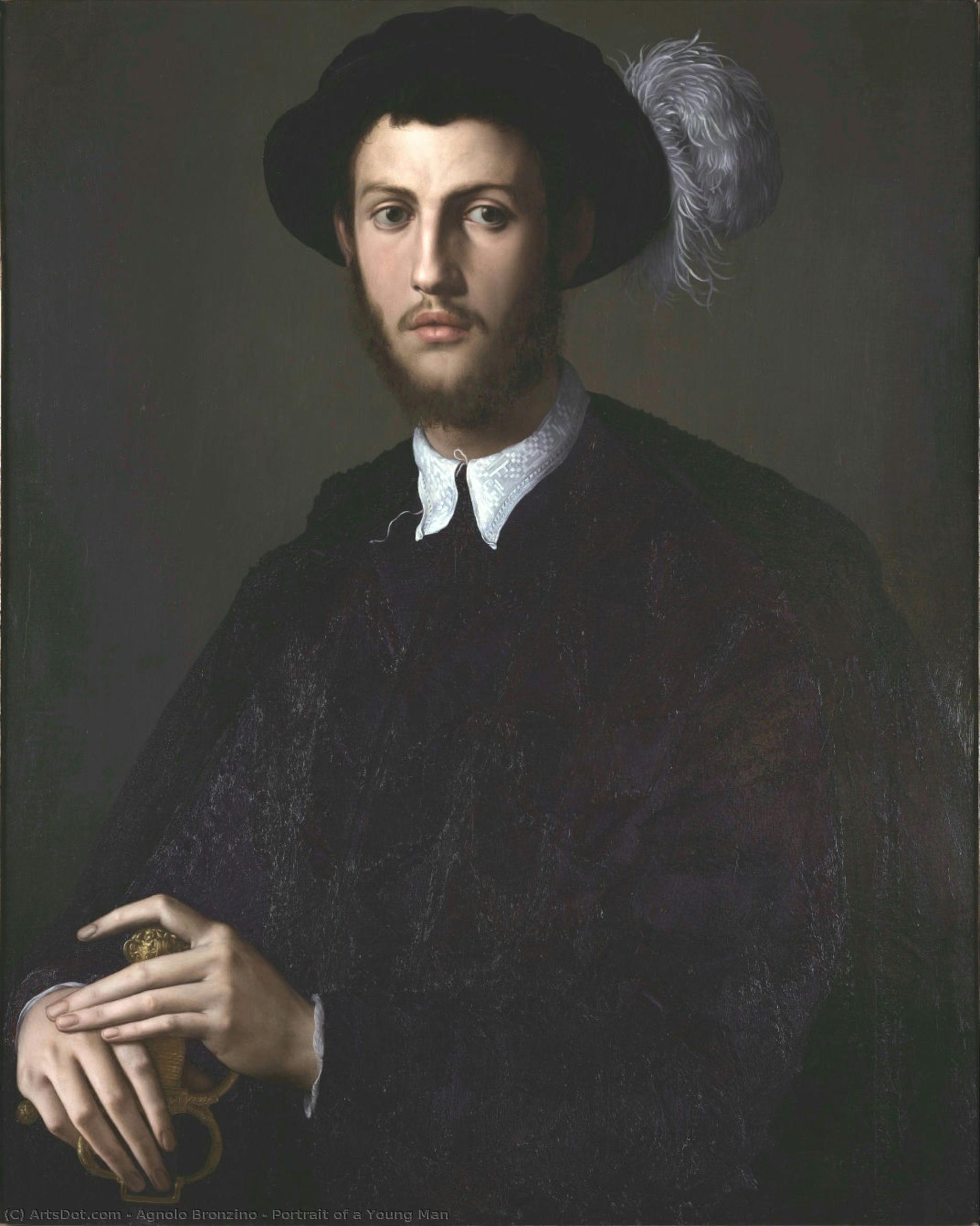
To gaze upon this portrait is to step directly into the rarefied atmosphere of mid-sixteenth-century Florence, a world governed by the subtle power plays and exquisite tastes of the Medici court. Agnolo Bronzino, the master chronicler of such elite circles, captured not merely a likeness, but an entire social stratum. The sitter, though anonymous to us today, embodies the controlled elegance expected of those who moved within the gilded cage of Renaissance aristocracy. There is an immediate sense of formality; every fold of fabric, every precise line defining the jaw, speaks to a life lived under the watchful, yet admiring, gaze of history and high society.
Mastery in Oil: Technique and Detail
Technically, this work is a breathtaking testament to the period's mastery of oil on canvas. Bronzino’s hand achieves an almost cool perfection, evident in the meticulous rendering of textures that seem tangible across the centuries. Observe the velvet of the garment; the artist has coaxed deep, light-absorbing shadows into its nap, contrasting sharply with the subtle sheen catching the directional light. The handling of the sitter's skin is equally remarkable—smooth yet possessing enough lifelike variation to suggest vitality beneath a veneer of composure. The composition itself is deceptively simple: a centered bust shot against a dark void that serves only to push the subject forward, demanding our full attention.
Symbolism and the Weight of Status
The symbolism woven into this portrait speaks volumes about status and self-presentation during the Renaissance. The attire—the structured collar, the rich fabrics, the carefully placed feathers upon the hat—are not mere decorations; they are visual declarations of wealth, lineage, and cultivated taste. Bronzino excelled at making these symbols feel inherent to the subject's very being. Yet, beneath this outward display lies a fascinating tension. The sitter’s gaze is direct, almost challenging, suggesting an inner life that resists the superficiality of his surroundings. It is a portrait that celebrates external achievement while hinting at profound introspection.
An Enduring Emotional Resonance
What lingers most powerfully with the modern viewer is the emotional ambiguity. The detachment suggested by the sitter’s bearing—that slight aloofness characteristic of court life—is captivating. It invites us to wonder: what thoughts occupied this man in that moment? Is it boredom, contemplation, or perhaps a quiet acknowledgment of his own elevated position? This sense of dignified reserve prevents the portrait from becoming merely decorative; it becomes psychological. For collectors and designers alike, owning a reproduction of this piece is not just acquiring art, but curating an atmosphere of sophisticated, enduring gravitas within one's own space.