Francesco Albani’s “Spring”: A Baroque Symphony of Light and Myth
Francesco Albani (l'albane), born in Bologna in 1578, stands as one of the titans of Italian Baroque painting—a movement characterized by dramatic contrasts between light and dark, opulent ornamentation, and a fervent embrace of classical ideals. His masterpiece, “Spring,” completed in 1616, resides within the Galleria Borghese in Rome, offering viewers an unparalleled glimpse into Albani’s artistic vision and the aesthetic sensibilities of his era.
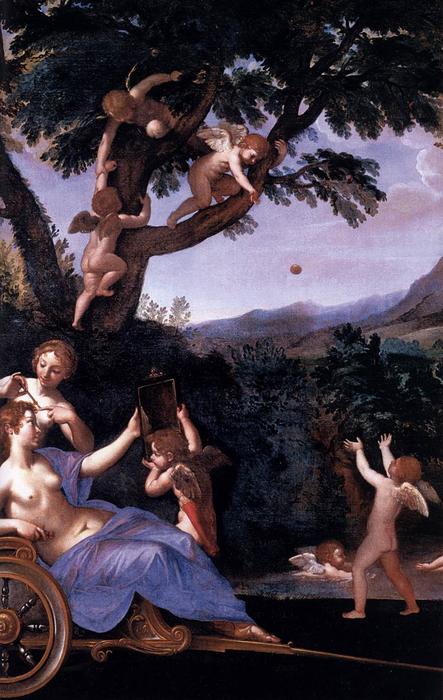
Subject Matter & Composition: The painting depicts Venus at her toilette—a scene drawn from Philostratus's *Eikones I*,6—where Aphrodite meticulously prepares for her rendezvous with Adonis. Albani skillfully captures this mythological narrative, presenting it as a carefully orchestrated tableau of figures arranged against a breathtaking landscape backdrop. The central figure, Venus herself, dominates the composition, reclining gracefully amidst attendants and cherubs, embodying beauty, serenity, and feminine power.
Style & Technique: Albani’s distinctive style is immediately recognizable through his masterful use of chiaroscuro—a technique pioneered during the Baroque period—which dramatically illuminates certain areas of the canvas while plunging others into shadow. This creates a palpable sense of depth and atmosphere, drawing the eye inward and emphasizing the sculptural quality of the figures. The artist employs oil paint on canvas with meticulous detail, capturing subtle nuances of color and texture that convey an astonishing level of realism.
Historical Context: “Spring” emerged during a period of intense artistic innovation in Rome—a city under papal patronage eager to reaffirm its cultural prestige. Albani’s work reflects the broader Baroque preoccupation with reviving classical forms and ideals, albeit filtered through a distinctly Christian lens. The painting embodies the Renaissance spirit of humanism alongside religious symbolism, demonstrating Albani's ability to synthesize disparate influences into a cohesive artistic statement.
Symbolism & Emotional Impact: Beyond its visual splendor, “Spring” is laden with symbolic meaning. Cherubs adorning the scene represent innocence and divine grace—a deliberate allusion to Christian iconography. The landscape serves as a conduit for conveying seasonal rhythms and mirroring Venus’s inner state—suggesting contemplation and anticipation. Albani's ability to evoke emotion through color, light, and form elevates “Spring” beyond mere representation; it invites viewers into a realm of beauty and wonder, capturing the essence of springtime itself.
Further Exploration: To delve deeper into Albani’s artistic legacy, consider visiting WGA00101 for a detailed examination of the painting and its stylistic innovations. Alternatively, explore ArtsDot to discover reproductions available for purchase.