A Glimpse of Divinity: Albert Bierstadt’s “Sunlight and Shadow”
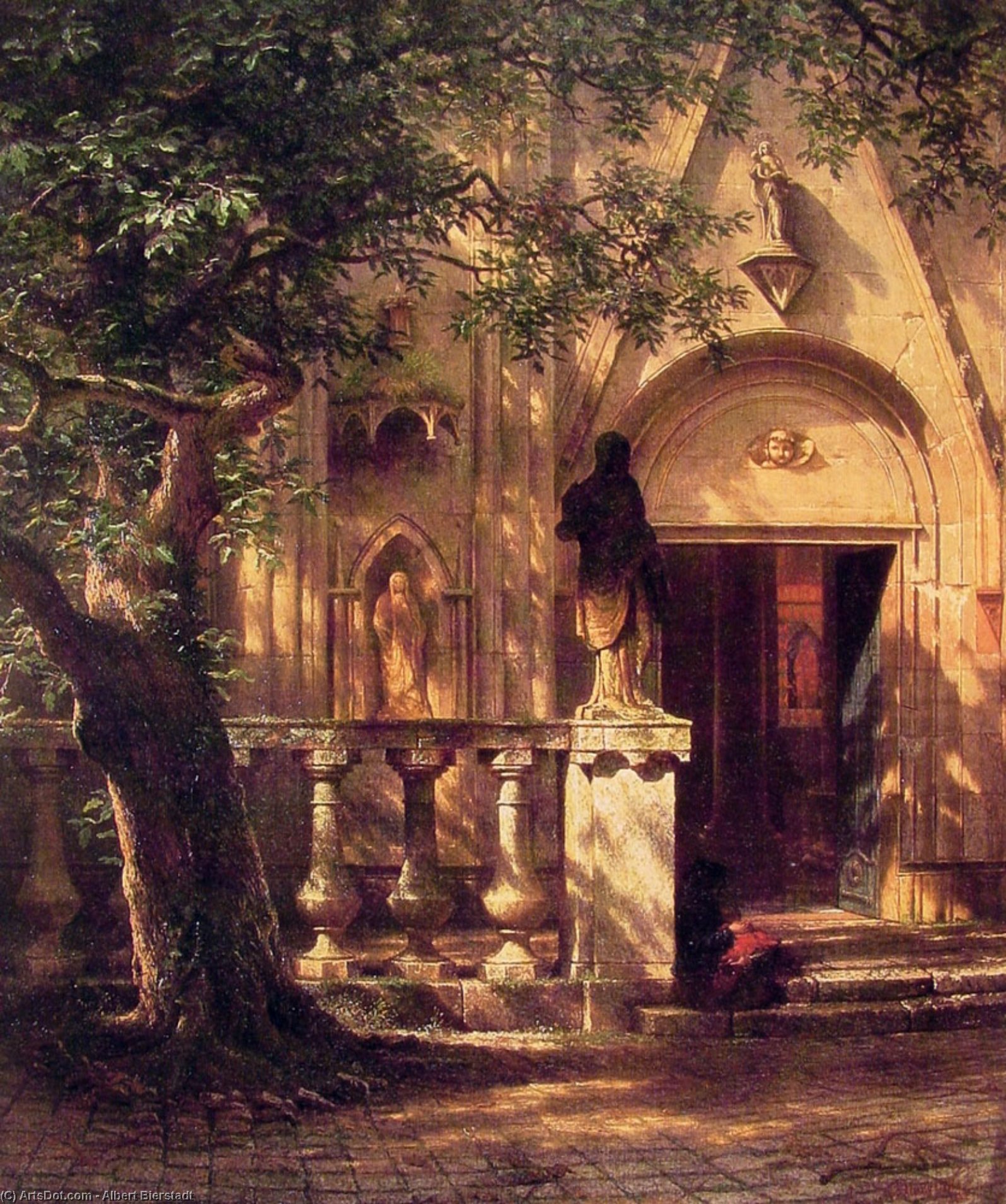
Albert Bierstadt's "Sunlight and Shadow," painted in 1862, isn’t merely a landscape; it’s an immersive experience. This monumental canvas transports the viewer to the heart of the American West, specifically capturing a scene near Kassel, Germany – a deliberate nod to the Gothic Revival architecture that Bierstadt so admired. The painting immediately draws the eye with its dramatic lighting, a hallmark of the Hudson River School and, crucially, Bierstadt’s own unique approach to Luminism. He didn't simply depict a mountain view; he sought to evoke the sublime, that feeling of awe and reverence inspired by nature’s grandeur. Notice how the sunlight, fractured and diffused through the arched doorway of the distant church, casts an ethereal glow upon the weathered stone, imbuing it with a sense of ancient wisdom and spiritual resonance.
The Romantic Vision: Bierstadt and the Rocky Mountain School
Bierstadt’s artistic journey is deeply intertwined with the burgeoning identity of America itself. Born in Prussia and raised in New Bedford, Massachusetts, he developed a profound fascination for the landscapes that would define his legacy. His early studies in Düsseldorf provided him with an unparalleled technical mastery – a meticulous attention to detail and a sophisticated understanding of light and atmosphere, qualities he expertly translated to his depictions of the American wilderness. He was a key figure within the Hudson River School, but distinguished himself through his expansive scale and his ability to capture not just the visual beauty of the West, but also its emotional power. His work stands apart from earlier landscape painting by prioritizing an intensely personal response to nature – a desire to convey the sublime, rather than simply replicate what was seen.
Symbolism in Stone and Light: Interpreting the Scene
The composition of “Sunlight and Shadow” is rich with symbolic elements. The imposing Gothic Revival church, reminiscent of structures like the Löwenburg castle near Kassel, represents faith, tradition, and a connection to European artistic heritage. However, Bierstadt subtly contrasts this monumental structure with the more humble figure of a woman tending her child in the foreground – a poignant reminder of charity and compassion. The towering oak tree, a national symbol of Germany, anchors the scene, its branches reaching towards the heavens like supplicating arms. This deliberate inclusion speaks to the enduring power of faith amidst adversity, mirroring Christ’s crucifixion and resurrection. The play of light itself is crucial; it's not merely illumination but a vehicle for conveying emotion – warmth, serenity, and a sense of divine presence.
A Legacy of Grandeur: Reproductions and Artistic Inspiration
“Sunlight and Shadow” remains one of Albert Bierstadt’s most celebrated works, admired for its scale, technical brilliance, and evocative power. Today, high-quality reproductions offer a remarkable opportunity to experience this masterpiece in your own home or office. ArtsDot specializes in meticulously crafted hand-painted reproductions that capture the essence of Bierstadt's original vision. Consider how these reproductions can transform a room – bringing a touch of Romantic grandeur, spiritual depth, and the timeless beauty of the American West into your space. Further research reveals fascinating details about Bierstadt’s artistic process, including his use of stereoscopic photographs as reference material, demonstrating his commitment to both accuracy and emotional resonance. (See links below for further exploration).
- Size:** 105 x 90 cm
- Date:** 1862
- Artist:** Albert Bierstadt
Useful Resources: Google Arts & Culture, Wikipedia, ArtsDot