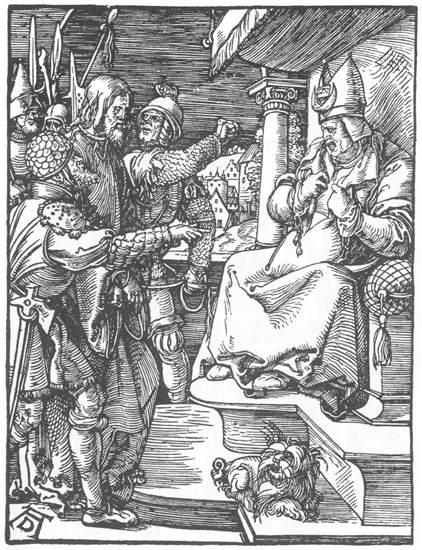
A Moment Frozen in Time: Albrecht Dürer’s “Small Passion: 13. Christ before Caiaphas”
Albrecht Dürer's "Small Passion: 13. Christ before Caiaphas," created in 1511, is more than just a woodcut print; it’s a meticulously crafted tableau of betrayal, authority, and the weighty consequences of judgment. Born in Nuremberg, Germany, Dürer’s artistic journey began within his father's goldsmith workshop, yet his innate talent for drawing quickly steered him toward the vibrant world of illuminated manuscripts and burgeoning illustration techniques under Michael Wolgemut. This early exposure to intricate detail and narrative imagery profoundly shaped his later work, culminating in this powerful depiction of a pivotal biblical scene. The print’s monochrome palette—a masterful manipulation of hatching and cross-hatching—immediately draws the viewer into its dramatic intensity, conveying texture and form with remarkable precision.
The Scene Unfolds: Narrative and Composition
The composition itself is strikingly direct, focusing on a tightly framed interaction between a figure seated upon an elevated platform and two men before him. The scene unfolds as a potential surrender or oath-taking – the details are deliberately ambiguous, inviting interpretation. Dürer’s use of perspective, flattened yet layered through overlapping forms, creates a sense of depth that belies the limitations of woodcut technique. Architectural elements—columns and hints of a city skyline—establish a setting suggestive of a royal court or a place of significant legal authority. The presence of a small dog at the base of the platform adds an intriguing layer of symbolism; often associated with loyalty, fidelity, or even subservience, it subtly underscores the dynamics of power and obligation within the scene.
Masterful Technique: The Art of Woodcut
The execution of “Christ before Caiaphas” is a testament to Dürer’s mastery of woodcut. Each line, meticulously carved into a block of wood, represents countless hours of painstaking labor. The artist's control over hatching and cross-hatching is particularly noteworthy; these techniques are deployed not merely for shading but to build volume and texture, imbuing the figures with a remarkable sense of physicality. The crispness and precision of the lines speak to Dürer’s exceptional skill as a craftsman, demonstrating an intimate understanding of how light and shadow could be simulated through line alone. The deliberate choice of monochrome amplifies the emotional impact, forcing the viewer to focus on form, gesture, and the subtle nuances of expression.
Symbolism and Historical Context
Dürer’s “Small Passion” is deeply rooted in the late medieval and early Renaissance artistic traditions. The armor worn by the central figure immediately evokes notions of authority, power, and perhaps even conflict. The scene itself draws upon biblical narratives surrounding Christ's arrest and trial, specifically referencing the moment before Caiaphas, a high priest who played a key role in Jesus’ condemnation. Beyond its religious significance, the print can be interpreted as an allegory for political intrigue and the precarious nature of power – themes that resonated powerfully during Dürer’s time. The work reflects the humanist interest in classical antiquity, evident in the formal composition and the emphasis on human form, while simultaneously retaining a strong devotional element.
A hand-painted reproduction from ArtsDot.com offers an unparalleled opportunity to experience the profound beauty and intricate detail of this iconic artwork. Bringing Dürer’s vision into your home or office allows you to contemplate its timeless themes and appreciate the extraordinary skill of one of history's greatest artists.