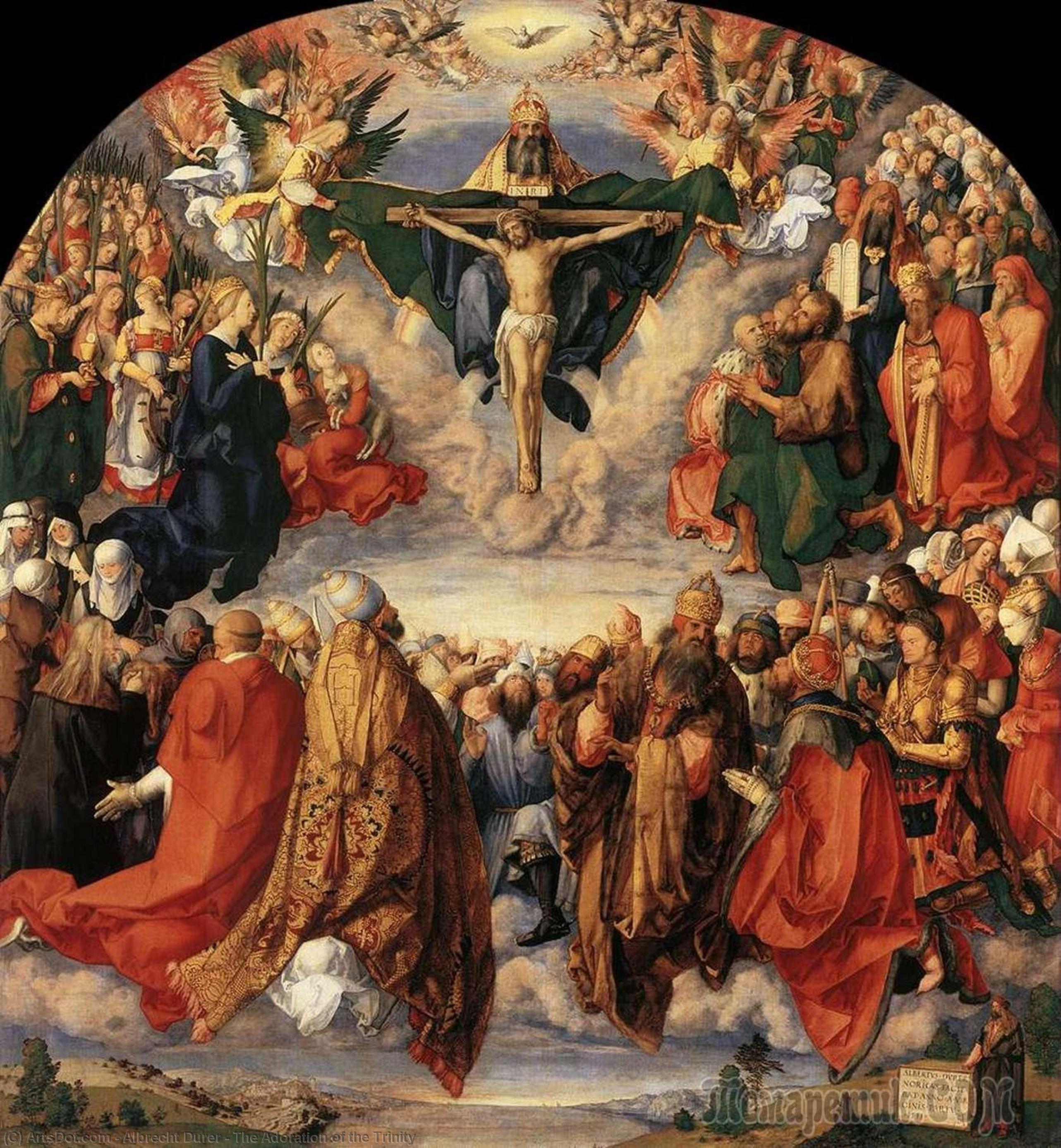
アルブレヒト・デューラーは、ドイツのルネサンスを代表する画家・版画家。自画像や「メランコリアI」など、緻密な描写と象徴性豊かな作品で知られ、北ヨーロッパ美術に革新をもたらしました。
ハプスブルク家の至宝を所蔵!ラファエル、レンブラント、フェルメールの傑作からエジプト美術まで、ウィーン芸術史美術館で時を超える芸術体験を。🏛️✨
Kunsthistorisches Museum
Austria
Vienna
Kunsthistorisches Museum
Egyptian Collection
Over 500,000 objects
Art and history museum
1891
Gothic
2
What is the primary architectural style of the Kunsthistorisches Museum?
A Testament to Faith: Exploring Albrecht Dürer’s “The Adoration of the Trinity”
The painting "The Adoration of the Trinity," completed in 1511 by Albrecht Dürer, stands as a monumental achievement of German Renaissance art—a visual hymn to divine majesty and theological contemplation. More than just a depiction of biblical narrative, it’s an intricate tapestry woven with meticulous observation of nature, masterful artistic skill, and profound symbolic resonance that continues to captivate audiences centuries later. This stunning reproduction captures the essence of Dürer's vision, transporting viewers back to a pivotal moment in European intellectual history.
The Composition: A Geometric Harmony
Dürer’s genius lies not merely in his technical prowess but also in his profound understanding of compositional principles. The artwork employs a complex geometric framework—a central pyramid anchored by Christ’s crucified body—to establish visual stability and guide the eye upwards towards God. Angels flank Jesus, their outstretched hands conveying reverence and support as they elevate him to his rightful place amongst the Father and the Holy Spirit represented as radiant spheres above. This deliberate structuring reflects humanist ideals prevalent during the Renaissance, prioritizing reason and order alongside spiritual aspiration. The positioning of figures—grouped strategically around the central crucifix—creates a dynamic interplay between stillness and movement, mirroring the contemplative nature of prayer itself.
Technique: Oil Paintsmanship Elevated to Perfection
Dürer’s mastery is evident in his painstaking application of oil paint—a technique that allowed for unprecedented luminosity and detail compared to earlier mediums like tempera. He employed sfumato shading, a subtle blending of tones achieved through layering thin glazes, to soften contours and imbue the figures with an ethereal glow. This meticulous attention to texture and color contributes significantly to the artwork’s emotional impact—the warm hues of the drapery contrast sharply with the cool blues and whites of the celestial spheres, creating a visual hierarchy that underscores the divine realm's transcendence. The artist’s painstaking etching process ensured exceptional precision in transferring his vision onto paper, demonstrating Dürer’s dedication to achieving unparalleled artistic accuracy.
Historical Context: Reformation Reverberations
“The Adoration of the Trinity” emerged during a period of intense religious upheaval—the Protestant Reformation was reshaping Europe's spiritual landscape. Dürer, though nominally Catholic, possessed humanist sensibilities that questioned dogma and celebrated human dignity. The painting’s depiction of Christ as humanity’s savior speaks to this broader intellectual movement, reflecting an interest in reconciling faith with reason. Furthermore, the artwork embodies the artistic fervor characteristic of Nuremberg at the time—a city renowned for its printing presses and burgeoning artistic community. Its creation coincided with a renewed appreciation for classical ideals and a desire to express profound spiritual truths through visual art.
Symbolism: Layers of Meaning Beyond Scripture
Beyond its biblical narrative, “The Adoration of the Trinity” is replete with symbolic references that enrich its interpretation. The pyramidal structure symbolizes divine ascension and perfection—the Holy Spirit radiating outwards from God’s throne represents divine grace and illumination. The angels' gestures convey humility and devotion, emphasizing humanity’s role as supplicants before God. Even the drapery folds are carefully arranged to create visual rhythm and contribute to the overall sense of grandeur. These elements collectively communicate a message of faith, hope, and redemption—themes central to Christian theology and powerfully conveyed through Dürer's artistic vision.
Emotional Resonance: A Window into Divine Beauty
Ultimately, “The Adoration of the Trinity” transcends mere representation; it aspires to evoke emotion and inspire contemplation. The artwork’s luminous colors and masterful execution convey a sense of awe and reverence—drawing viewers inward toward a profound awareness of God's majesty. Its serene composition invites stillness and reflection, prompting us to consider questions of faith and spirituality. As a reproduction, this masterpiece allows collectors and interior designers alike to experience the enduring beauty and intellectual depth of Dürer’s artistic legacy – bringing a timeless symbol of Christian devotion into any space.