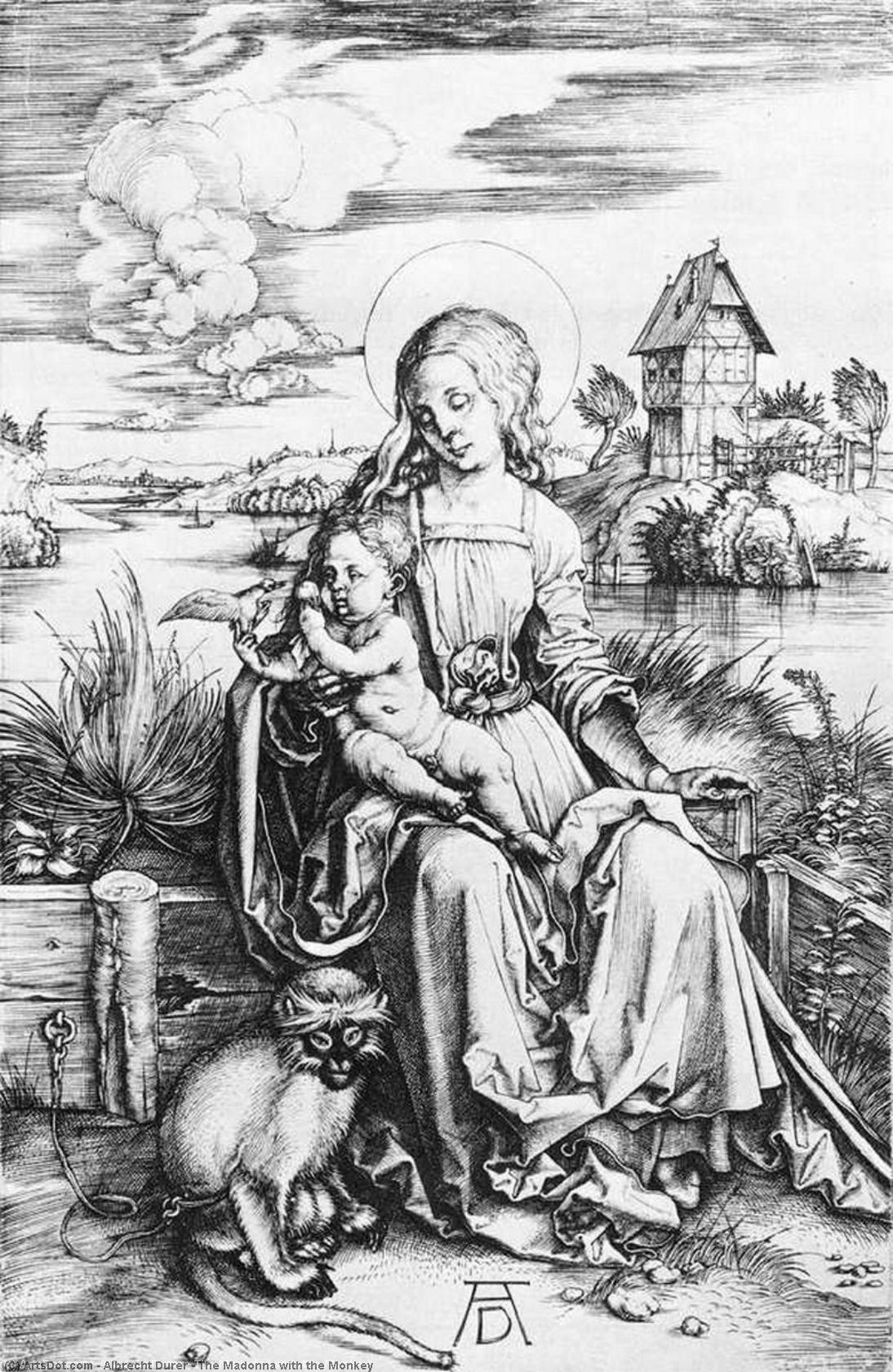
A Study in Detail: Albrecht Dürer’s “The Madonna with the Monkey”
Albrecht Dürer's "The Madonna with the Monkey," completed in 1498, stands as a testament to the Northern Renaissance fascination with meticulous observation and symbolic representation. More than just a depiction of religious piety—the Virgin Mary cradling her infant son—this engraving delves into complex layers of meaning that continue to intrigue scholars and inspire artists today.
- Subject Matter & Narrative Depth: The scene portrays the Madonna and Child, a motif central to Christian iconography. However, Dürer’s genius lies in introducing an unexpected element – a monkey perched beside Mary and Jesus – which disrupts the conventional serenity of such images. This juxtaposition wasn't merely whimsical; monkeys held symbolic significance within Renaissance art, often representing folly or temptation, prompting viewers to contemplate moral dilemmas alongside spiritual devotion.
- Technique & Artistic Mastery: Executed in engraving on paper, Dürer’s method exemplifies the pinnacle of printmaking artistry. The artist painstakingly incised lines into a copper plate using burin tools, creating an image that would then be inked and pressed onto paper. This process demanded immense precision and patience—characteristics perfectly embodied in Dürer's unwavering commitment to realism.
- Composition & Perspective: The engraving’s composition is carefully constructed to draw the eye inward, emphasizing the Madonna and Child at its core. Background elements—a landscape featuring a stylized castle and flowing water—establish depth through linear perspective, subtly guiding the viewer’s gaze across the scene. This deliberate arrangement contributes to the overall sense of narrative and invites contemplation.
- Color Palette & Texture: Despite being monochromatic, “The Madonna with the Monkey” achieves remarkable tonal variation thanks to Dürer's masterful use of hatching—cross-hatching lines that build up shading and texture. This technique skillfully renders details like Mary’s drapery folds and the monkey’s fur, conveying a palpable sense of materiality and enhancing the image’s visual impact.
- Historical Context & Artistic Legacy: Created during Dürer's formative years in Nuremberg, this engraving reflects the broader artistic currents of the era—a period marked by humanist ideals and an unprecedented interest in scientific observation. “The Madonna with the Monkey” solidified Dürer’s reputation as a pioneer of printmaking and profoundly influenced subsequent generations of artists, cementing his place among the giants of European art history.