A Glimpse into Contemplative Piety: Moretto da Brescia's Vision
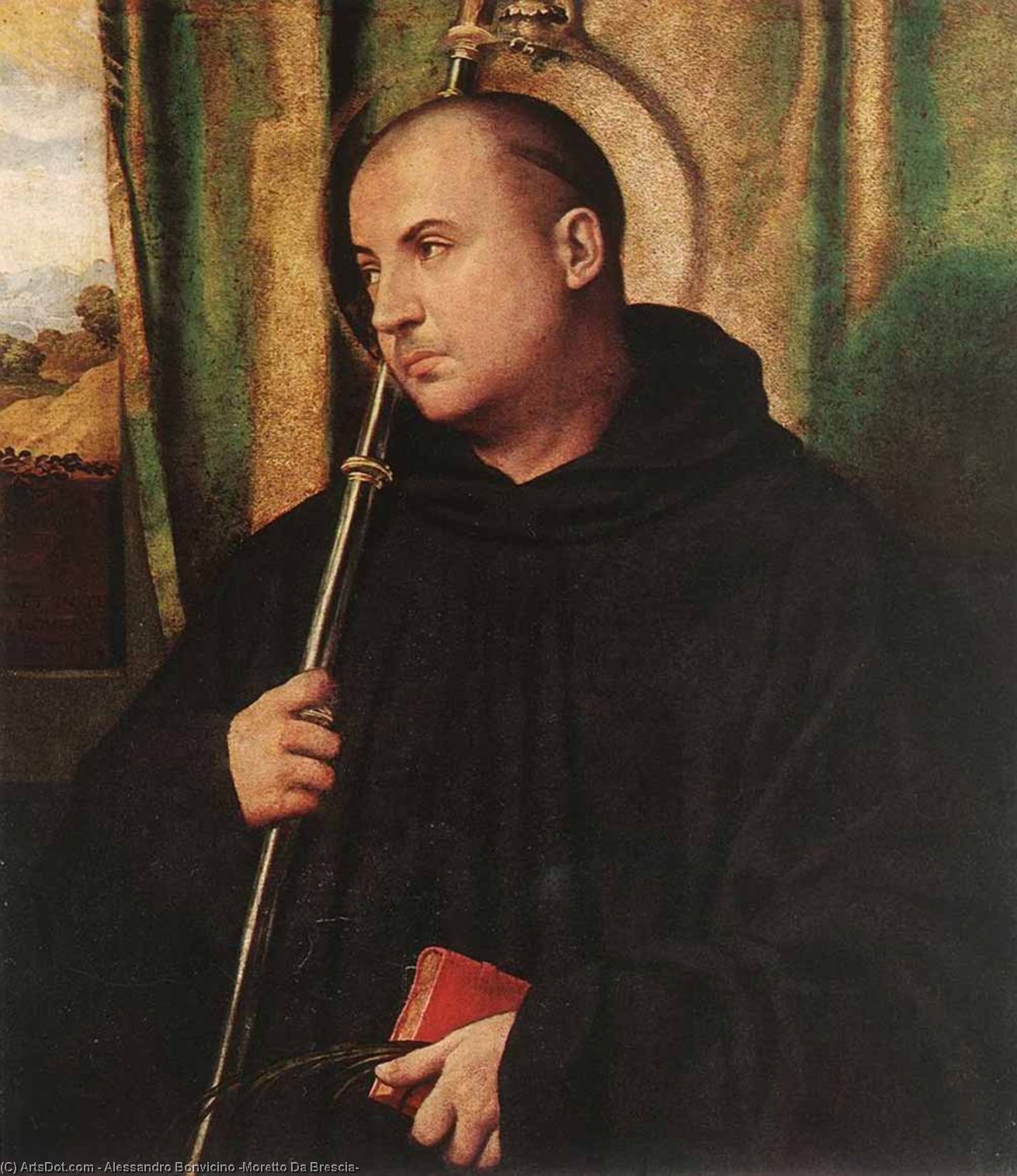
To stand before this depiction of A Saint Monk is to step across the threshold of time and into a moment of profound, quiet devotion. Painted around 1530 by Alessandro Bonvicino, better known as Moretto da Brescia, this work radiates the serene dignity characteristic of the Venetian Renaissance. The central figure—the monk—commands attention not through dramatic action, but through an almost palpable sense of internalized contemplation. His gaze, directed outward toward the viewer, is both stern and deeply knowing, inviting us into a silent dialogue about faith, duty, and the enduring nature of spiritual life.
Mastery in Technique and Composition
Moretto da Brescia’s handling of paint here showcases his remarkable ability to balance luminous color with profound depth. The composition is masterfully balanced, anchoring itself around the central figure whose black robe absorbs the light, contrasting beautifully with the subtle richness of the background curtain. This drapery, more than mere backdrop, adds an architectural sense of space, giving the scene a tangible reality that belies its spiritual subject matter. Notice the details: the book held close to his body suggests scholarship alongside piety, while the staff serves as both support and symbol of his vocation. The inclusion of secondary figures, subtly placed in the periphery, enriches the narrative tapestry without ever distracting from the monk’s solemn presence.
Symbolism Woven into the Robes
The symbolism within this painting is rich for the discerning eye. The monastic habit itself speaks to renunciation and commitment—a visual vow taken before God. The book, of course, points toward scripture or sacred texts, grounding the saint’s wisdom in divine word. Moretto often imbued his figures with a humanist undertone; they are not merely saints, but thoughtful men grappling with profound philosophical questions. This piece invites us to consider what personal vows—be they spiritual, intellectual, or artistic—define our own lives.
An Echo of Renaissance Serenity for Your Space
For the collector or designer seeking an artwork that speaks volumes without shouting, this reproduction offers unparalleled depth. It captures the quiet power of the High Renaissance masters while maintaining a distinctly Venetian grace. Imagine this piece gracing a library, a study, or a formal reception room; it acts as a meditative focal point. Owning a representation of A Saint Monk by Moretto da Brescia is not simply acquiring art; it is curating an atmosphere of thoughtful repose and enduring artistic heritage.