The Serene Majesty of "The Trumpeter Swan"
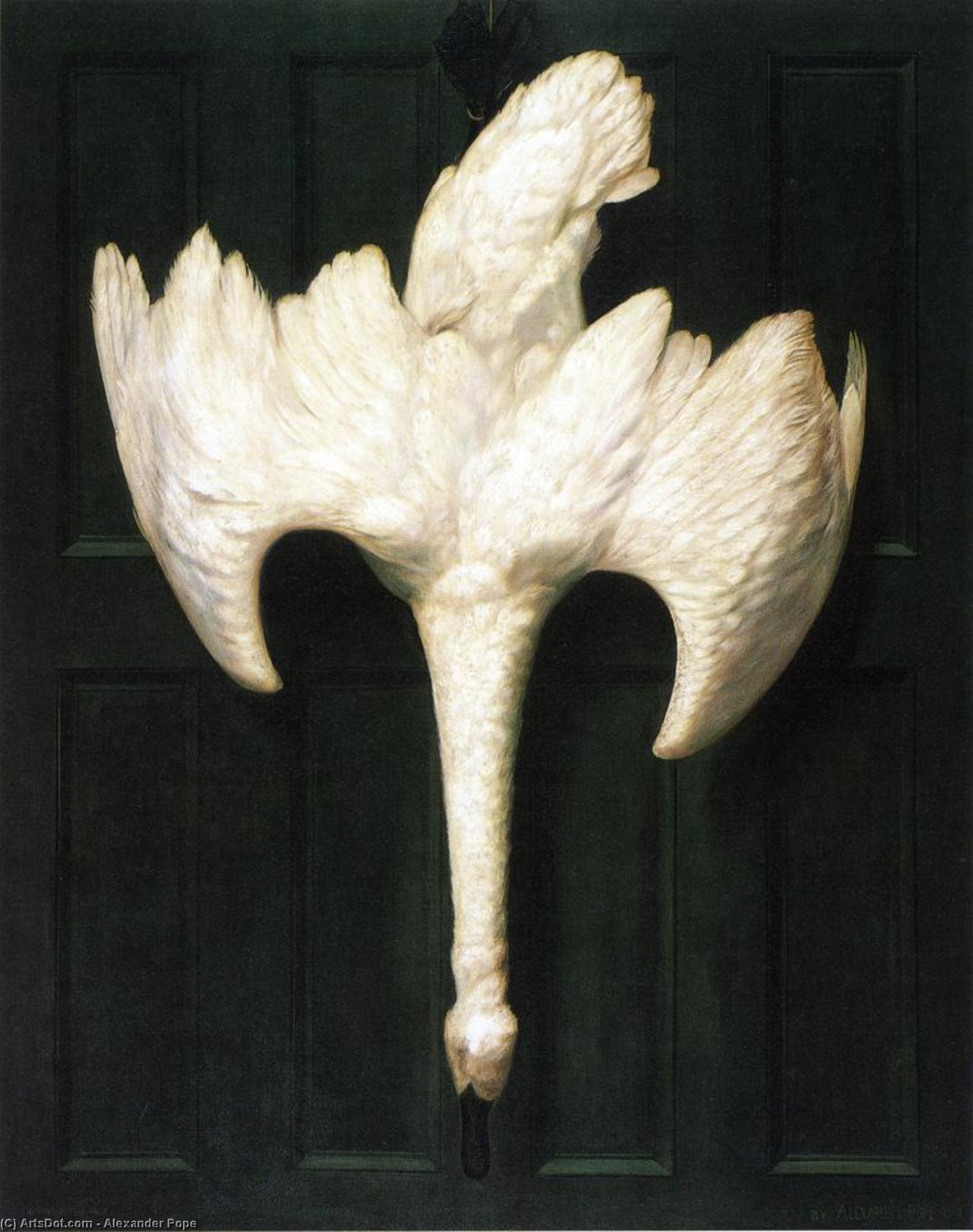
Alexander Pope’s “The Trumpeter Swan,” painted in 1900, is more than just a depiction of a magnificent bird; it's an evocative portrait of grace, solitude, and the delicate balance between nature and artistry. The painting captures a single trumpeter swan, its long neck elegantly curved downwards, seemingly poised to release a resonant call into the stillness of the surrounding landscape. The artist’s choice of a dark, muted background serves not to obscure the bird but rather to amplify its pristine whiteness, creating a striking contrast that draws the viewer's eye directly to the swan's form and presence. It is a moment frozen in time, an invitation to contemplate the quiet power of the natural world.
A Glimpse into Late 19th-Century American Art
Pope’s work emerged during a period of significant artistic transition in America. While realism was gaining traction, there remained a strong appreciation for romantic ideals and depictions of wildlife—a fascination fueled by the nation's westward expansion and growing awareness of its unique natural heritage. Pope himself appears to have been deeply connected to this world, with his studio reportedly filled with hunting paraphernalia, suggesting a personal passion that informed his artistic endeavors. “The Trumpeter Swan” reflects this intersection of observation and sentiment, capturing not just the physical appearance of the bird but also conveying a sense of reverence for its wildness. The painting’s creation coincided with a period when the trumpeter swan population was critically endangered, making Pope's portrayal all the more poignant—a visual testament to a species teetering on the brink of extinction.
Technique and Artistic Vision
Executed in oil on canvas, “The Trumpeter Swan” showcases Pope’s mastery of light and shadow. The artist skillfully uses subtle gradations of tone to render the swan's feathers with remarkable detail, creating a sense of volume and texture that brings the bird to life. Notice how the highlights catch the curve of its neck and breast, while the shadows define the contours of its body. This attention to detail extends to the surrounding environment, though deliberately understated—a testament to Pope’s focus on the swan as the central subject. The composition is carefully balanced, with the swan positioned slightly off-center, creating a dynamic tension that prevents the image from feeling static or predictable. It's a study in controlled realism, where every brushstroke contributes to an overall impression of serene beauty.
Symbolism and Emotional Resonance
Beyond its aesthetic appeal, “The Trumpeter Swan” carries layers of symbolic meaning. Swans have long been associated with purity, grace, and elegance across various cultures. The trumpeter swan, in particular, embodies a sense of wildness and freedom—a creature untamed by human influence. Pope’s painting taps into these archetypal associations, evoking feelings of tranquility, awe, and perhaps even a touch of melancholy, given the historical context of the species' near extinction. The solitary figure of the swan against the dark backdrop can also be interpreted as a metaphor for resilience—a testament to the enduring power of nature in the face of adversity. The painting invites viewers to reflect on their own relationship with the natural world and appreciate the fragile beauty that surrounds us.