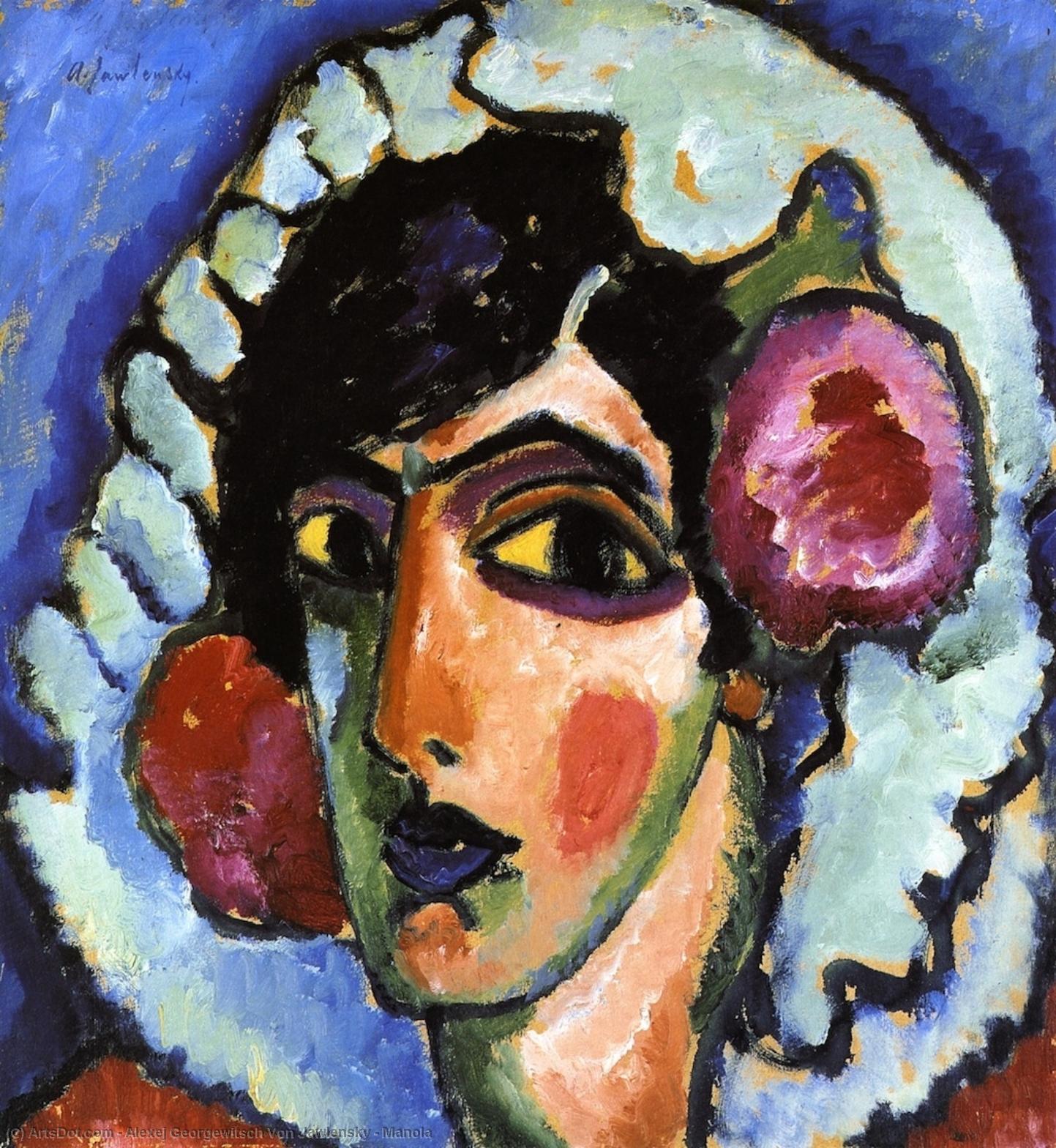
Delve into the emotive Expressionist style of Alexej von Jawlensky's 'Manola,' a striking 1913 painting exploring themes of introspection and color symbolism housed at Kunsthaus Zürich.
表現主義を代表するロシア生まれの画家、アレクセイ・フォン・ヤヴレンスキー。鮮やかな色彩と抽象的な「神秘の頭」で知られ、青い騎士団にも参加。感情豊かな色彩と独自の様式が、20世紀美術に大きな影響を与えました。
スイス、チューリッヒの Kunsthaus Zürich は、モネからジャコメッティまで、時代を超えた多様なアートコレクションを誇ります。セセッション様式の建築と現代アートが融合した、文化的な旅に出かけましょう!
古代遺物を主に展示するため。
1
説明によると、Kunsthaus Zürich の主な役割の一つは何ですか?
Exploring the Emotional Landscape of Expressionism: Alexej von Jawlensky’s “Manola”
Alexej Georgewitsch Von Jawlensky stands as one of the most influential figures in early twentieth-century Expressionist art, a movement characterized by its fervent embrace of subjective emotion and distortion—a deliberate rejection of academic conventions in favor of conveying inner turmoil and psychological intensity. Born in Torzhok, Russia, in 1864, Jawlensky’s artistic journey unfolded primarily in Germany, where he became inextricably linked with groundbreaking artistic collectives like Der Blaue Reiter (The Blue Rider) and Die Blaue Vier (The Blue Four), shaping the trajectory of modern art for decades to come. His unwavering dedication to color and form—particularly his masterful use of pigment—established him as a visionary whose canvases pulsate with palpable feeling.
A Portrait Steeped in Symbolism: The Painting’s Visual Narrative
“Manola,” created in 1913, exemplifies Jawlensky's signature style perfectly. Measuring 54 x 50 cm and executed on oil-on-panel, the artwork depicts a woman gazing directly at the viewer—a posture imbued with an arresting stillness that belies the profound emotional depth beneath the surface. The dominant hue is a striking shade of blue, chosen not merely for its aesthetic appeal but as a deliberate symbol of contemplation and introspection. This color palette isn’t accidental; it reflects Jawlensky's belief in color’s ability to communicate emotion directly—a cornerstone of Expressionist philosophy. Surrounding the woman is a simple floral arrangement—likely hyacinths—further reinforcing themes of fragility, beauty, and remembrance. The hat she wears adds another layer of visual interest, hinting at both formality and perhaps, a subtle concealment of vulnerability.
Technique and Artistic Vision: Jawlensky’s Bold Brushstrokes
Jawlensky's technique is characterized by its deliberate simplification—reducing subjects to their essential elements while maintaining an unwavering commitment to conveying emotion. Thick brushstrokes dominate the canvas, creating textured surfaces that capture the dynamism of feeling itself. The artist eschewed blending colors extensively, opting instead for juxtaposing hues in a manner that intensifies their impact and generates visual friction. This approach aligns seamlessly with Expressionist principles—a rejection of illusionistic representation in favor of conveying psychological states through expressive color and form. The meticulous layering of paint contributes to the painting’s luminous quality, highlighting the vibrancy of the blue background and emphasizing the woman's gaze.
Historical Context: Der Blaue Reiter and the Avant-Garde Spirit
“Manola” emerged during a period of intense artistic experimentation—the height of Expressionism’s influence within Germany. The Blue Rider group, to which Jawlensky belonged, championed a radical reimagining of artistic practice, rejecting traditional academic standards in favor of exploring spiritual and psychological dimensions. Artists like Wassily Kandinsky and Franz Marc sought to liberate art from representational constraints, prioritizing color and form as vehicles for conveying inner experience—a pursuit that profoundly impacted the development of abstract expressionism and subsequent artistic movements. Jawlensky’s work stands as a testament to this avant-garde spirit—a defiant assertion of artistic freedom rooted in an unwavering belief in the power of emotion.
Legacy and Emotional Resonance: An Enduring Masterpiece
Today, “Manola” continues to captivate viewers with its arresting simplicity and profound emotional resonance. Its enduring appeal lies not merely in its aesthetic beauty but in its ability to provoke contemplation—to invite us to confront our own inner landscapes alongside the woman depicted on canvas. As a seminal work of Expressionist art, it serves as an invaluable reminder that true artistic achievement resides in conveying emotion authentically—a legacy that resonates powerfully within the broader context of modern art history. Currently housed at the Kunsthaus Zürich, “Manola” remains a beacon of artistic innovation and emotional depth.