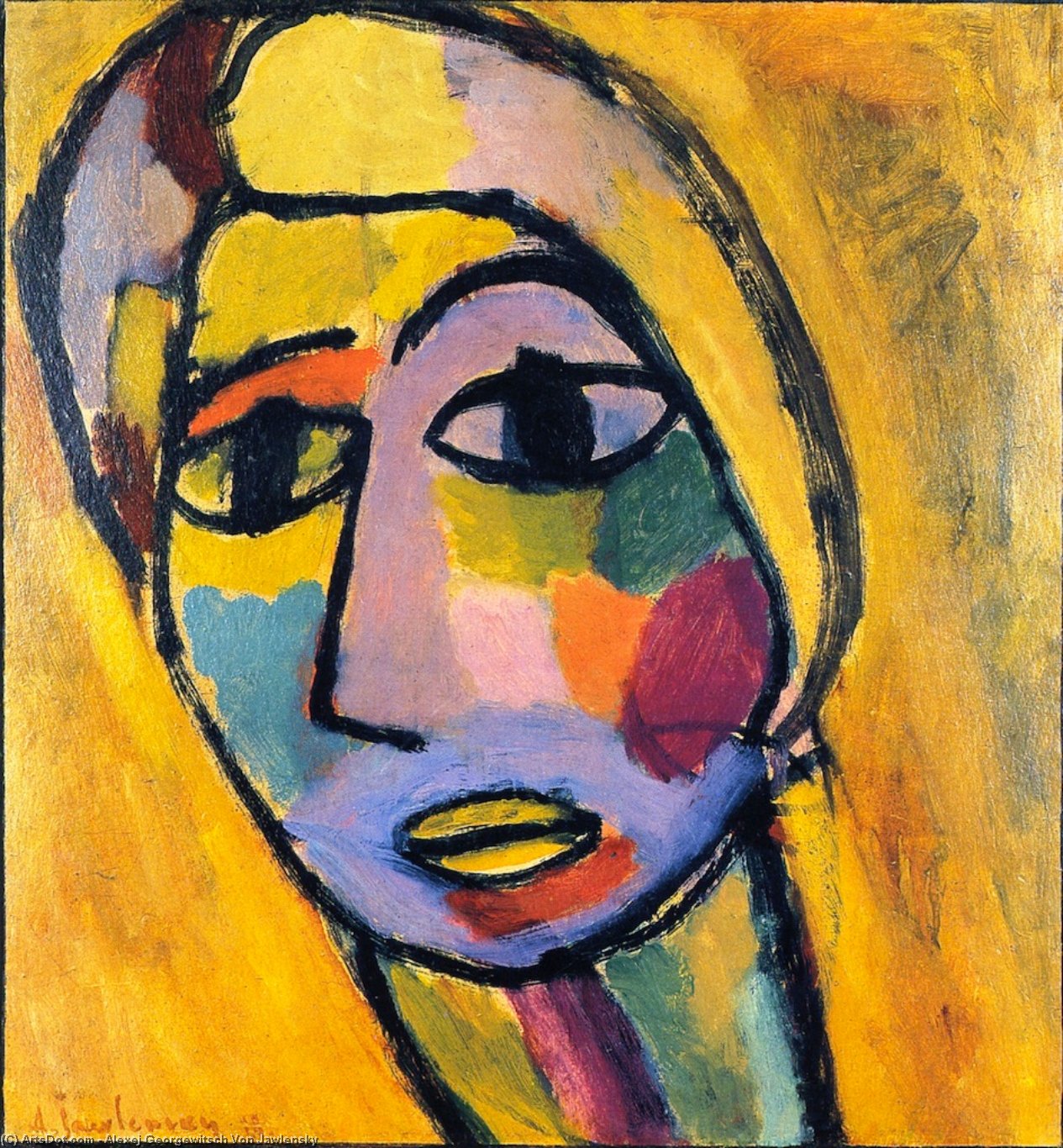
Mystical Head: Earth – An Exploration of Expressionist Emotion
The Alexej Georgewitsch Von Jawlensky painting, Mystical Head: Earth, stands as a cornerstone of early twentieth-century Expressionism—a movement that fundamentally challenged the conventions of representational art and championed instead the visceral conveyance of inner psychological states. Executed in 1918 during the tumultuous aftermath of World War I, this oil on panel piece transcends mere visual depiction; it’s an immersive experience designed to provoke contemplation and resonate deeply with viewers attuned to the complexities of human emotion.
Style and Technique: Bold Color and Stylized Form
Jawlensky's approach to painting embodies the core tenets of Expressionism. Rejecting academic precision, he prioritized expressive color—particularly vibrant hues like crimson, ochre, and indigo—to communicate feelings rather than accurately portraying external reality. The stylized form of the woman’s face is deliberately abstracted, prioritizing emotional impact over anatomical correctness. Thick impasto technique—the application of paint in textured layers—further amplifies this sense of dynamism and contributes to the painting's palpable energy. Notice how the swirling patterns within the background mirror the turbulent emotions conveyed by the central figure.
Historical Context: The Trauma of War and Artistic Rebellion
The genesis of Mystical Head: Earth lies squarely within the anxieties surrounding the devastation wrought by World War I. Artists like Jawlensky responded to this pervasive sense of disillusionment with a fervent desire for artistic liberation—a rejection of accepted aesthetic standards in favor of subjective experience. Expressionism emerged as a reaction against Impressionism’s focus on capturing fleeting moments of visual beauty, asserting instead that art should confront the darker recesses of human consciousness and grapple with existential questions.
Symbolism: The Woman's Face and the Necklace
The woman’s face itself serves as a potent symbol—representing introspection and vulnerability amidst external pressures. Her gaze directs towards the viewer, fostering a connection that transcends mere visual observation; it invites engagement with her inner world. The necklace encircling her neck symbolizes continuity and perhaps, spiritual aspiration – an element reflecting Jawlensky's own preoccupation with Eastern mysticism. The colors chosen for the background—particularly indigo—are associated with intuition and contemplation, reinforcing the painting’s overarching thematic concerns.
Emotional Impact: A Resonance of Quiet Intensity
Ultimately, Mystical Head: Earth succeeds in capturing a remarkable level of emotional intensity without resorting to overt melodrama. Its subdued palette combined with stylized form generates a profound sense of stillness punctuated by flashes of vibrant color—creating an atmosphere that is both unsettling and alluring. The painting compels viewers to confront their own perceptions of beauty and emotion, prompting reflection on the role of art in conveying human experience beyond the confines of literal representation. It’s a testament to Jawlensky's ability to distill complex psychological ideas into a single unforgettable image—a masterpiece of Expressionist artistry.
- Artist: Alexej von Jawlensky
- Born Year: 1864
- Death Year: 1941
- Birth City: Torzhok
- Birth Country: Russia
Further Information: Explore more about Alexej von Jawlensky and his oeuvre at ArtsDot.com, where you can find meticulously crafted oil painting reproductions of Mystical Head: Earth and other seminal works by Jawlensky. Alternatively, immerse yourself in the artistic legacy of Expressionism at Kunstmuseum Bern – Switzerland.