A Portrait of Inner Turmoil: The Genesis of ‘Savior’s Face’
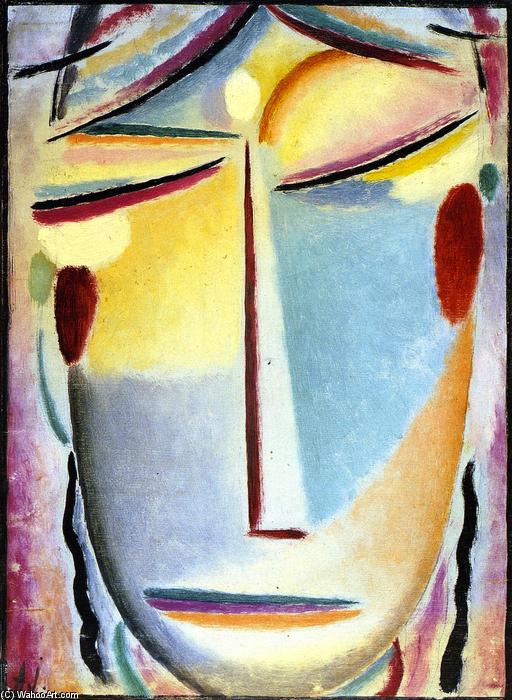
Alexej von Jawlensky's “Savior’s Face” (1919) is not merely a depiction of a human visage; it’s an excavation of the soul. Painted against a stark, almost aggressively simple blue background, the distorted face immediately commands attention, pulling the viewer into a realm of raw emotion and unsettling beauty. This work exemplifies Jawlensky's core artistic philosophy – to bypass superficial representation and capture the essence of spiritual experience through intensely concentrated color and form. The year 1919 was a pivotal one for the artist, marked by increasing isolation following Germany’s entry into World War I and a deepening commitment to exploring themes of faith, suffering, and redemption within his art.
Expressionism Rooted in Russian Orthodoxy
Jawlensky's artistic trajectory was profoundly shaped by his upbringing within the traditions of Russian Orthodox Christianity. Born in Torzhok, Russia, he grew up immersed in the iconography of the Eastern Church – images imbued with a potent spiritual significance. This influence is palpable in “Savior’s Face,” where the subject’s features are rendered with an almost iconographic quality, hinting at a timeless and universal narrative. The deliberate distortion isn't a rejection of realism but rather a heightened mode of expression designed to evoke a visceral response in the viewer, mirroring the emotional intensity often associated with religious devotion.
Technique and Color: A Language of Emotion
The painting’s power resides largely in Jawlensky’s masterful manipulation of color and texture. Bold strokes of red, yellow, and blue – applied with a thick impasto technique – create a dynamic surface that vibrates with energy. The layering of these hues generates a sense of depth and movement, while the simplification of form directs focus to the emotional weight of the subject's expression. Notice how the intense blues seem to press in on the face, creating a feeling of claustrophobia or perhaps, an overwhelming sense of divine presence. Jawlensky’s technique was deliberately rough and unpolished; he rejected academic precision in favor of a direct, intuitive approach that prioritized emotional impact over technical perfection.
Symbolism and Interpretation
The title itself, “Savior’s Face,” immediately evokes biblical imagery – the face of Christ. However, Jawlensky's interpretation transcends simple religious iconography. The distorted features suggest a profound sense of suffering, vulnerability, and perhaps even madness. Some scholars interpret the work as a reflection of the artist’s own inner turmoil during a period of immense personal and political upheaval. The painting can be seen as an exploration of humanity’s capacity for both faith and despair, offering no easy answers but demanding contemplation. The ambiguity inherent in the image invites multiple interpretations, making it a deeply resonant work that continues to captivate viewers today.
A Legacy of Spiritual Intensity
“Savior’s Face” stands as a testament to Alexej von Jawlensky's enduring legacy within the realm of Expressionism. It exemplifies his commitment to capturing profound emotional truths through a uniquely personal and intensely spiritual style. This hand-painted reproduction offers an unparalleled opportunity to experience the raw power and evocative beauty of this seminal work, bringing its timeless message directly into your space.