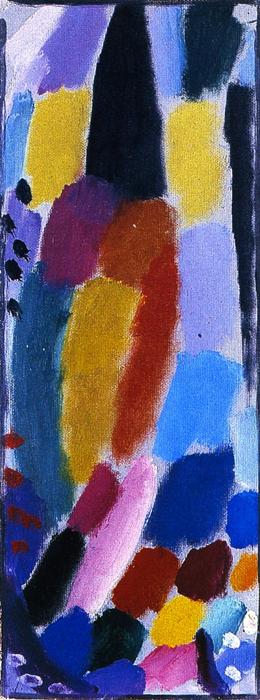
A pivotal figure in early 20th-century Expressionism, Alexej von Jawlensky (1864-1941) was known for his emotionally charged and often unsettling paintings. His work evolved through distinct periods, marked by a move towards abstraction and a focus on conveying raw emotion. He is considered one of the most important figures in the development of Expressionism.
Torzhok
Russia
1864
Alexej von J
Alexej von Jawlensky: Variation (18) – A Study in Raw Emotion
This captivating rendition of Alexej von Jawlensky’s “Variation (18)” is more than just a colorful painting; it's a visceral expression of the artist’s deeply felt inner world. Executed with a deliberate, almost brutal honesty, the work embodies the core tenets of early Expressionism – prioritizing emotional impact over representational accuracy. The swirling masses of blue, red, yellow, and orange aren’t merely decorative hues; they are conduits for raw feeling, reflecting a turbulent psychological landscape.

The Artist’s Vision: Jawlensky and the Expressionist Movement
Born in Torzhok, Russia, in 1864, Alexej von Jawlensky spent much of his life grappling with themes of faith, suffering, and the human condition. He was a key figure within a small circle of artists – including Gerhardt Richter and Karl Schmidt-Rottluff – who developed a distinctly Expressionist style, rejecting the prevailing academic trends of the late 19th century. Jawlensky’s approach was profoundly influenced by his religious beliefs, particularly his Pietistic faith, which informed his intensely personal and often unsettling imagery. His work is characterized by a rejection of illusionism, favoring instead bold, flattened forms and expressive brushwork that prioritized direct emotional communication.
Technique & Composition: A Deliberate Chaos
The painting’s power lies in its seemingly chaotic composition. However, this isn't random; it’s the result of a meticulously considered process. Jawlensky employed a technique he termed “pointillé” – applying small dots of color to build up form and texture. The black lines aren’t merely outlines but active elements contributing to the overall dynamism and sense of movement within the piece. Notice how they fracture the colors, creating a layered effect that adds depth and complexity. The deliberate lack of blending or smooth transitions amplifies the raw energy emanating from the canvas.
Symbolism & Emotional Resonance
"Variation (18)" is often interpreted as a reflection of Jawlensky’s own struggles with doubt, faith, and the inherent suffering of existence. The intense colors – particularly the reds and yellows – can be seen as representing passion, anger, or even spiritual fervor. The fragmented forms suggest a brokenness, a sense of disorientation, mirroring perhaps the artist's own internal turmoil. Ultimately, this work invites viewers to confront uncomfortable emotions and contemplate profound questions about life, death, and the search for meaning. It’s a testament to Jawlensky’s ability to translate deeply personal experience into a universally resonant artistic statement.