A Vision of Divine Serenity: Alonso Cano’s Saint Jacques le Majeur
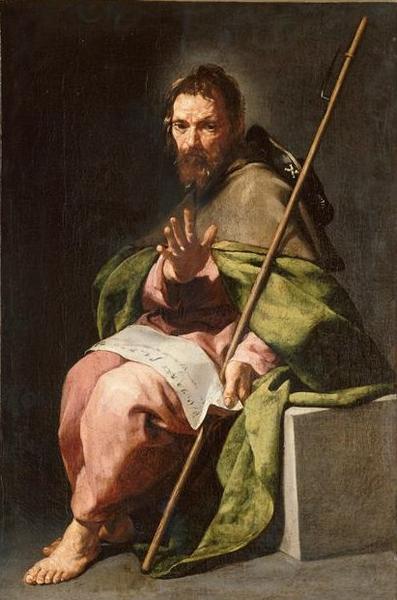
In the grand, dramatic theater of the Spanish Baroque, few figures command the canvas with as much quiet authority as Alonso Cano’s Saint Jacques le Majeur. To encounter this masterpiece is to step into a moment of profound spiritual stillness, a deliberate pause amidst the turbulent religious fervor of the seventeenth century. The painting presents Saint James the Greater not as a warrior in the heat of battle, but as a figure of deep, contemplative grace. Seated upon a simple stone pedestal, the saint radiates a sense of peace that transcends the earthly realm, inviting the viewer into a shared space of devotion and introspection.
Cano, an artist whose life was as multifaceted and complex as his brushwork, possessed a rare ability to marry the physical with the metaphysical. In this work, he utilizes the hallmark techniques of the Baroque period to sculpt form out of shadow. Through the masterful application of chiaroscuro, a brilliant light source emerges from the front-left, illuminating the saint’s weathered face and the soft folds of his garments while allowing the background to recede into an atmospheric, dark void. This interplay of light and shadow does more than create depth; it directs the soul's eye toward the subject's expression, emphasizing a sense of divine presence that feels almost palpable.
The Language of Symbolism and Technique
Every element within the composition serves a higher narrative purpose, making this piece an exquisite choice for those who appreciate art with intellectual and emotional depth. The saint’s raised hand, palm open in a gesture of blessing, acts as a bridge between the divine and the spectator, offering a silent benediction to all who behold it. Leaning against his shoulder, the pilgrim's staff serves as a vital attribute, grounding the figure in his historical identity as a traveler and a pillar of faith. The earthy palette—rich with deep browns, muted greens, and warm pinkish skin tones—complements the organic textures of the stone and fabric, creating a grounded, tactile reality.
For the discerning collector or interior designer, this painting offers a sophisticated anchor for any curated space. The technique employed by Cano involves a meticulous layering of oil glazes, which lends the skin an inner luminosity and the drapery a heavy, luxurious weight. These visible yet refined brushstrokes provide a textural richness that is particularly striking in high-quality reproductions. Whether placed in a sunlit gallery or a moody, library-style study, the artwork brings with it an aura of timelessness and dignity.
An Enduring Legacy for Modern Interiors
Beyond its historical significance, Saint Jacques le Majeur possesses a transformative emotional impact. It does not merely decorate a room; it alters its atmosphere, infusing it with a sense of solemnity and grace. The painting’s ability to evoke such intense, quiet emotion makes it a profound choice for those seeking to create environments of reflection and prestige. As a reproduction, it allows the grandeur of the Spanish Baroque to reside within contemporary homes, offering a window into an era where art was the ultimate vessel for the human spirit's highest aspirations.