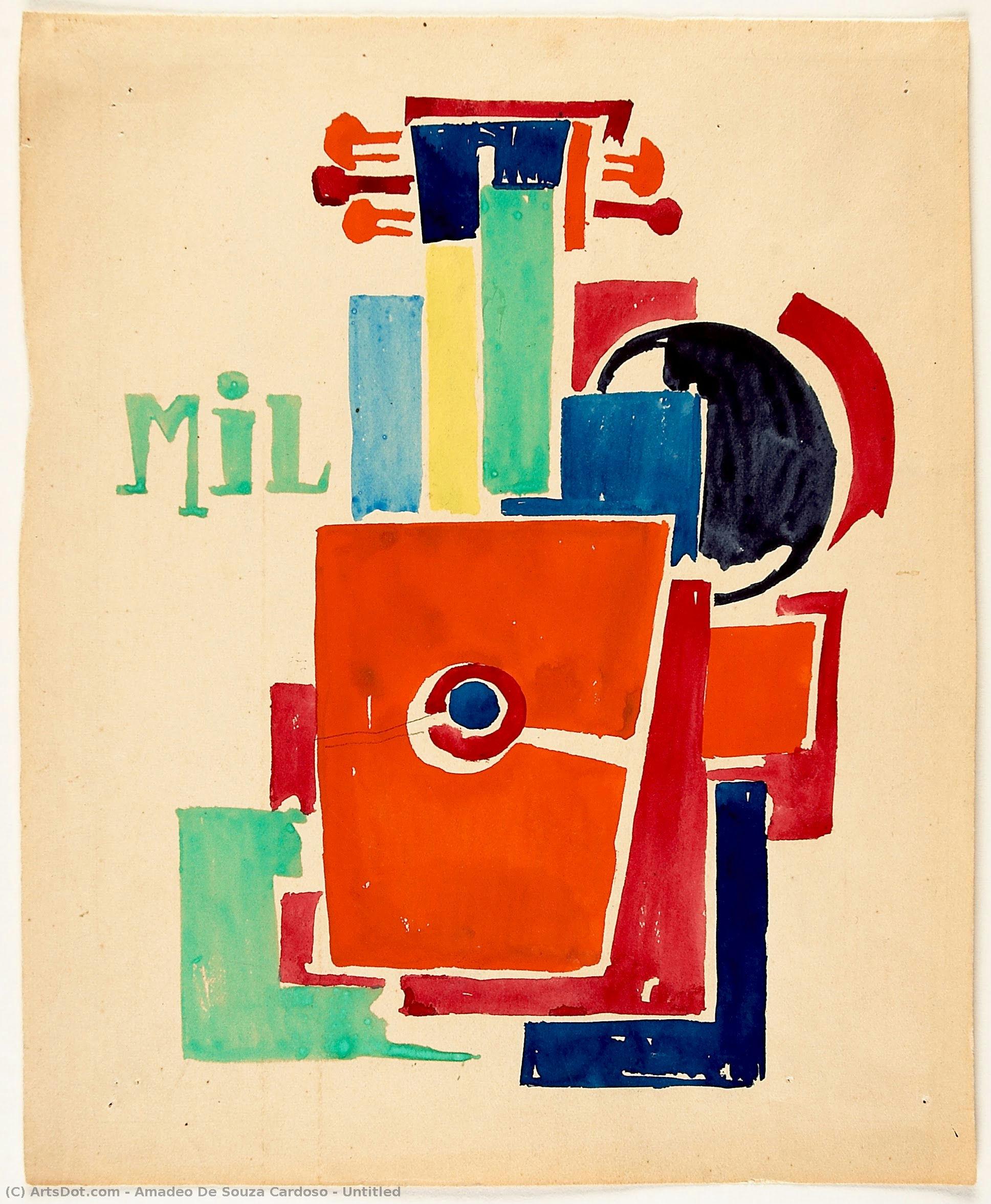
This striking abstract oil painting embodies the spirit of early 20th-century art, blending Cubist influences with Expressionistic fervor. Its prominent geometric forms and expressive color palette capture Souza-Cardoso's pioneering vision for Portuguese artistic innovation.
A Pioneer's Vision: Decoding Amadeo de Souza-Cardoso’s “Untitled”
Amadeo de Souza-Cardoso stands as an undeniable cornerstone of Portuguese Modernism, a figure whose artistic trajectory irrevocably altered the landscape of European art at the dawn of the 20th century. His oeuvre transcends mere visual representation; it embodies a fervent embrace of experimentation and a profound dialogue with the burgeoning avant-garde movements that reshaped artistic sensibilities across Europe. “Untitled,” painted in 1916, exemplifies this spirit perfectly—a deceptively simple composition brimming with layered meanings and technical prowess.
- Subject Matter & Composition: The painting presents a starkly geometric depiction of a red box intersected by a vibrant blue circle. This deliberate reduction to essential forms speaks volumes about Souza-Cardoso’s fascination with Cubist principles—the fragmentation of perspective and the simultaneous portrayal of multiple viewpoints—a technique he honed during his formative years in Paris alongside luminaries like Picasso and Gris.
- Style & Technique: Executed in oil on canvas, “Untitled” showcases Souza-Cardoso’s masterful command of color and texture. Bold hues of crimson dominate the box's surface, contrasted sharply by the cool serenity of azure within the circle. The artist employs a smooth brushstroke, creating an illusionistic depth that defies the flatness inherent in Cubist aesthetics.
Historical Context: Embracing European Avant-Garde Influences
Souza-Cardoso’s artistic journey began amidst the intellectual ferment of Lisbon and subsequently propelled him into the epicenter of Parisian Modernism. Witnessing firsthand the revolutionary ideas circulating amongst artists like Modigliani, Brancusi, Delaunay, and Gris profoundly impacted his creative vision. These encounters instilled in him a conviction that art should actively engage with contemporary concerns—a stance reflected in “Untitled’s” rejection of traditional representational conventions.
- Symbolism & Interpretation: The red box and blue circle are open to interpretation, yet they resonate powerfully with the anxieties surrounding the era. Some scholars suggest that the box symbolizes containment—perhaps representing societal pressures or psychological barriers—while the circle embodies unity and wholeness, offering a counterpoint to fragmentation.
- Emotional Impact: Despite its apparent austerity, “Untitled” possesses an undeniable emotional resonance. The juxtaposition of colors evokes feelings of tension and harmony simultaneously, mirroring the complexities inherent in human experience. Souza-Cardoso’s intention was not merely to depict form but to convey a deeper sense of feeling—a hallmark of Expressionist art.
Legacy & Significance
“Untitled” remains an enduring testament to Amadeo de Souza-Cardoso's pioneering spirit and his unwavering commitment to artistic innovation. It stands as a pivotal work within Portuguese Modernism, demonstrating the transformative potential of engaging with international artistic currents. Its influence extends beyond its formal qualities—it embodies a broader ethos of intellectual curiosity and creative daring—a legacy that continues to inspire artists today.
This striking piece exemplifies Souza-Cardoso’s ability to distill complex ideas into visually arresting compositions, cementing his place as one of Portugal's most important artistic voices of the early 20th century.