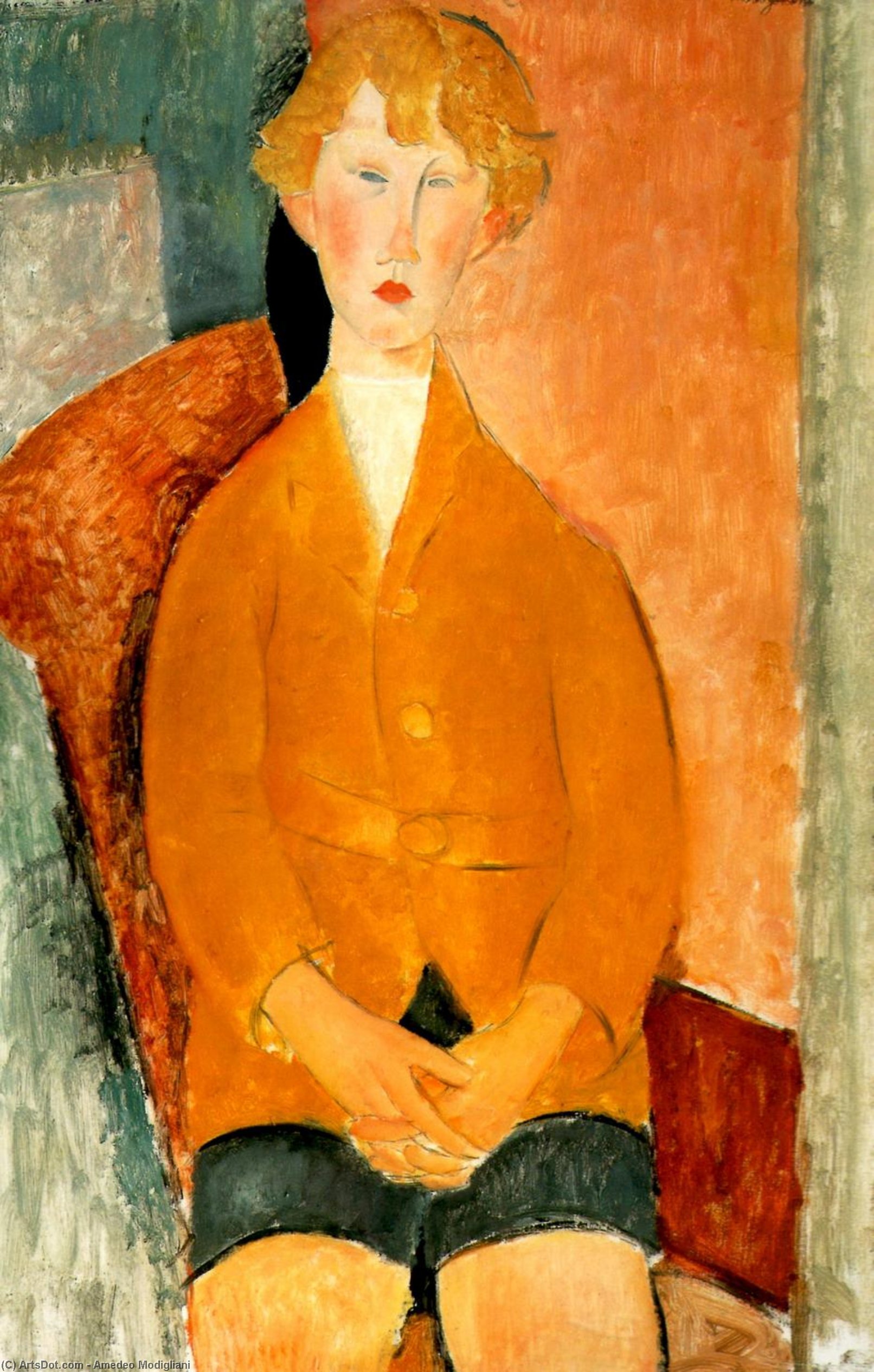
Experience the melancholic beauty of Amedeo Modigliani's 1918 masterpiece Boy in Shorts, featuring his signature elongated forms and serene expression, a timeless addition to any fine art collection.
A Symphony of Stillness: The Soul of Modigliani’s Boy in Shorts
To encounter Amedeo Clemente Modigliani’s 1918 masterpiece, "Boy in Shorts," is to step into a realm where time seems to suspend its forward march. Though the title may suggest a youthful, perhaps even casual subject, the canvas reveals a much deeper, more complex narrative of quiet contemplation and grace. The painting presents a figure—often perceived as a woman seated with poised elegance—resting in a moment of profound introspection. Through his signature use of elongated forms and a muted, earthy palette, Modiana captures not just a physical likeness, but an enduring psychological state. It is a work that transcends the boundaries of simple portraiture, offering instead a meditation on the beauty found within melancholy.
The visual language of this piece is unmistakably Modigliani. He famously eschewed the rigid constraints of meticulous realism, choosing instead to sculpt his subjects with paint. In "Boy in Shorts," one observes the artist's iconic technique: the subtle stretching of the neck and the rhythmic, flowing lines that define the silhouette. This deliberate distortion serves a higher purpose than mere aesthetic whim; it creates an ethereal, almost sculptural quality that imbues the subject with a sense of timelessness. The palette—a delicate arrangement of ochre, beige, and soft pinks—works in harmony with the flattened planes of the composition to create an atmosphere of serene stillness, inviting the viewer to linger in the quietude of the moment.
The Echoes of Paris and the Weight of Modernity
Created during the transformative years following the First World War, "Boy in Shorts" is a poignant artifact of the burgeoning Expressionist movement in Paris. As the world grappled with the anxieties and uncertainties of a new era, artists like Modigliani sought to move beyond the fleeting light of Impressionism to capture something more permanent: the inner truth of the human condition. There is an undeniable tension within the work—a balance between the outward elegance of the seated figure and the underlying sense of vulnerability that permeates the brushwork. This duality reflects the broader cultural shift of the early 20th century, where the search for identity and meaning became a central theme of the avant-garde.
For the discerning collector or interior designer, this painting offers more than just visual appeal; it provides an emotional anchor for a space. The artwork possesses a unique ability to command attention through its subtlety rather than through loudness. Its presence in a room introduces a layer of sophisticated introspection, making it an ideal centerpiece for environments that value depth, history, and a touch of bohemian elegance. Whether placed in a sunlit gallery or a moody, contemporary study, the reproduction of this masterpiece brings with it the hauntingly beautiful spirit of the École de Paris, serving as a constant reminder of the profound grace found in moments of silent reflection.