The Haunting Beauty of a Fleeting Moment
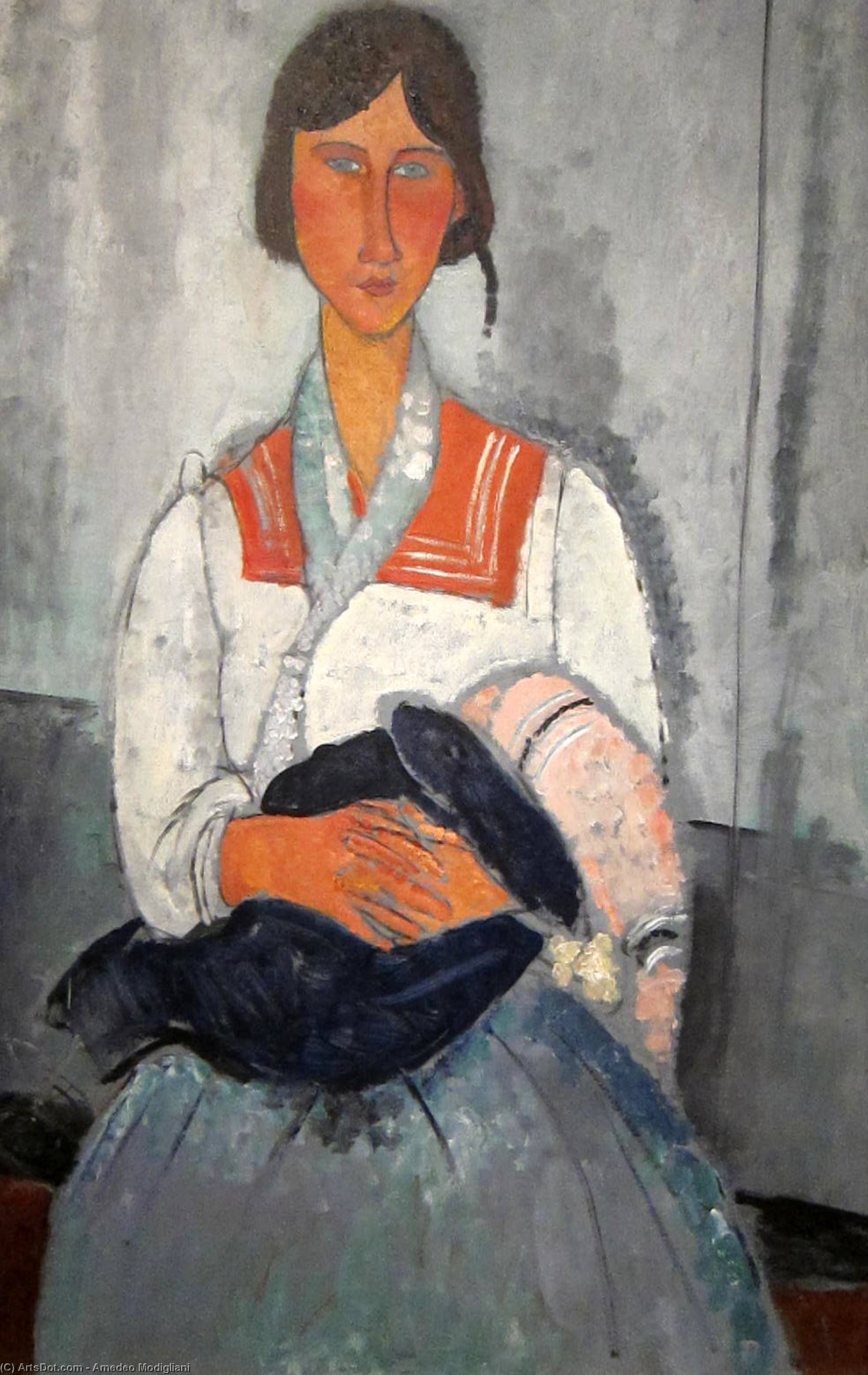
Amedeo Clemente Modigliani's "Gypsy Woman with Child," painted in 1919, isn’t merely a portrait; it’s a distilled essence of human experience – a poignant meditation on motherhood, vulnerability, and the enduring spirit within. Created during a turbulent period of artistic experimentation, this oil-on-canvas work stands as a testament to Modigliani's unique ability to capture not just likeness but also the very soul of his subjects. The painting immediately draws the viewer in with its muted palette – ochres, browns, and subtle blues – creating an atmosphere of quiet contemplation rather than overt drama. This restrained approach is characteristic of Modigliani’s style, a deliberate choice that amplifies the emotional weight of the scene.
A Fusion of Influences: Style and Technique
To understand “Gypsy Woman with Child,” one must appreciate the artist's distinctive blend of influences. Born in Livorno, Italy, Modigliani’s artistic journey was shaped by a complex interplay of movements – Cubism’s fragmented forms, Fauvism’s bold use of color, and a surprising resonance with African sculpture. This amalgamation is strikingly evident here; the woman’s elongated features, reminiscent of Picasso's work, are softened by a gentle, almost melancholic expression. The simplification of her face, coupled with the child’s serene countenance, speaks to a desire to strip away the superfluous and reveal the core of human emotion. Modigliani masterfully employs a limited color range, using contrasting tones to sculpt volume and create a sense of depth that belies the painting's relatively small scale. The brushstrokes themselves are loose and expressive, contributing to the overall feeling of immediacy and intimacy.
Light as a Storyteller: Composition and Symbolism
The strategic use of light is paramount in “Gypsy Woman with Child.” It’s not employed for dramatic effect but rather to subtly illuminate the woman's face, highlighting her features and conveying a sense of quiet dignity. The way the light catches the folds of her clothing and the texture of her skin adds a tactile quality to the image, inviting us to almost reach out and touch it. Beyond its technical brilliance, the painting is rich in symbolism. The woman’s confident gaze – a subtle defiance against the hardships she undoubtedly faces – speaks volumes about resilience. The presence of the child represents not just innocence but also hope, continuity, and the enduring cycle of life. The setting itself, though somewhat ambiguous, evokes a sense of nomadic existence, aligning with the traditional image of a Roma (Gypsy) family, suggesting freedom and independence.
A Legacy of Longing: Historical Context
Painted in 1919, “Gypsy Woman with Child” reflects the broader artistic landscape of the early 20th century – a period marked by experimentation, innovation, and a growing interest in portraying marginalized communities. Modigliani’s own life was one of profound struggle and fleeting success; battling chronic illness throughout his youth and facing constant financial hardship, he channeled his experiences into his art. His relationships with artists like Picasso and Tarsier were complex and often fraught with difficulty, adding to the sense of melancholy that permeates his work. “Gypsy Woman with Child,” therefore, can be viewed as a poignant reflection on the fragility of life and the enduring power of human connection – themes deeply rooted in Modigliani’s personal experience.
Bringing ‘Gypsy Woman with Child’ Home
A reproduction of “Gypsy Woman with Child” offers a remarkable opportunity to bring this evocative masterpiece into your home or office. ArtsDot's hand-painted reproductions capture the essence of Modigliani’s style and technique, offering an unparalleled level of detail and authenticity. Whether you are an art collector, an interior designer seeking a touch of timeless elegance, or simply someone captivated by the beauty of this iconic image, a reproduction from ArtsDot is a treasured addition to any collection. Explore our selection today and experience the haunting allure of Amedeo Modigliani’s enduring vision.