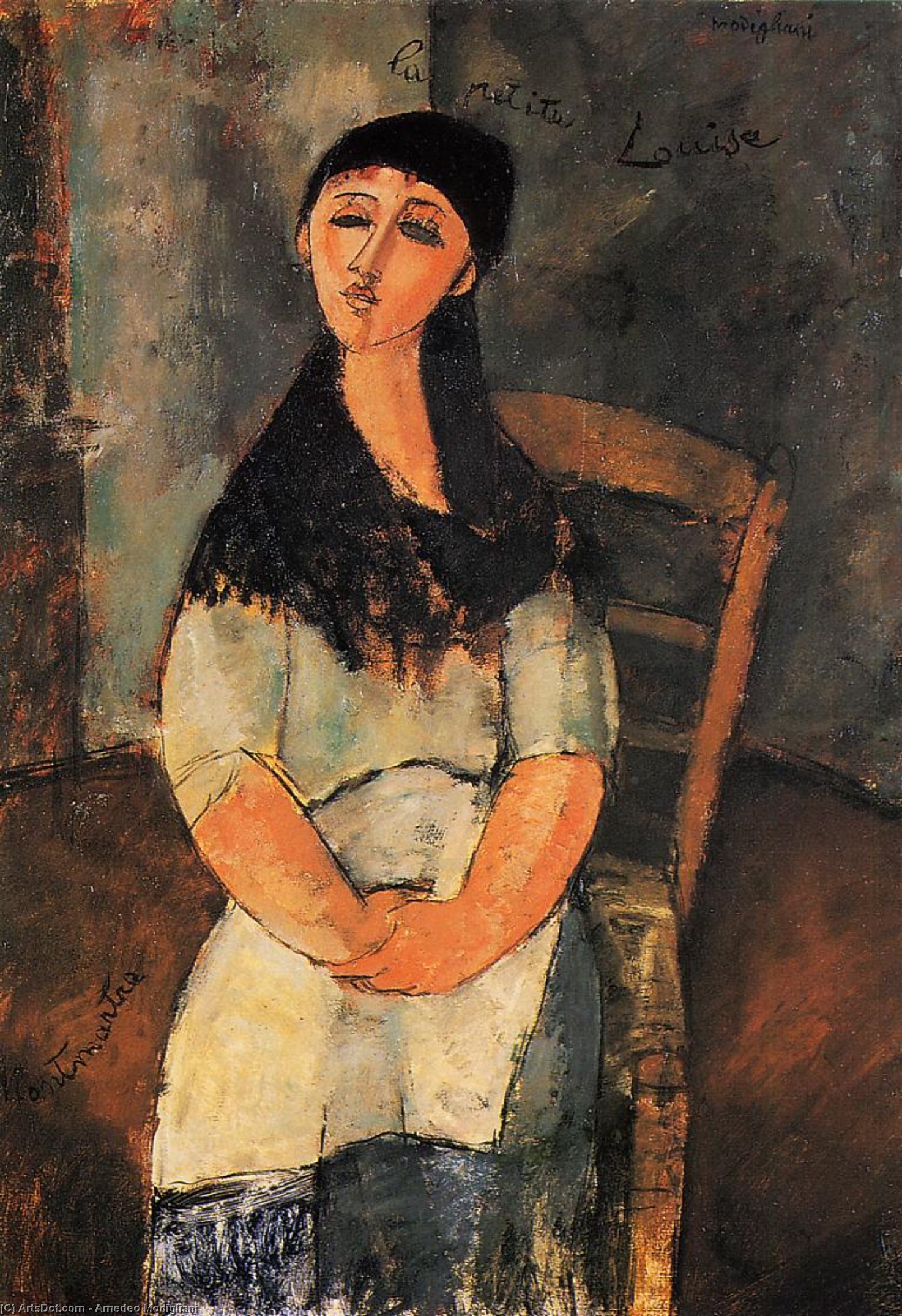
Little Louise
“Little Louise” by Amedeo Modigliani stands as an emblem of early 20th-century Expressionism, capturing a poignant moment frozen in time—a woman seated thoughtfully on a chair, her gaze directed towards the viewer with an intensity that speaks volumes about unspoken emotions. Painted in 1915 during Modigliani’s Parisian exile, this portrait transcends mere representation; it delves into the realm of psychological exploration and embodies the artist's signature style.
- Subject Matter: The central figure is a woman—likely Louise Bourgeois herself, though confirmation remains elusive—rendered in Modigliani’s characteristic elongated proportions. Her posture exudes quiet contemplation, suggesting an inner world brimming with feeling.
- Style & Technique: Modigliani's distinctive approach involved simplified forms and stylized features, prioritizing expressive gesture over meticulous realism. The painting utilizes a muted palette of earthy tones—primarily ochre, umber, and ivory—creating a sense of subdued drama. Thick impasto brushstrokes contribute to the textural richness of the canvas, emphasizing the contours of the woman’s face and torso.
- Historical Context: Created amidst the turbulent backdrop of World War I, “Little Louise” reflects the anxieties and uncertainties of the era. However, it transcends its immediate historical context by tapping into universal themes of vulnerability, introspection, and emotional depth—themes that resonate powerfully with viewers today.
- Symbolism: The elongated face and neck are not merely stylistic choices but symbolic representations of Modigliani’s preoccupation with metamorphosis and the fragility of human existence. They convey a sense of timelessness, hinting at an inner stillness unaffected by external pressures.
- Emotional Impact: Viewing “Little Louise” evokes feelings of melancholy and empathy. The woman's gaze invites contemplation, prompting viewers to consider themes of solitude, resilience, and the complexities of human emotion—a testament to Modigliani’s ability to distill profound psychological states into visual form.
This artwork exemplifies Modigliani’s masterful manipulation of form and color to convey emotional resonance. Its enduring appeal lies in its ability to capture a fleeting moment of quiet contemplation, inviting viewers to engage with the artist's deeply felt vision of human experience.