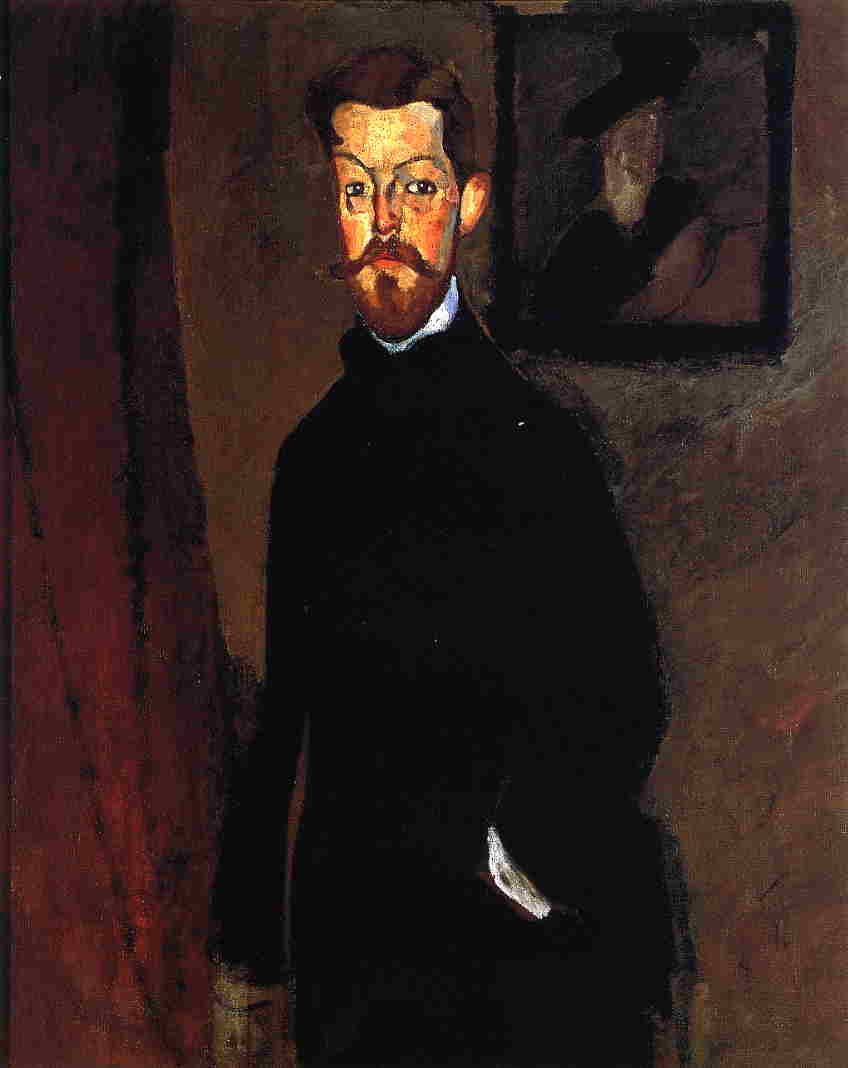
A Gaze Through the Veil of Time
In the quiet corridors of art history, few portraits possess the haunting, magnetic pull of Amedeo Modigliani’s Portrait of Dr. Paul Alexandre. Executed in 1909, this masterpiece is far more than a mere likeness of a physician; it is an evocative window into the soul of the Expressionist movement. When one gazes upon the face of Dr. Alexandre, there is an immediate sense of encountering a profound, quiet dignity. Modigliani, ever the master of psychological depth, utilizes his signature elongated facial features to sculpt a visage that feels both ethereal and grounded. The doctor’s direct yet contemplative gaze invites the viewer into a shared moment of intellectual seriousness, creating an intimate connection that transcends the boundaries of the canvas.
The composition is a masterful study in balance and subtle tension. While the subject stands as the undeniable focal point, Modigliani artfully populates the periphery with figures partially obscured by the frame. These spectral presences add a layer of dynamic movement to an otherwise still scene, hinting at the bustling, bohemian life of Paris that surrounded the artist. A simple wall, adorned with a single framed photograph, provides a grounding element of domesticity, contrasting sharply with the expressive, almost surreal distortion of the subject's features. This interplay between the mundane and the extraordinary is what gives the work its enduring, dreamlike quality.
The Language of Line and Melancholy
Technically, the painting serves as a brilliant testament to Modigliani’s unique stylistic innovation. Moving away from the photographic accuracy of traditional portraiture, the artist employs bold, decisive lines to delineate form. These contours are not merely outlines but are rhythmic elements that guide the eye across the canvas, emphasizing the sculptural quality of the jawline and neck. The color palette is a sophisticated arrangement of muted yellows, deep browns, and earthy tones, used sparingly to illuminate the subject without overwhelming the emotional gravity of the piece. This restrained use of color ensures that the focus remains on the texture of the emotion itself.
For the discerning collector or interior designer, this work offers an unparalleled opportunity to introduce a sense of refined sorrow and historical weight into a space. The painting embodies a specific kind of melancholic elegance—a mood that is both sophisticated and deeply human. It does not merely decorate a room; it anchors it with a narrative of longing and resilience. Whether placed in a contemporary gallery setting or a classic study, a high-quality reproduction of this work brings with it the spirit of the École de Paris, offering a timeless piece of art that continues to whisper tales of beauty found within the shadows of the human experience.